Signature
The South: Monasteries & Wine
7 days
2,400 m
Vayots Dzor — Burial church of the Orbelian princes and the masterwork of the sculptor Momik: at Noravank, Armenian stone-carving of the 13th and 14th centuries reached its boldest moment — and the twelve kilometres of gorge before it are the overture.
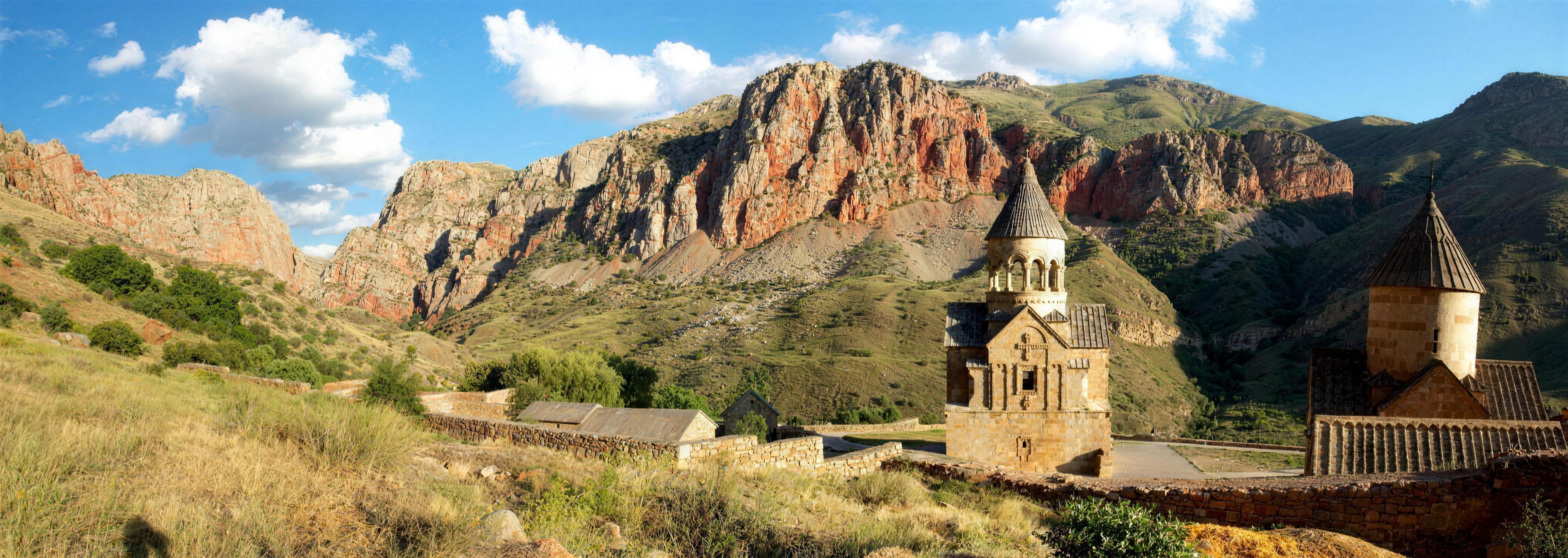
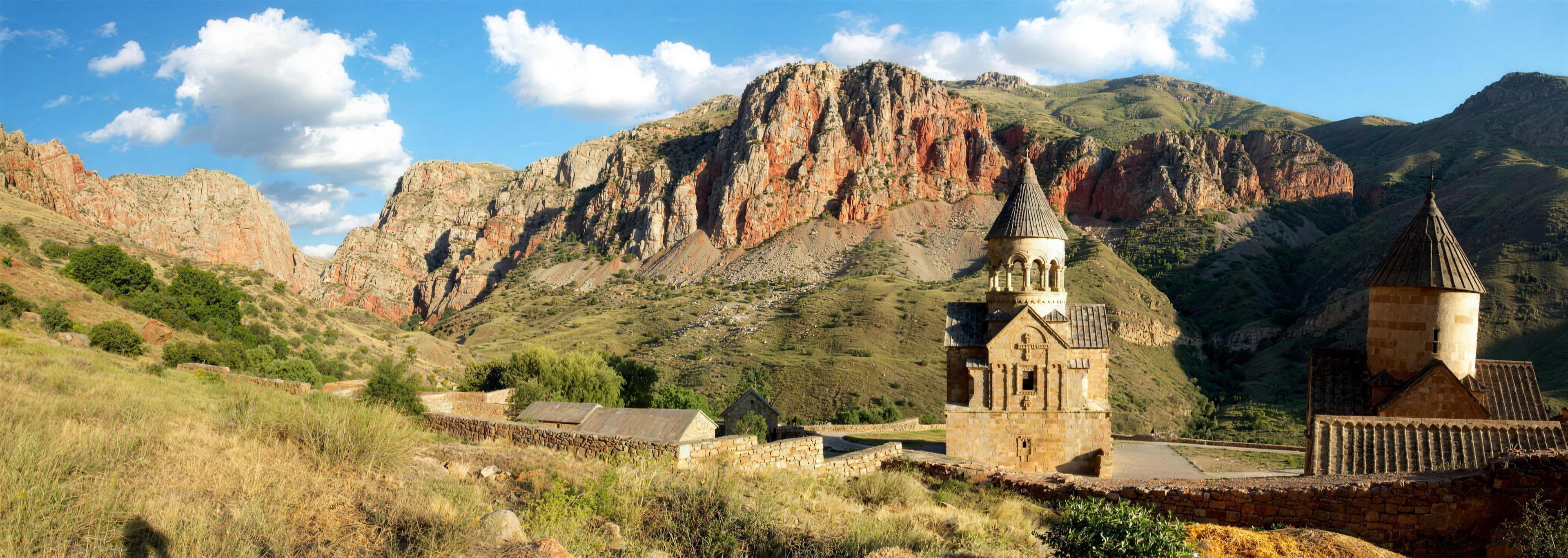
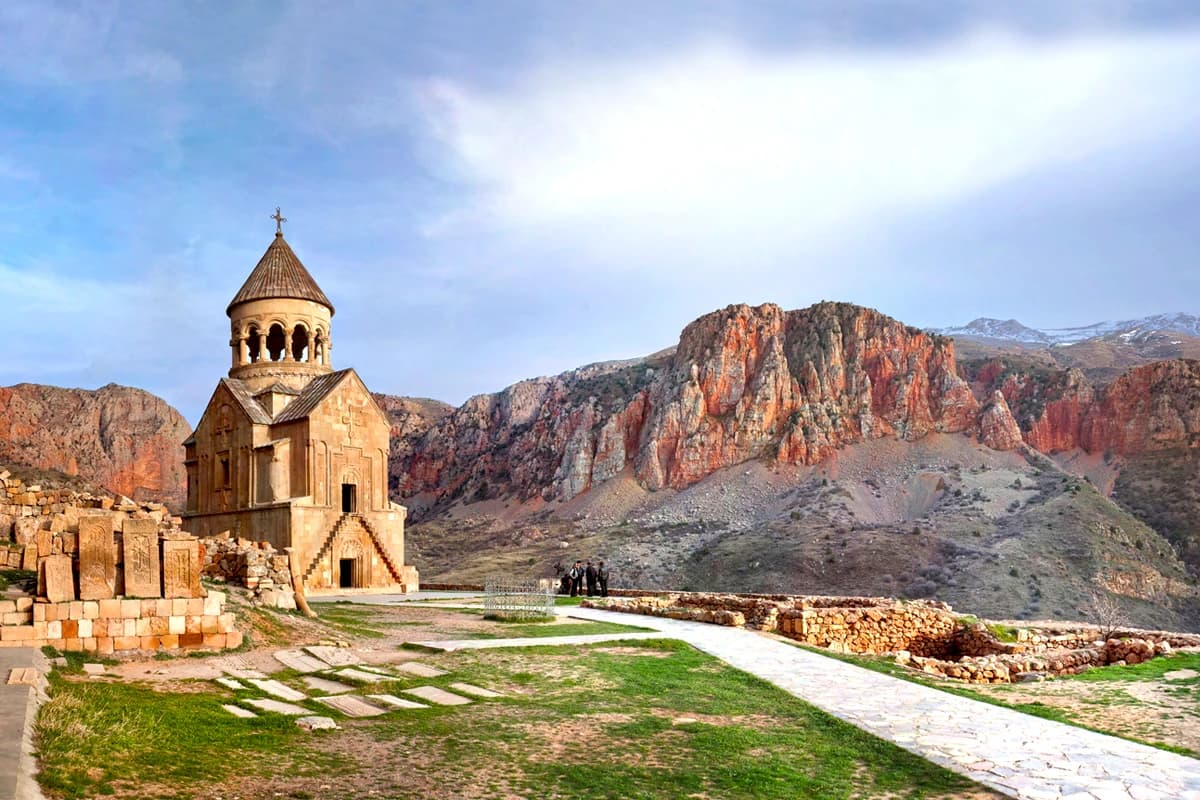
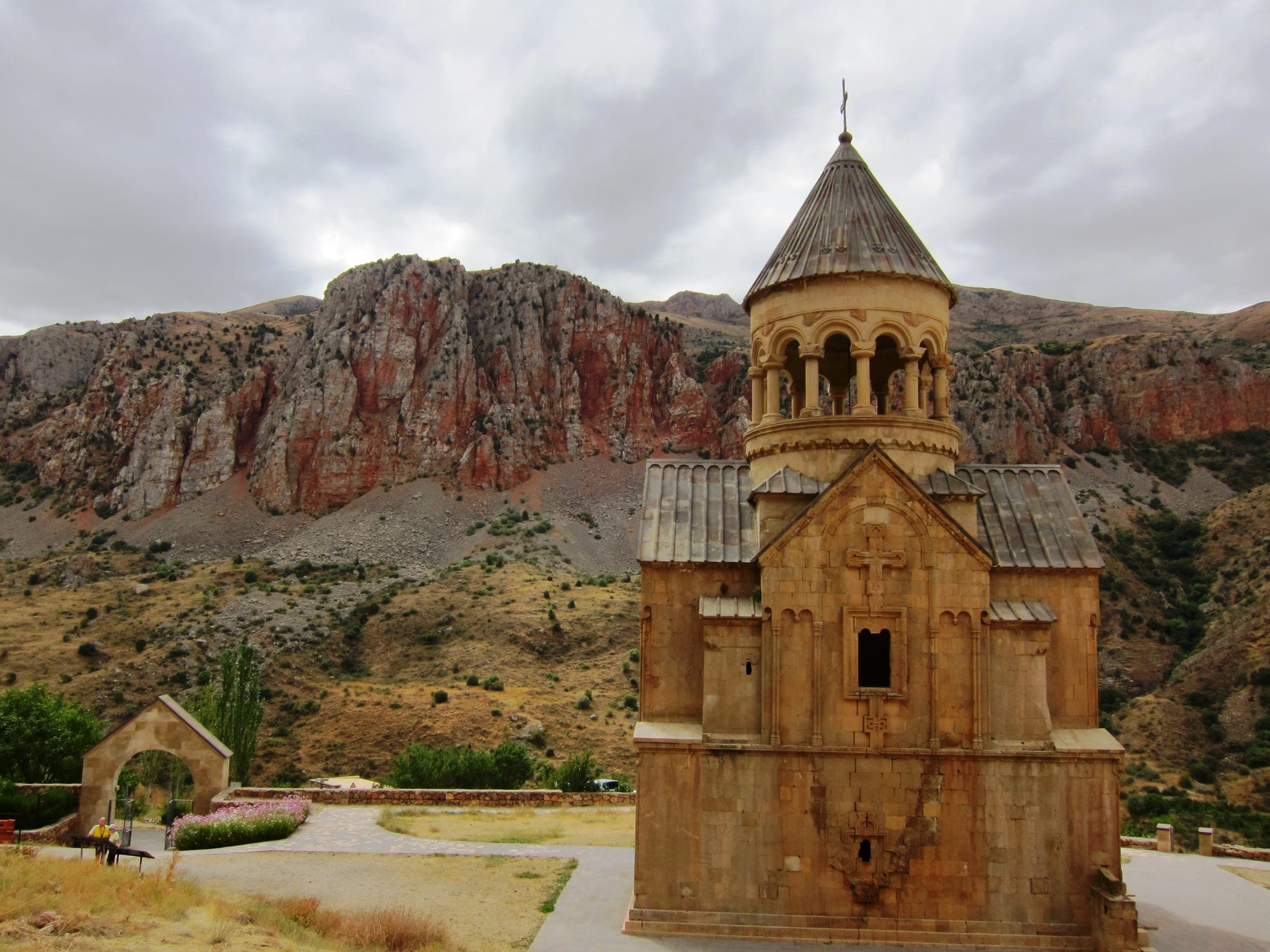
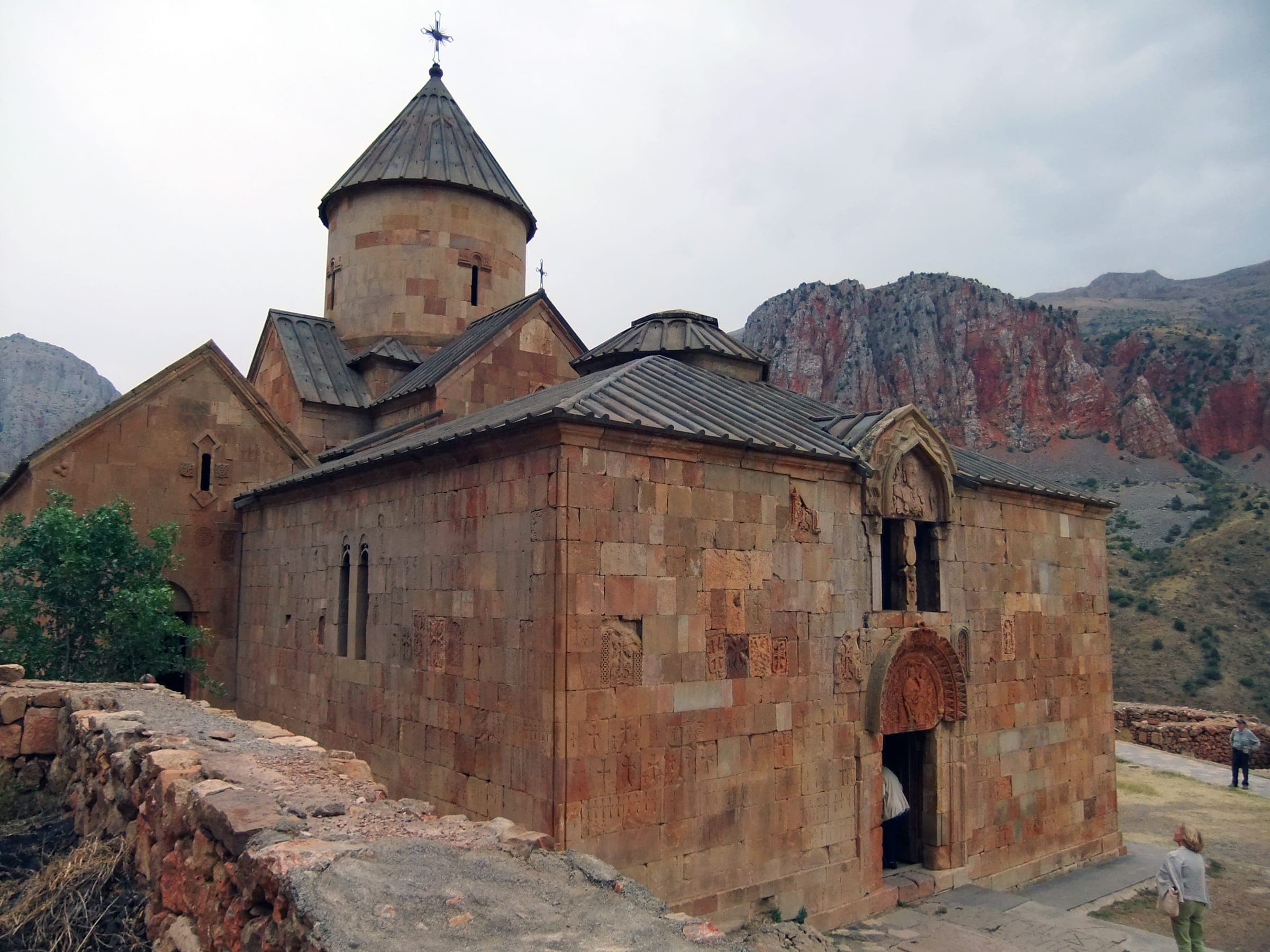
At the end of a narrow gorge of brick-red rock stands the 13th-century Noravank Monastery. Its masterpiece: the two-storey Surb Astvatsatsin church, its façade carrying a narrow, exposed stone staircase with no railing up to the upper floor — the steps jut bare from the wall, and you place one foot before the other. In low sun, cliffs and tufa glow the same warm red.
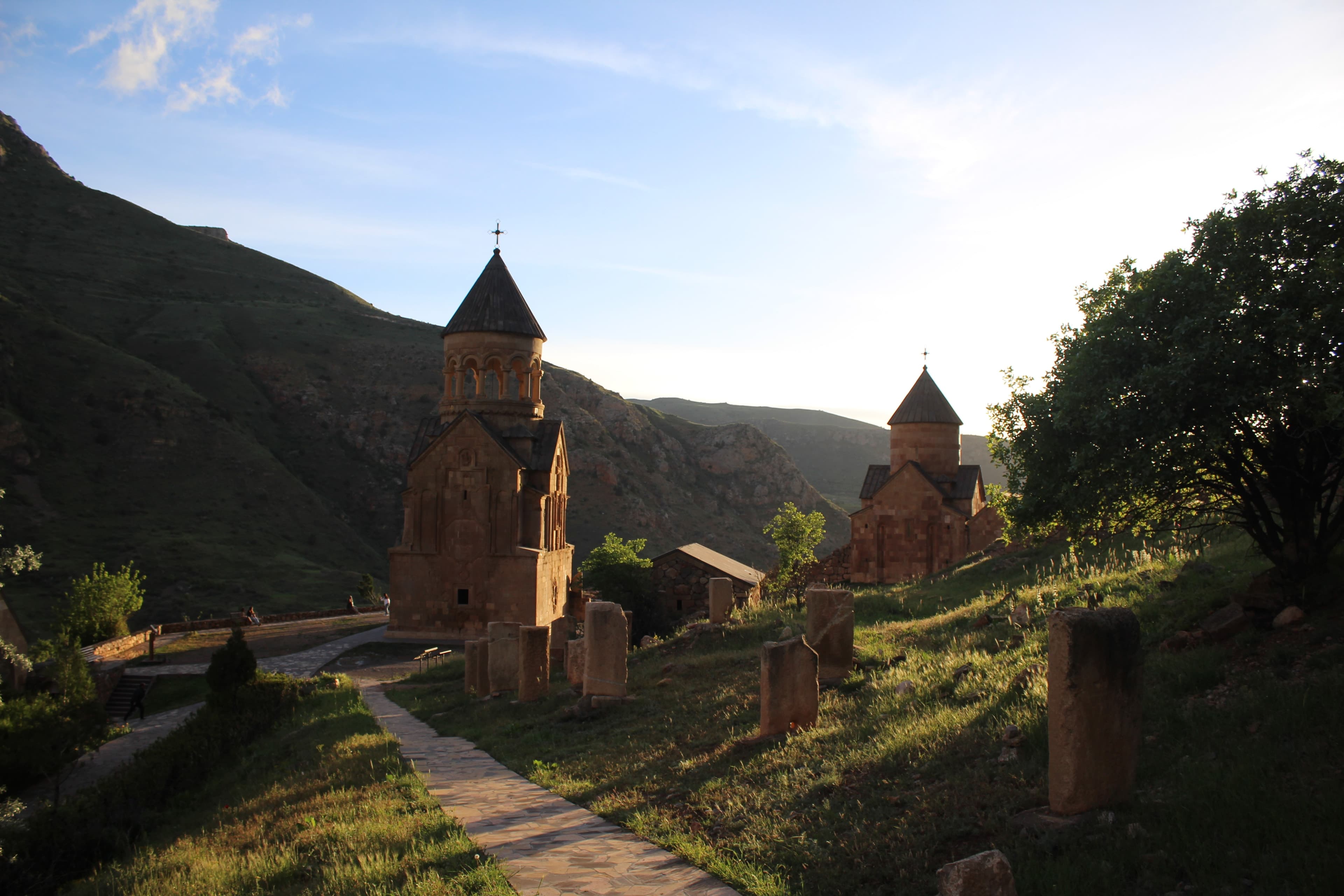
The monastery sits where the Amaghu side-valley narrows to its close, on a spur of warm sandstone walled in by steep limestone cliffs. Three buildings share the ledge: the church of Surb Karapet with its gavit, the small Surb Grigor chapel beside it, and, set a few steps apart, the main church of Surb Astvatsatsin, the complex's masterpiece. It is a compact site, built to be read at close range — façades worked with reliefs, khachkars leaned against the walls, the cliffs standing close on every side. You come to it at the end of a single road in, with the valley closing behind you and no view out but the way you arrived.
Offroad & access
This is no driving adventure: the spur road from Areni is paved, off-road factor 1 of 5. It winds twelve kilometres through the Amaghu Gorge, cliff wall on one side, stream on the other, and ends at the monastery below the cliffs. The real thrill comes on foot — to reach the upper chapel you take the narrow, unrailed stone stair up the west front, slick in wet or ice, and that is where we stand close when you need a hold.
Noravank stands at the head of the Amaghu Gorge in Vayots Dzor, at about 1,590 metres, where a spur of red sandstone lifts the whole complex above the streambed. Three churches share the ground. Surb Karapet, with its gavit, and the little Surb Grigor chapel stand close together; the two-storey Surb Astvatsatsin — often called the Burtelashen, after its patron Burtel Orbelian — rises a few steps apart, its upper chapel reached by twin flights set into the west front. The site was founded in 1105 and, from the 13th century, served as the seat of the bishops of Syunik and the burial ground of the Orbelian princes. Surb Astvatsatsin was completed in 1339 by the master builder and sculptor Momik, who set his reliefs and khachkars across the walls of what had become the family's dynastic sanctuary.
The main church rose on the commission of Prince Burtel Orbelian, over his family's burial vault, in the decades when Noravank had become the spiritual centre of the Orbelian domain in Vayots Dzor. Its builder, Momik, was manuscript illuminator, painter and architect in one — the leading figure of a Syunik school of carving that pushed relief further toward sculpture than Armenian churches had gone before. He worked here across the 1320s and 1330s and shaped the two-tier west front with its figured tympana: God the Father above the door, Christ and the Virgin and Child below. Momik died in 1333, six years before Surb Astvatsatsin was finished, and his own signed khachkar of that year stands on the site. The building sealed a century in which the Orbelian princes, ruling under Mongol overlordship, made this remote valley one of the richest centres of art in the medieval Armenian world.
High on the west face, where the last stones of the dome go into place, a young man works alone against a deadline only he believes he can meet. That, at least, is how the story is told. Momik, the mason of Noravank, is said to have loved the daughter of Prince Orbelian, and the prince promised her to him on a single condition: raise a church of matchless beauty in three years. Momik built. As he set the final stone of the cupola, a rider sent by the prince came up behind him and cast him from the height — and the stone still in his hand, the tale says, became his gravestone. It is a legend, not a record: the real Momik died in 1333 and left a signed khachkar, not a fall. But it fastens onto something the building makes plain — that one man's hand shaped this place, and gave the rest of his life to it.
Noravank rewards you for coming close. No barrier stands between you and Momik's façade, so you read the reliefs at arm's length — the figured tympana over the doors, the deep-cut rosettes, the khachkars whose stone lacework runs finer here than almost anywhere in Armenia. Few medieval sites let you stand this near their best carving. Around you the three churches hold a single small ground, so the whole complex reads at a glance rather than as a march between monuments, and the façade shows its sculpture at both eye level and above. On our routes through Vayots Dzor we give the site unhurried time rather than a photo stop — because Noravank is a place to look hard at one man's work, not to tick off between stages.
The spur road from Areni is paved the whole way — twelve kilometres up the Amaghu Gorge, manageable in any car; the effort only begins on foot. Aim for the late afternoon, when the sun sits low on the sandstone and the midday coaches have gone. The climb to the upper chapel of the main church is narrow and unrailed, slippery in wet or ice and better left alone then. The monastery is open year-round, but in winter snow and ice can lie along the gorge, so late spring through autumn is the easier window.
Areni, Vayots DzorWine
Vayots DzorCanyon
Vayots DzorNature
Want to see Noravank away from the midday coaches, in the best evening light? Armenia Expeditions brings you through the Amaghu Gorge straight to the monastery, at the quietest hour of the day. One message — we’ll plan the rest.