Paved
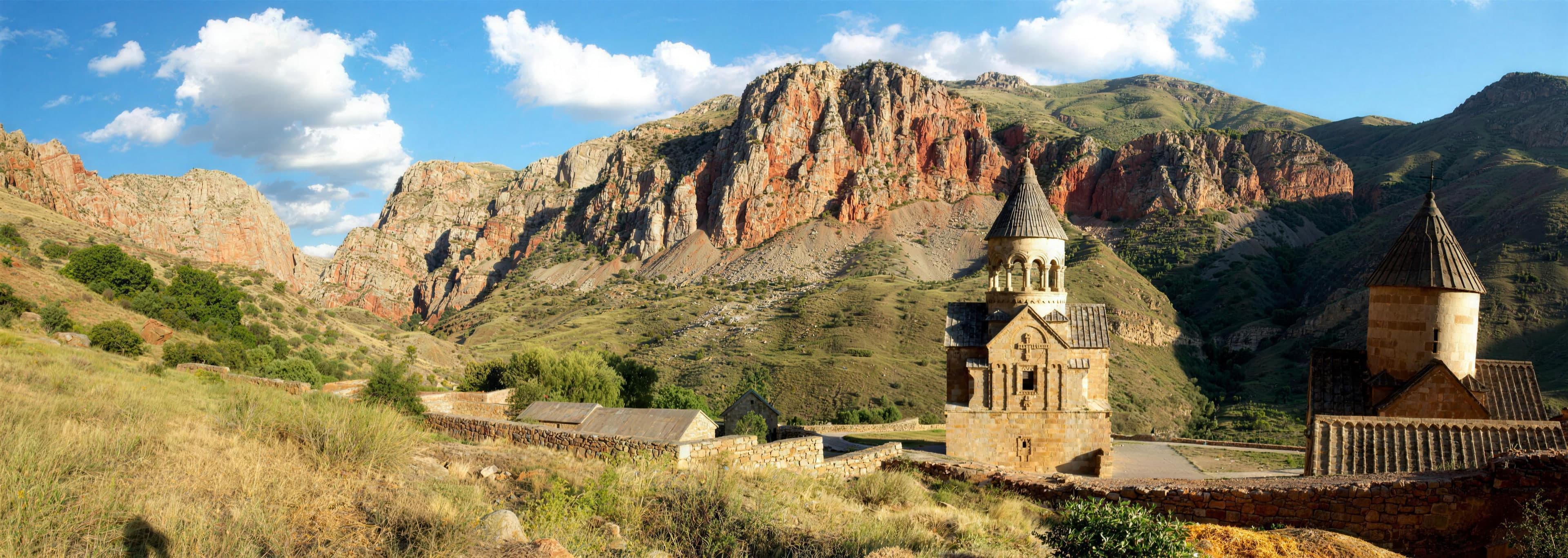
Vayots DzorMonastery
Vayots Dzor — The escape for two: 48 hours of wine, red cliffs and a thermal bath in Jermuk
from$593per person, based on 2 guests
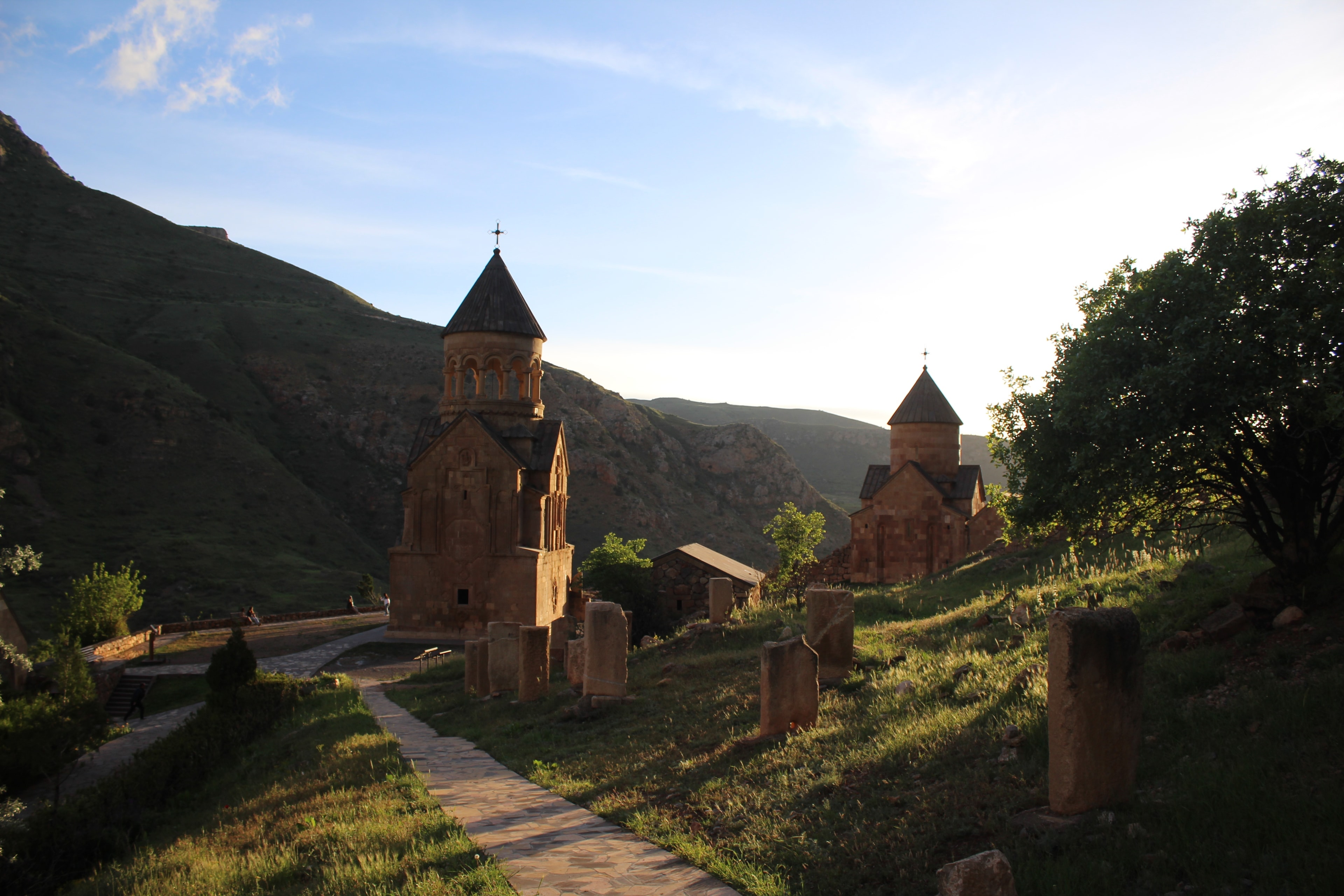
48 hours entirely for the two of you: at a family winery in Areni you taste Areni Noir made from indigenous grapes, away from any group, then a brief stop at Noravank Monastery on the way to the spa town of Jermuk. The evening belongs to the thermal pools, with no programme at all. On the second day, a late morning, the drive up to the bubbling mineral geysers high above the town, then an unhurried drive back to Yerevan. No suitcase worth unpacking, no group itinerary — a weekend as compact as a single deep breath.
390 kilometres in two days, difficulty 2 of 5 — the road itself asks little of you, and that is exactly how this weekend is cut. From Yerevan at around 990 metres the M2 runs out into the Ararat plain, whose lowest point along this route is Yeraskh at 810 metres. There the trunk road swings east and climbs in long, shallow pulls to the watershed into Vayots Dzor; beyond it Yelpin holds on at 1,545 metres. From then on the Arpa sets the direction: Areni at about 1,000 metres, then Yeghegnadzor with 1,194 and Vayk with 1,300 — and that is where the H-42 branches off the M2 and carries you up to 2,080 metres, to Jermuk. The evening therefore sits a thousand metres above the morning, without a single metre of gravel.
There is no off-road on day one, and that is deliberate. The Areni-1 cave opens a kilometre east of the village, directly above the M2 at a little over 1,000 metres; you stop on the verge and walk the last few steps. Twelve kilometres of asphalt run to Noravank Monastery, threaded into the Amaghu gorge, rock wall on one side, stream bed on the other, and ending with the vehicle at roughly 1,590 metres. The road is narrow, yes; difficult is something else. And because the two of you travel in one vehicle — two seats, no convoy — nobody else decides how long a stop lasts.
The terrain comes on day two, and it comes late. The track to the geyser leaves the outskirts level with the mineral water plant and pulls up to a little over 2,100 metres: loose gravel, ruts scoured out by water, several fords through streams that stand highest after the snowmelt. This is where low range goes in and tyre pressure comes out, and the track continues all the way to the spring itself. Off-road factor 4 of 5 on a tour that as a whole sits at 2 — every demand these two days make on a driver is packed into those few kilometres. Highest point: 2,140 metres.
The way back runs via Yeghegnadzor onto the M2 and reaches Yerevan in just under three hours; when it begins depends solely on how long you stay in the warm water up there. Where you sleep is decided by the comfort class, not by the town: this weekend is built for the Signature class, so a hotel with a thermal spa in Jermuk; in the Expedition class it would be a guesthouse, in the Frontier class a wild camp above the town. Anyone who would rather hold the wheel than be driven takes the sealed stages and drives the off-road section after the off-road training at the start. The driving season runs June to October. The snow releases the plateau around May; early in the season the streams stand higher, and the decision is made at the ford, not on the calendar.
A private wine tasting at a family winery in Areni, then on to Noravank Monastery for a brief stop, before checking in at the spa town of Jermuk in the late afternoon and letting the evening unwind in the thermal pools.
Not a metre of gravel on this day: around 209 kilometres, just under three and a half hours of actual driving. Level going to Yeraskh, after that the steady climb past Yelpin and back down to the Arpa. The cave costs two kilometres there and back, the monastery twenty-four through the gorge. From Vayk on, the H-42 climbs in hairpins to 2,080 metres; in the evening the air up there is nothing the valley prepares anyone for.
209 km · Driving time 3 h 30 · Elevation 990 → 2,080 m · tarmac 100 %
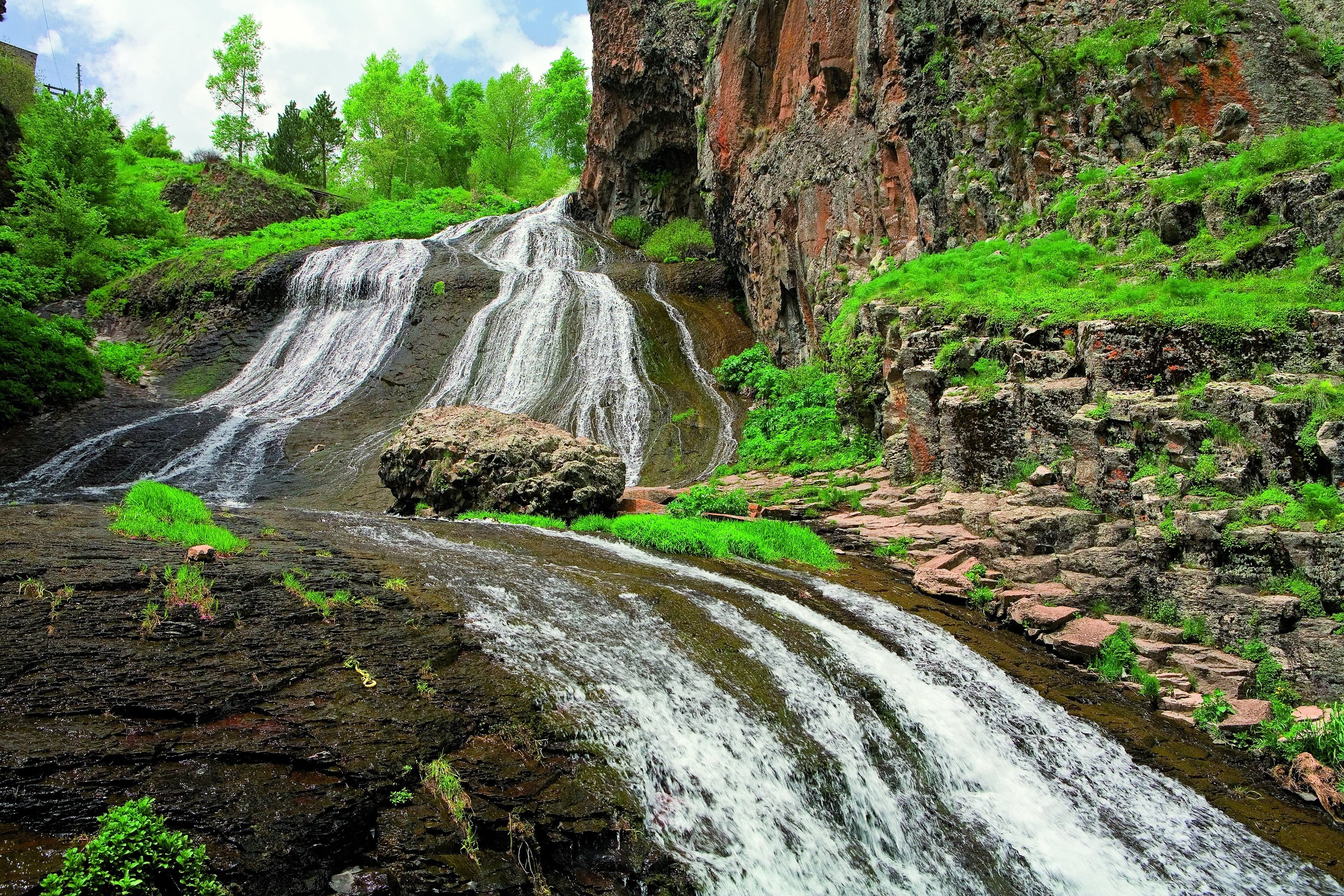
A slow start in the thermal town, then the drive up to the bubbling mineral geysers high above Jermuk, before an unhurried drive back via Yeghegnadzor to Yerevan.
The morning may start late: breakfast without a clock, a second turn in the pool, and only then the track. Up from the last houses over loose gravel and scoured ruts, with low range in and air let out of the tyres, plus several fords that are checked before the crossing. Highest point 2,140 metres, and at the end the vehicle stands at the spring. Down in town the tyre pressure goes back up, then just under three hours of asphalt via Yeghegnadzor to Yerevan.
Driving time 3 h · Elevation 2,080 → 990 m · highest point 2,140 m
Vayots DzorMonastery
Areni, Vayots DzorWine
Jermuk, Vayots DzorGeyser
Packing list
Questions about this tour
Off-road factor 4 of 5 on a tour that as a whole sits at 2. The surface is loose gravel with ruts washed into it, plus several stream crossings. That is what low range and softer tyres are for; the section is short but technical, and still the hardest piece of driving of the weekend. The vehicle reaches the spring — everything after that is the question of how long you stay in the water.
Later than it could on a group trip. The driving budget for day two is around three hours, the run up to the spring and back included; even setting off around midday gets you back to Yerevan in the evening. The morning is therefore not on a clock: breakfast, pool, track, spring — in whatever order and at whatever length suits you. The only limit is daylight, because nobody drives those fords in the dark.
Yes. The route is laid out for two seats, one vehicle goes, and there is no second party to wait for. That changes the practice of driving more than it sounds: stops happen where you want them, the gorge road to Noravank is not driven in a pack, and on the track on day two there is no car behind you in your dust. Guiding is in English; further languages are possible on request.
For this slice of it, yes. 390 kilometres, about 209 of them on day one, and a driving budget of just under three and a half plus around three hours leave both days with more time outside the vehicle than inside it. What does not fit is everything south of Jermuk: the province reaches up to 3,522 metres, and the road into Syunik costs another day. If you want both, you take a longer route; this weekend deliberately stays in the Arpa corridor.
The track to the geyser: ruts, gravel, fords
Only once in these two days does the driving get serious, on the climb to the spring: loose gravel, ruts scoured out by water and several stream crossings that stand highest after the snowmelt. At every ford the guide gets out and walks it; at high water it is decided there on the bank whether the crossing happens at all. Only one vehicle is out here, which keeps the section calm — it changes nothing about low range.
Satellite communication on every route
Every group carries satellite messaging and tracking. Where the mobile network ends, the connection stays up, and help can be called from any point on the route.
Recovery gear and reserves on board
Winch, recovery straps, tools, spare fuel and spare water travel in every vehicle. In the convoy a second vehicle is always within reach, and the margin is planned before it is needed.
First aid and pre-planned routes to help
Comprehensive first-aid kits, guides trained in wilderness first aid, and routes to the nearest medical facility planned in advance for every stage.
Fixed dates or your own timing — guided or self-driven. We reply personally.