Signature
The South: Monasteries & Wine
7 days
2,400 m
near Sisian, Syunik — Few ancient places keep their secret as stubbornly as this one. A field of standing stones on the Syunik highland has been called a graveyard, a temple and the oldest observatory on earth — and the sober truth is that none of it has ever been proven.
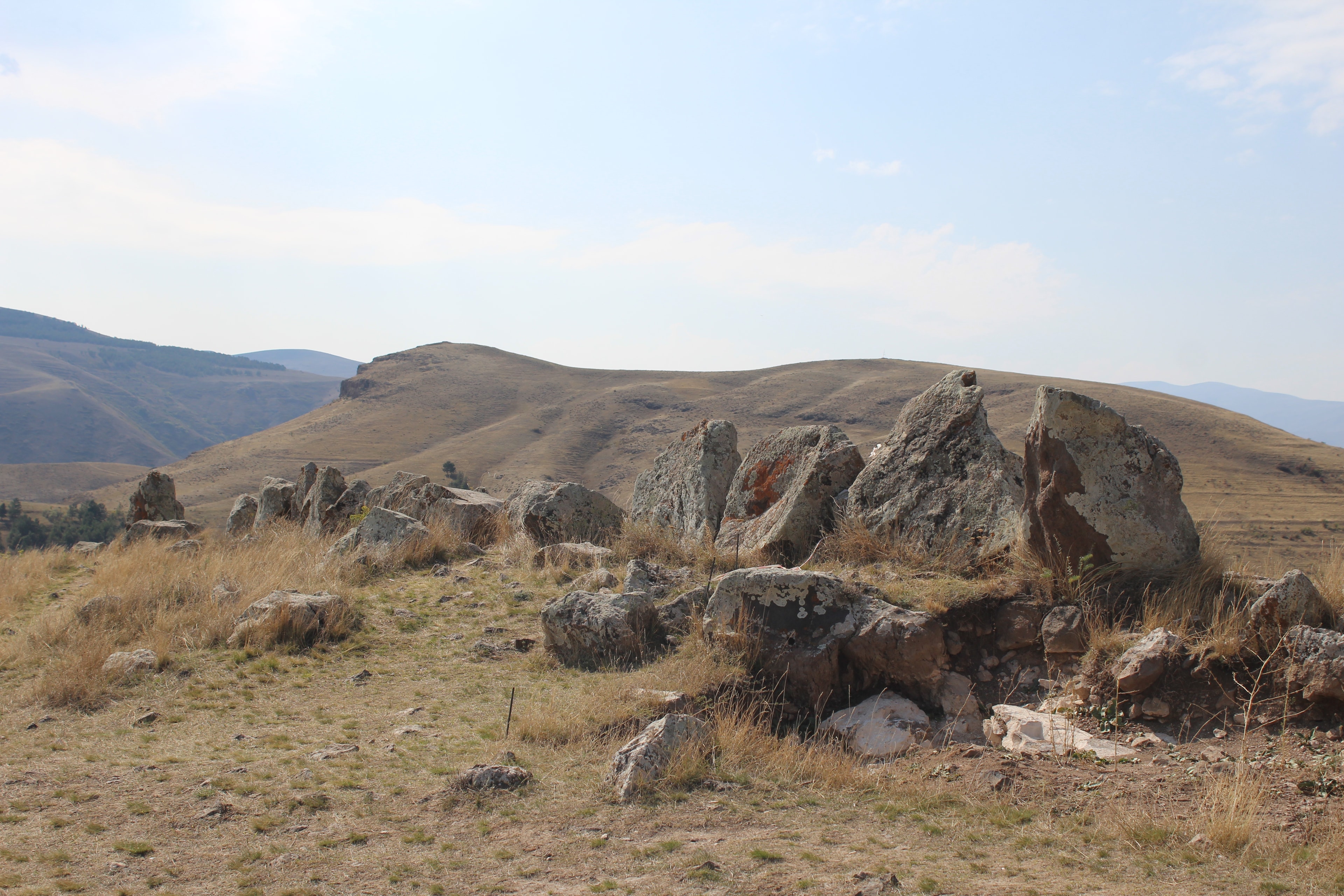
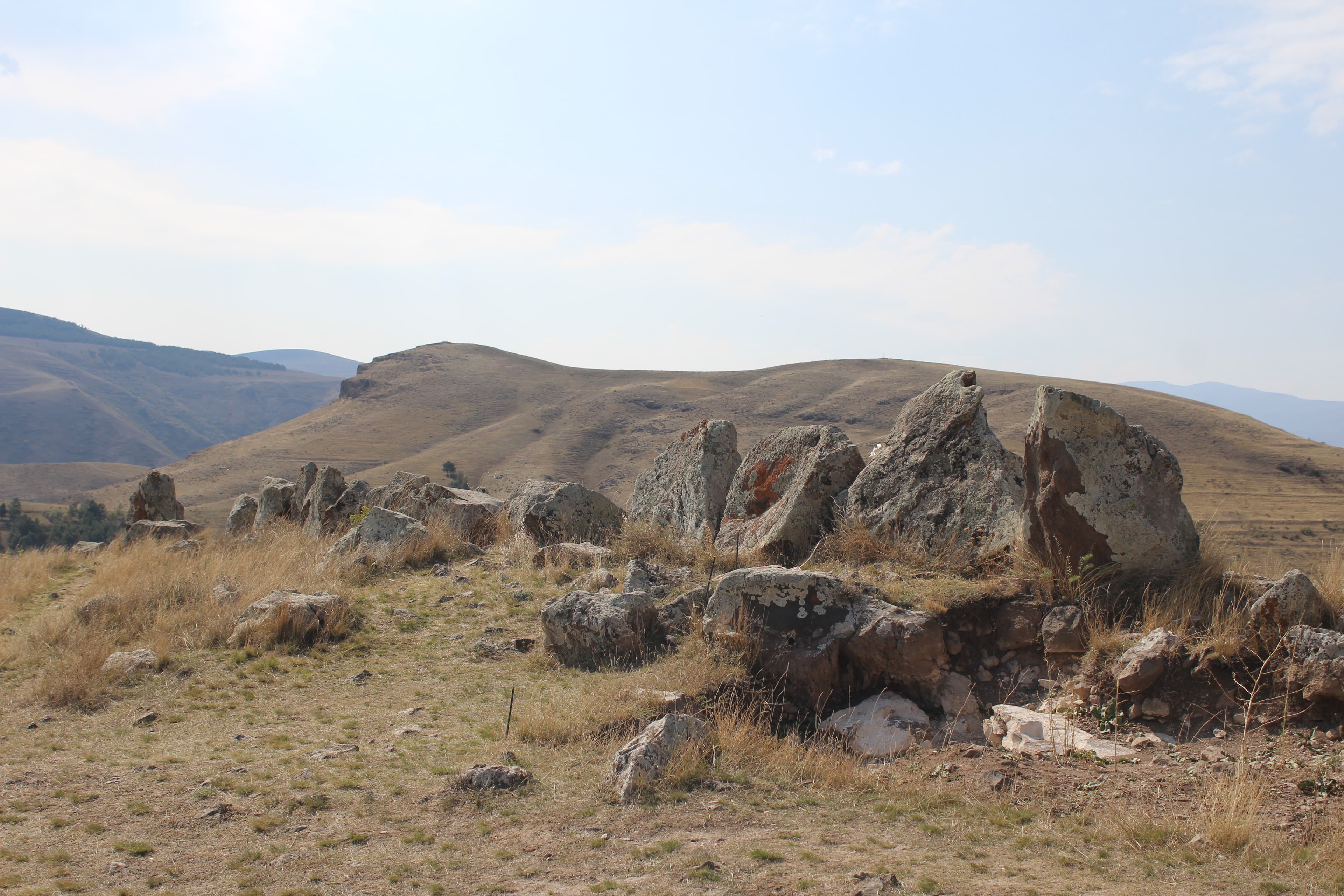
223 upright basalt stones run across a windswept plateau, some eighty of them pierced with carefully bored holes that seem to aim at points in the sky. Some researchers held Karahunj to be one of the oldest astronomical observatories on earth — others a Bronze Age necropolis. The truth remains in shadow, and that is precisely what makes the place so mystical.
Zorats Karer spreads across an exposed plateau just outside Sisian, at 1,770 metres in the Syunik highlands — a field of rough basalt blocks set upright in the ground and scattered over roughly seven hectares of open upland. Some stand taller than a person; the largest weigh close to ten tonnes. You do not see it from a path or behind a rope: the whole field is open, and you walk in among the stones themselves. It is old — the dating runs from the Middle Bronze Age into the Iron Age — and it has never given up a clear account of itself. That combination, great age and genuine mystery, is what the visit is built on.
Offroad & access
Off-road factor 1 of 5: Zorats Karer is the quiet, cultural counterpoint on a wilder route through Syunik — no driving adventure, a place to stand still. We bring you up onto the wind-open plateau at 1,770 metres; the approach is paved, and a short, level path leads out across the field. The real pull is that the whole megalith field is open and unfenced, and you stand in the middle of two hundred upright blocks while the wind runs cold over the stones.
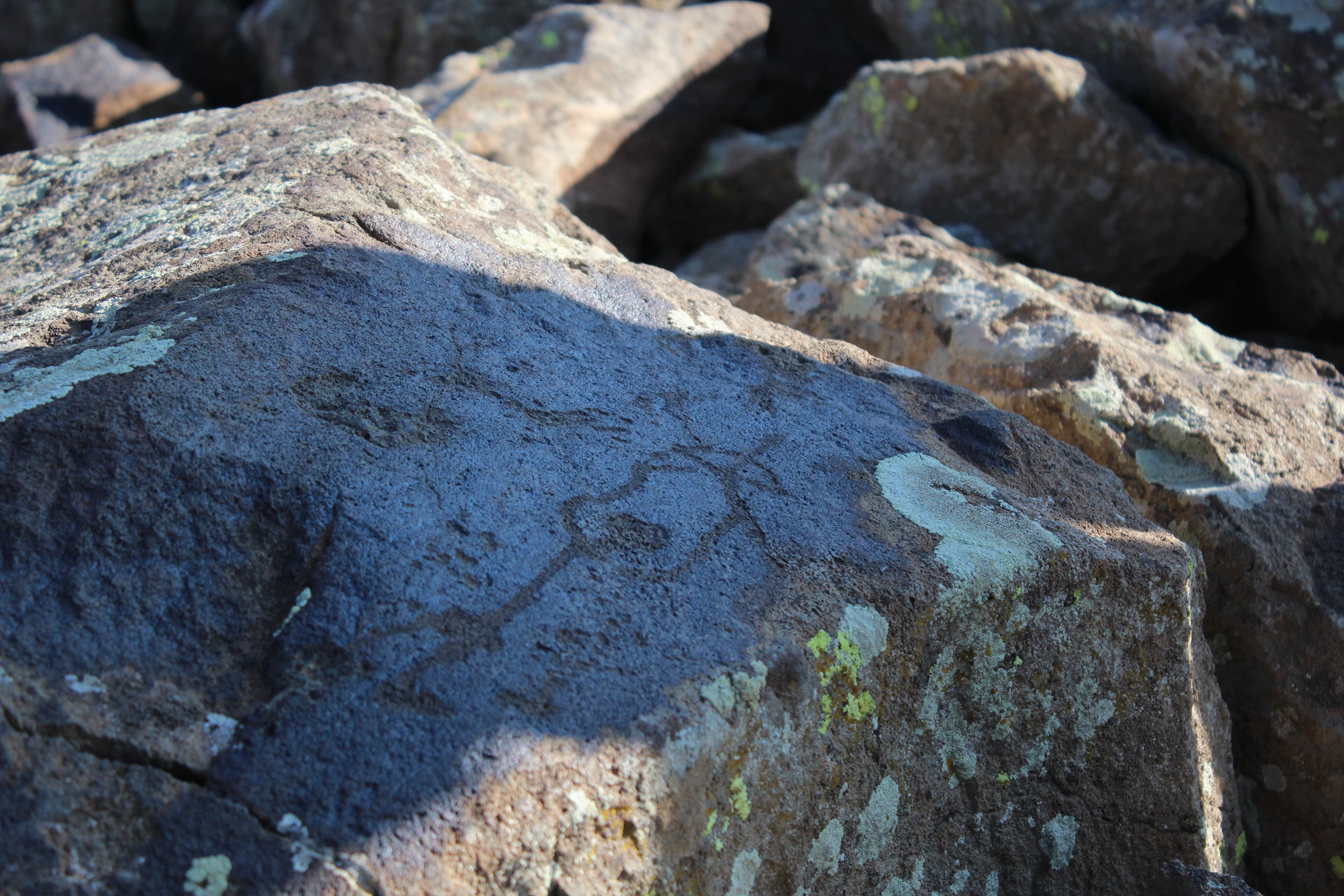
Over 200 basalt blocks stand across roughly seven hectares of plateau; the tallest reach about three metres and weigh close to ten tonnes. Around 80 of them are drilled with round holes, carefully bored just below the top edge — the detail that has fuelled every theory about the place.
Two hundred upright stones, eighty drilled holes — and still no agreed answer to what they were for.
The field dates from the Middle Bronze Age into the Iron Age, and sits at 1,770 metres near Sisian. It is open year-round in principle, but the practical season runs April to November; in winter the highland is exposed and often under snow. Nothing here is reconstructed or roped off — what you see is what has stood on this ground for three to four thousand years.
Two serious accounts of the place sit side by side, and they do not agree. In 2000, a team of archaeologists from Munich surveyed the site and read it as a necropolis: they identified stone cist graves in the ground and dated the complex from the Bronze Age into the Iron Age, making it, in their reading, a burial field rather than anything astronomical.
The rival claim is older and louder. The radiophysicist Paris Herouni argued that Carahunge is one of the oldest observatories in the world, its bored stones aligned to the sun and stars — the reading that gave the site its fame and its "Armenian Stonehenge" nickname. Mainstream scholarship treats Herouni's case as unproven: the alignments he saw have not held up as evidence, and no one has demonstrated a systematic astronomy in the stones. What survives the dispute is the honest gap — a monument clearly deliberate, clearly old, and still not firmly explained.
The tradition here lives in the names. In folk usage "Zorats Karer" is read as "the stones of the warriors" — a field of standing soldiers turned to stone, or a place where warriors were mustered or buried. The other name, "Carahunge", is built from the Armenian words for "stone" and "sound", and is usually rendered "the speaking stones."
That second name comes with its own explanation. When the wind runs hard across the plateau — which is most of the time — it passes through the bored holes in the blocks and draws a low whistling out of them, as if the field were talking to itself. Whether the place was named for that sound or the sound was heard to fit the name, the effect is real enough: on a windy day the stones do murmur. It is the kind of detail that keeps a site in folklore long after the archaeology has moved on.
On our routes through the south, Zorats Karer is the stop where the driving stops mattering. It is not a hard place to reach or a hard place to walk — the point of it is standing still. You are out on open upland among stones that people raised three to four thousand years ago, with nothing between you and them: no fence, no walkway, no ticket booth staged in front of the view. You can put your hand on a block that has stood here since before the alphabet.
And you leave without an answer, which is rarer than it sounds. Most monuments come pre-explained; this one refuses. We set your visit for early morning or late evening, when the light rakes low across the field and the crowds — such as they are — have thinned to almost no one. What you take away is not a fact but a mood: an old, deliberate, unexplained place, and the plateau quiet around it.
Zorats Karer is one of the easiest sites in Syunik to reach: the access road off the Sisian highway is paved right up to the field, and from the parking area a short, level path leads out across the plateau — no terrain, no climb, manageable for anyone on foot. The field is open and unfenced, so you can walk freely among the stones; keep to the worn paths where you can, since the ground itself holds archaeology. Best season is April to November. At 1,770 metres the plateau is fully exposed and the wind is near-constant, so bring a layer even in summer, and expect snow and hard cold in winter. For the best light and the fewest people, come early in the morning or in the last hour before dark.
near Sisian, SyunikNature
SyunikMonastery
SyunikArchaeology
Want to stand among the upright stones of Zorats Karer and have the theories laid out on the spot? Armenia Expeditions brings you straight up to the plateau near Sisian and times your visit for the quietest hour of the day. One message — we’ll plan the rest.