Explorer
The Legends Route
6 days
3,300 m
Upper Azat valley — Geghard hides at the head of a gorge you see neither from the road nor from the air: a medieval church standing free in the open, and behind it a second monastery driven straight into the cliff by the princes who ruled this valley.
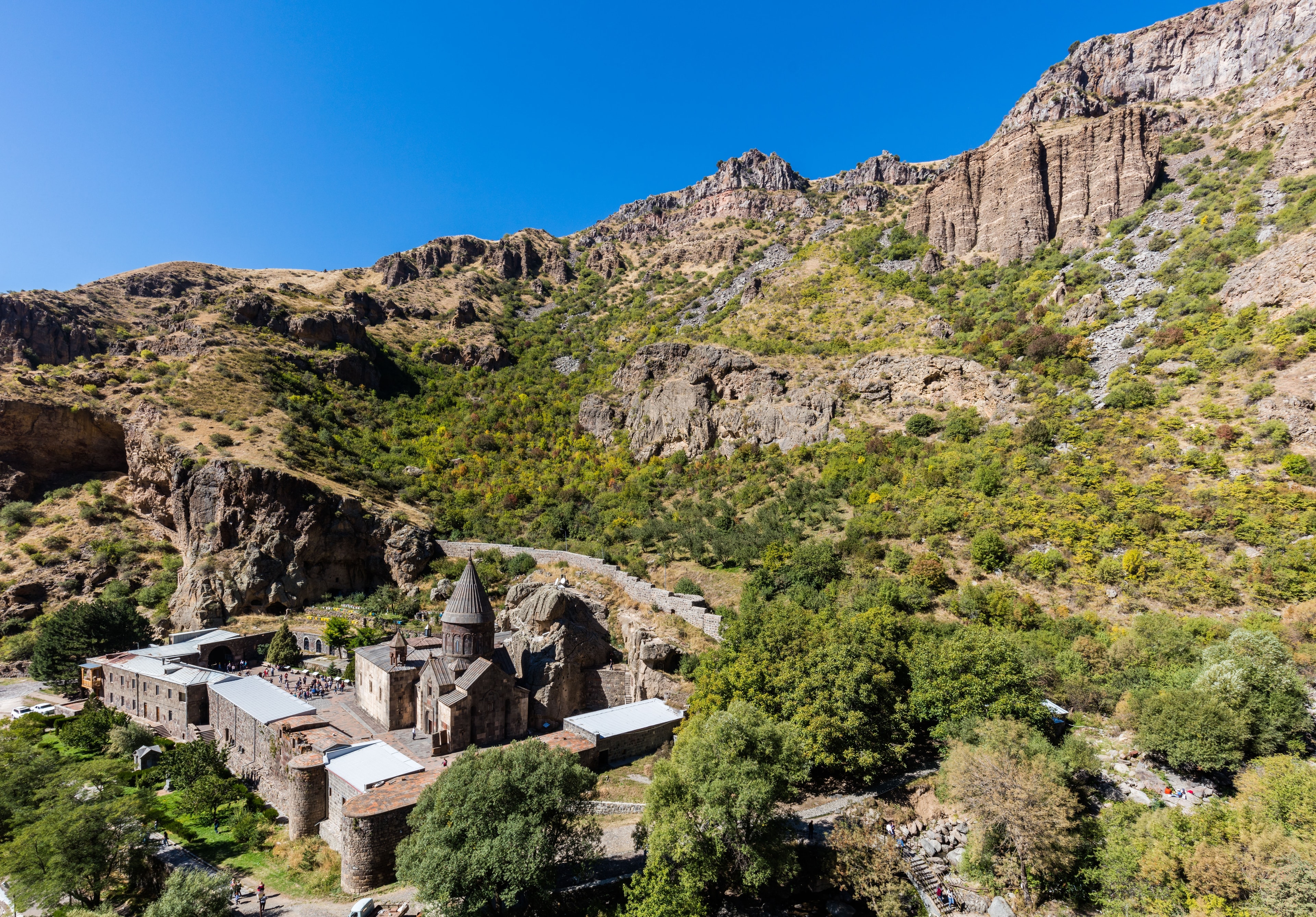
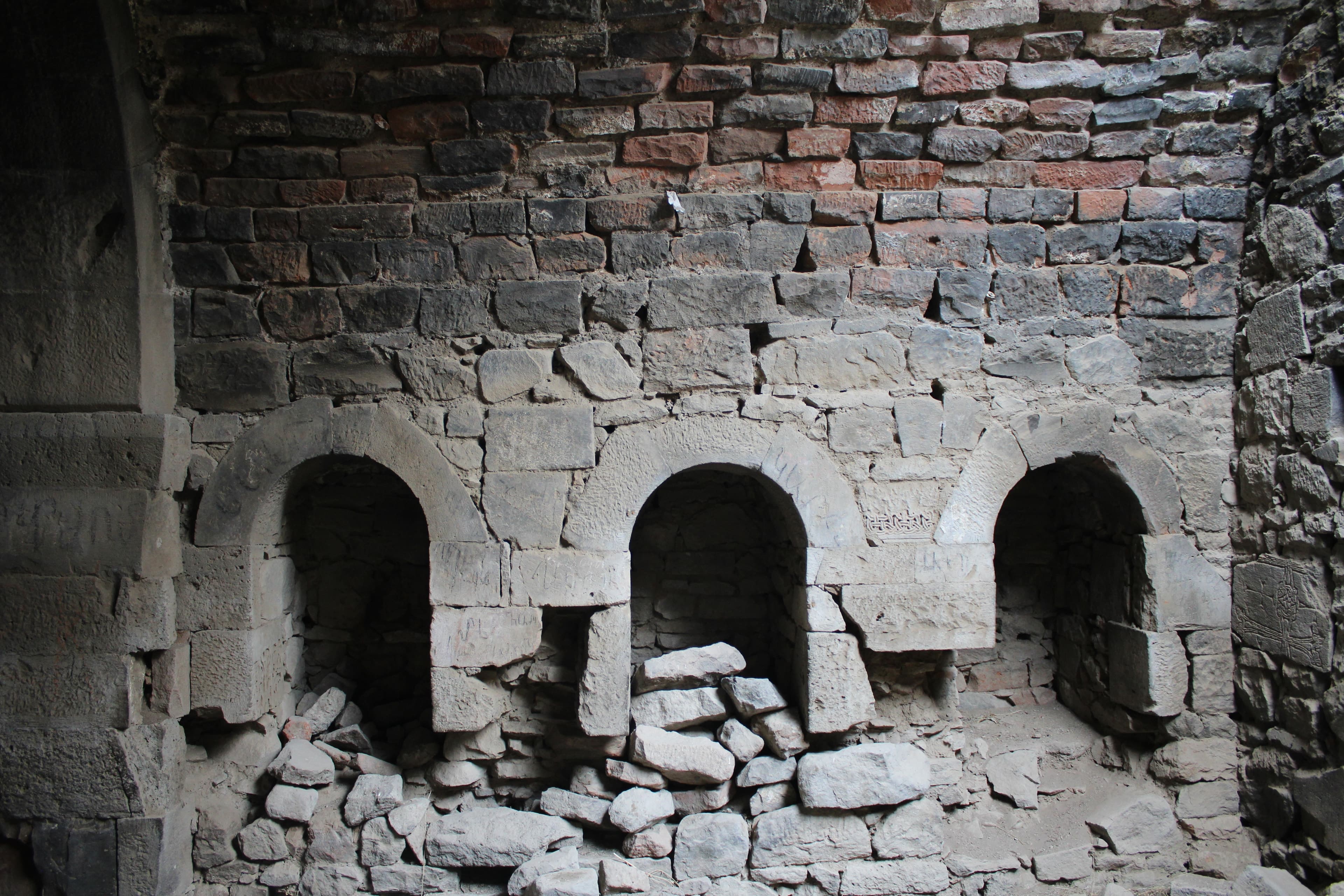
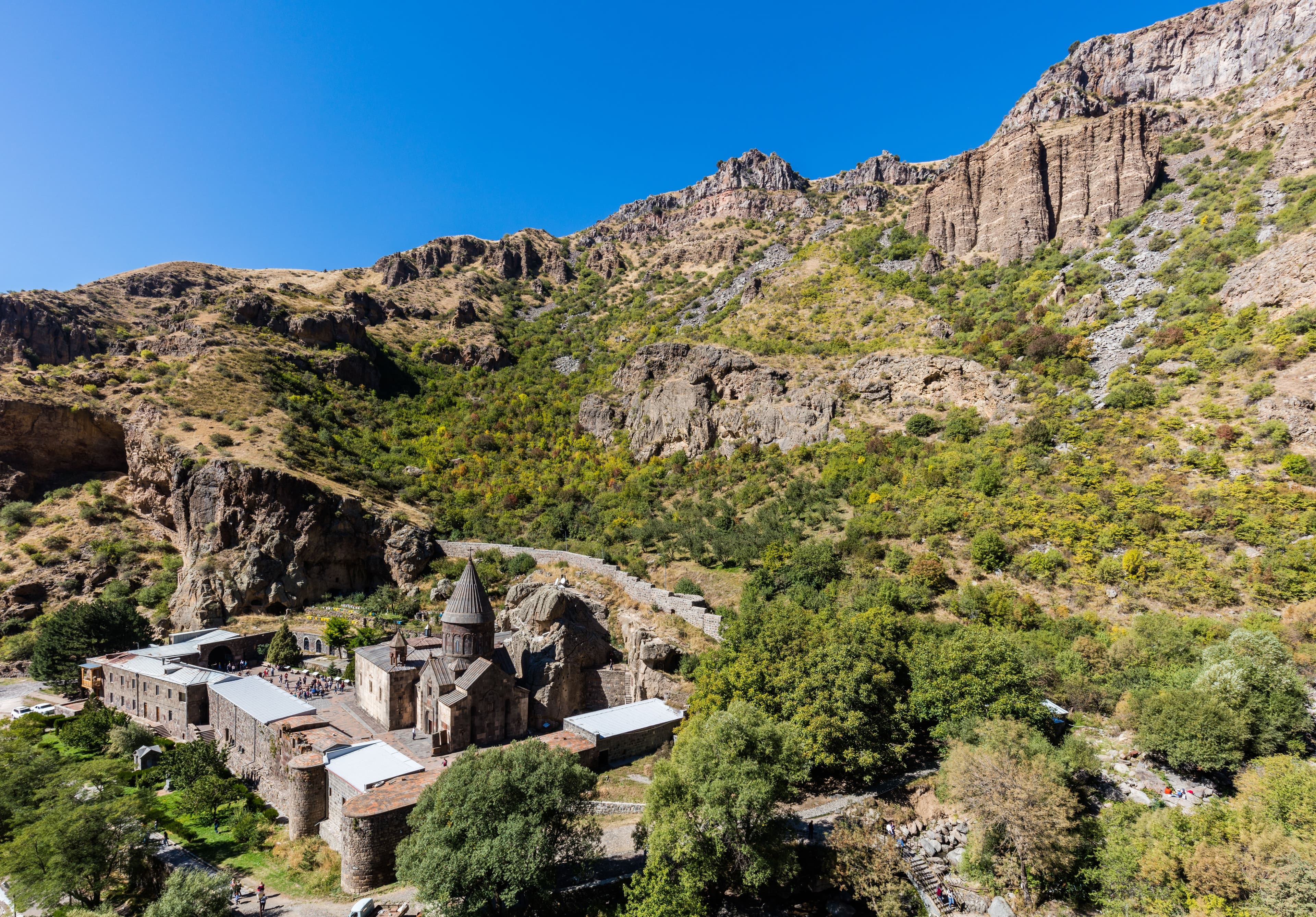
Parts of Geghard are chiselled straight from the surrounding rock — chapels, columns and tombs in which a single note echoes for long seconds. The monastery once held the "Holy Lance" said to have wounded Christ. Founded in the 4th century at a sacred spring, it is today a UNESCO World Heritage Site.
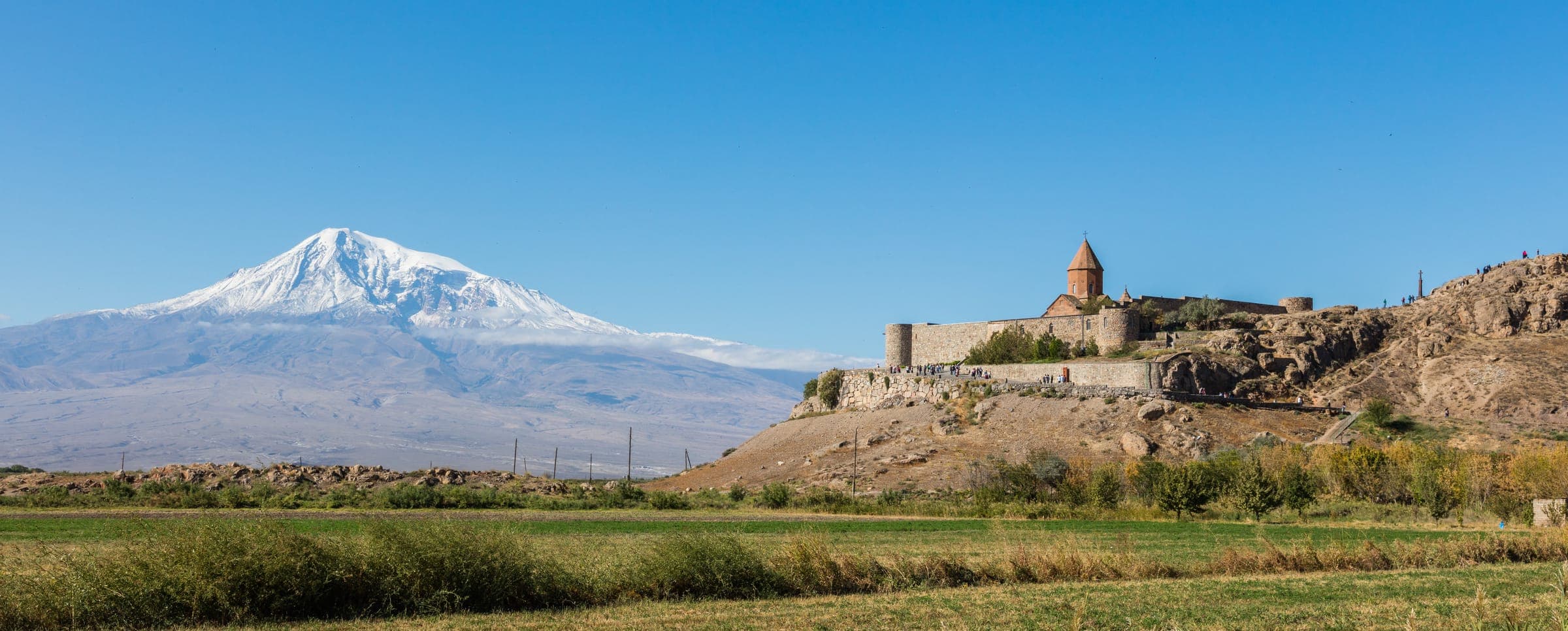
Geghard stands where the upper Azat valley narrows to a slot between sheer basalt walls, about forty minutes east of Yerevan. From the car park a short walk leads into a walled courtyard, and ahead rises the main church, Katoghike — free-standing, four-square, ordinary enough at first glance. Then you notice the doorways in its back wall, and the rooms that carry on into the mountain behind it: a vestibule, side chapels, a princely burial hall. The site is small in footprint but deep in section, running from open daylight at the front to chambers with the living cliff for a ceiling, and the gorge closes in on every side.
Offroad & access
Geghard is no driving adventure — the approach from Goght is paved, off-road factor 1 of 5, any car makes it. On your expedition it's the cultural pause between the wilder stages: we bring you in a small group into the gorge basin and take time for the cool, rock-cut chambers behind it.
Geghard sits at about 1,800 metres in the upper Azat valley of Kotayk province, ringed by vertical basalt cliffs at the head of the gorge. Tradition dates its founding to the 4th century, when Gregory the Illuminator is said to have established a monastery at a spring inside a cave — the origin of its first name, Ayrivank, 'the cave monastery.' The present main church, Katoghike, was built in 1215. From the mid-13th century the princely Proshian family cut a series of chapels and burial chambers directly into the rock behind it; their carved crest, an eagle gripping a lamb, survives in high relief above one of the halls. In 2000 Geghard, together with the upper Azat valley, was inscribed on the UNESCO World Heritage list.
The monastery owes its lasting name to a relic. Geghardavank means 'Monastery of the Holy Lance,' after the spear said to have pierced Christ's side at the crucifixion, which by tradition the Apostle Thaddaeus carried to Armenia; for centuries it was kept here before it moved to the treasury at Etchmiadzin, where it remains.
A monastery that took its name from the blade said to have wounded Christ.
The earlier name, Ayrivank, points back to the cave church of the 4th century, but almost nothing of that first foundation survives — Arab raids in the 9th and 10th centuries destroyed it. What you see is largely the work of the 12th and 13th centuries, when the Zakarian and then the Proshian princes rebuilt and extended the monastery. A severe earthquake in 1679 shook the complex, which was repaired rather than remade.
One tradition explains the site by a sign. Two brothers — in another telling, a pair of monks — could not agree where to raise the sanctuary, and left the choice to heaven: they threw a pick, swearing to build wherever it fell. In the morning it lay on the narrow rock ledge at the tightest point of the gorge, and there, against all convenience, they began to cut the church into the cliff. The story is a folk explanation for a hard, improbable location rather than a documented event. What is no legend is the sound: sing a single note in the domed upper gavit and it hangs in the air for long seconds, a reverberation the carved rooms hold on their own — and on our visits we let you hear it.
In the tightest of spaces Geghard sets side by side things that rarely meet: a free-standing 13th-century church, burial halls hewn out of the rock behind it, an Islamic-influenced muqarnas vault carved inside an Armenian sanctuary, and one of the densest gatherings of khachkars in the country, cut into the walls and into free-standing stones alike. Because so much of it is underground and close-quarters, it rewards slow looking rather than a quick lap of the courtyard. We come in a small group and take our time in the cool chambers behind the main church — the Proshian tombs, the carved crest, the upper gavit — rather than filing through with the coach crowds. It is the cultural pause on the expedition between the wilder stages, and it holds up to as much attention as you bring to it.
The approach from Goght is fully paved, off-road factor 1 of 5, so any car reaches the monastery; the only seasonal catch is winter snow or ice on the access road. Geghard sits at about 1,800 metres and is open year-round. The interest is all on foot and takes little effort — a level walk from the car park into the courtyard, then the rooms cut into the rock behind the main church, where the air stays cool even in high summer. Floors are worn and uneven and the rear chambers are dim, so tread carefully. It rewards an unhurried visit over a quick look, and is quieter early or late, before or after the day groups.
AraratMonastery
Garni gorge, KotaykNature
KotaykFortress
Armenia Expeditions brings you to Geghard in a small group — with time for the Proshian burial chambers and the acoustics of the upper Jhamatun. One message — we’ll plan the rest.