Gravel
Garni gorge, KotaykNature
Garni gorge, Kotayk — On foot down to the basalt organ pipes, up to temple and cave monastery
from$171per person, based on 5 guests
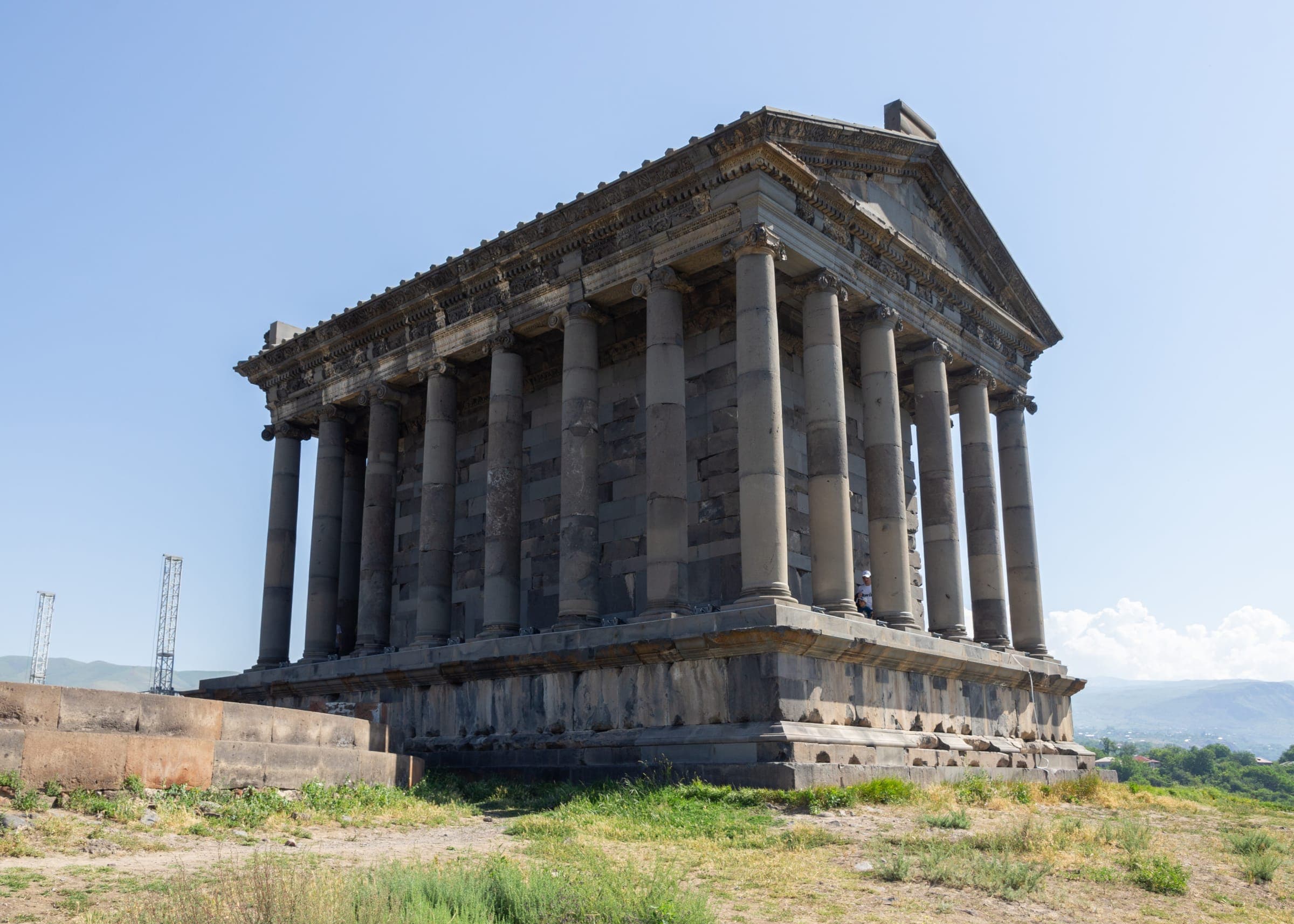
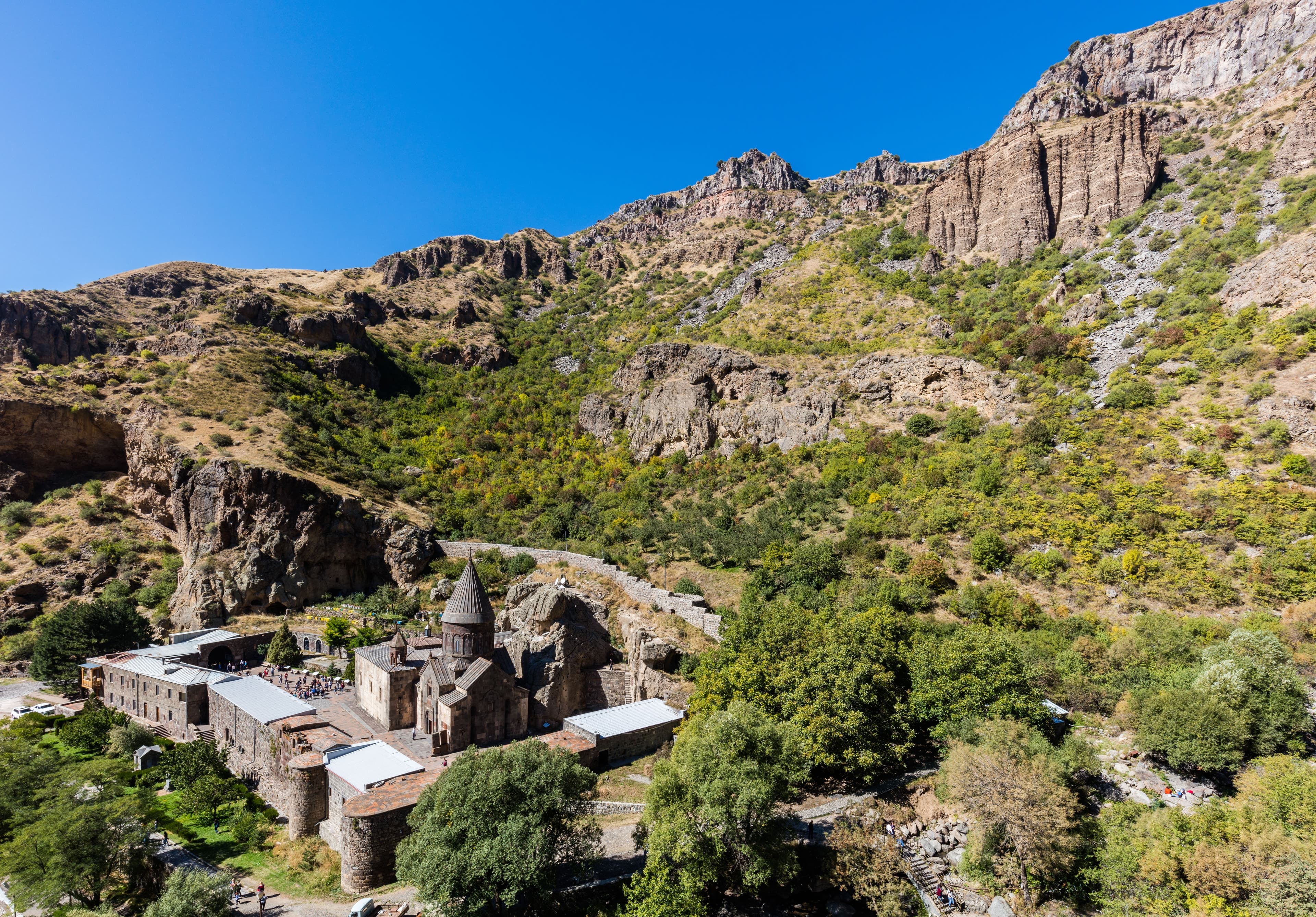
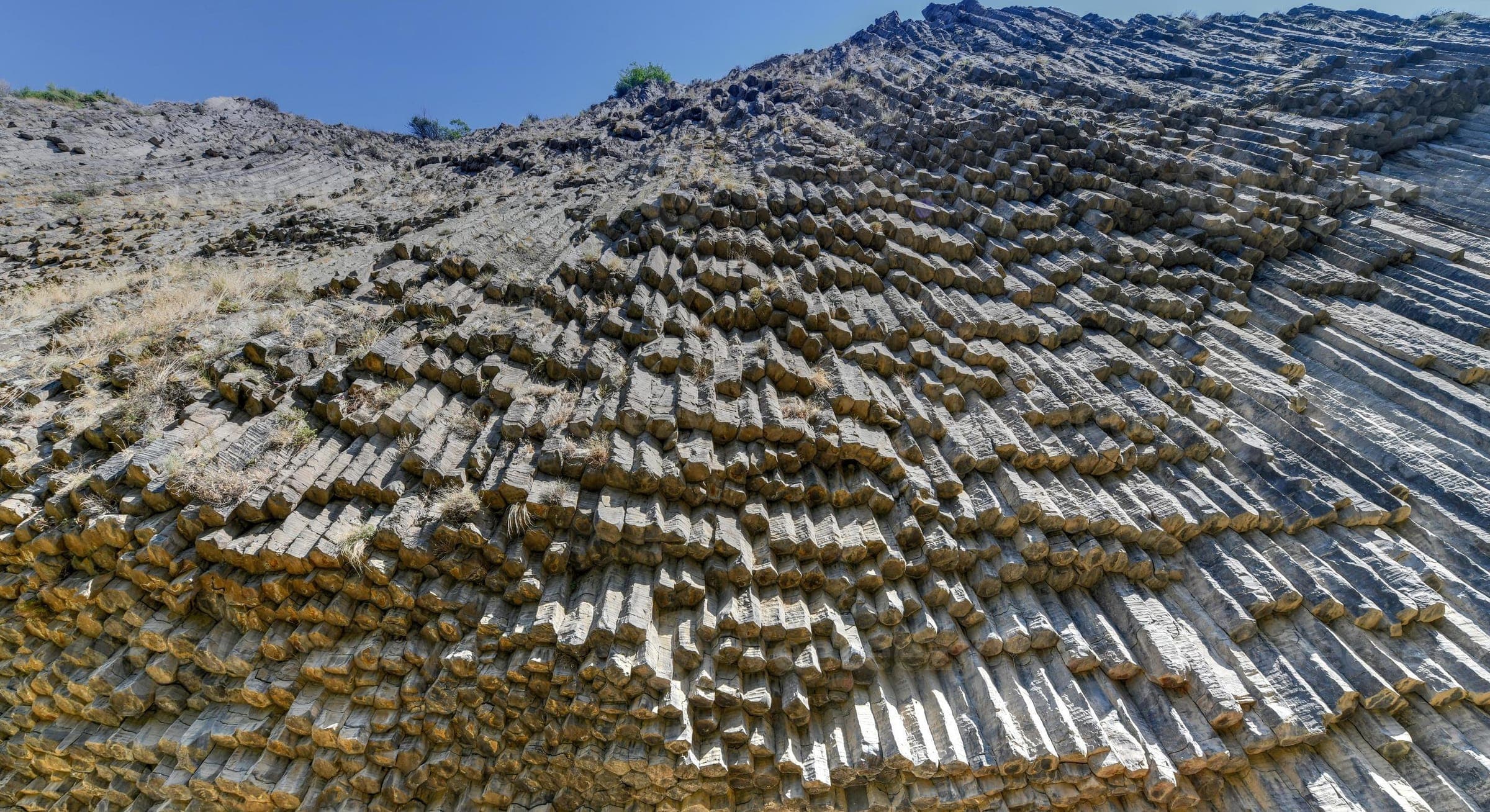
A hiking day for lovers of geology and history: we start at the pagan temple of Garni, perched high on its rock spur above the gorge, then walk down on foot to the Azat river. There the “Symphony of Stones” opens up — a wall of thousands of hexagonal basalt columns up to 50 metres tall, lined up like the pipes of a giant organ. Back on the plateau, the road continues to Geghard Monastery, founded in the 4th century at a sacred spring and partly hewn straight from the rock — a UNESCO World Heritage Site. A day of hiking boots, rock and faith, entirely unhurried.
The day’s loop measures ninety kilometres, and a good two hours of it are spent in the vehicle. Everything else belongs to your legs — which is why the day sits at difficulty 2 out of 5 although not a metre of it is hard terrain. The H-3 leaves Yerevan at around 990 metres, runs twenty-eight sealed kilometres east and stops, for now, on the rock plateau that carries Garni Temple and Fortress, some 1,400 metres up. Below the rim lies the Azat. Down there is where the day really goes.
The path starts behind the temple: roughly two kilometres to the river, with a hundred to a hundred and seventy metres of height between plateau and valley floor, depending on which recording you follow. Reckon on half an hour going down; the full round with the way back is logged at four to six kilometres and just under two hours of walking. This is no alpine route. A good half of it follows a dirt road, the rest is a narrow path over loose stone, a few metres of it briefly steep. At the bottom an old single-arched bridge crosses the water, and behind it the wall of the Symphony of Stones hangs above the river.
None of this has to be done on foot, and that is exactly where the day makes its choice. An access road runs into the same gorge from the village: one to two kilometres of gravel once the asphalt ends. After a day of rain the clay softens and pulls the wheels into the ruts that are already there — you steer early and steadily then, rather than correcting after the fact; dry, the stretch is barely worth a mention. Our vehicles take it slowly, because the line is too narrow for two abreast, and then stand down by the river. Walk instead and you hear the engine twice, briefly, and after that only the water. The day asks for no more driving technique than that: no low range, no lowered tyre pressure, and there is no ford on this route. We walk because the way into the gorge is the substance of this day, not a stand-in for a drive that does not exist.
After the climb the day returns to the vehicle. The road stays sealed and follows the Azat further upstream: ten kilometres, ending four hundred metres above the temple plateau, and there stands Geghard Monastery at 1,800 metres, the highest point of the day. There is climbing here too, but on steps and into chambers you can only enter on foot. In the evening the vehicle rolls back to the city in about fifty minutes. At most eight guests travel, and the page on the fleet shows which vehicle is ready for the day. The season runs from April to November.
From Yerevan to the pagan temple of Garni, then on foot down into the gorge to the Symphony of Stones — giant hexagonal basalt columns above the Azat river. Back past the temple and on to the rock-hewn Geghard Monastery.
The driving comes in short pieces: twenty-eight kilometres out of Yerevan onto the plateau of Garni, the access road down into the gorge and back up, ten kilometres upstream to Geghard, and about fifty minutes back in the evening — ninety kilometres in all, a good two hours at the wheel. The morning belongs to the path: down from the temple to the Azat, time at the basalt wall, the same line back up again. That access road stays drivable and is driven; we walk because the descent is the point of this day. The afternoon belongs to the bowl at 1,800 metres: cool chambers, steps instead of a slope.
90 km · Driving time 2 h · Elevation 990 → 990 m · highest point 1,800 m
Garni gorge, KotaykNature
KotaykFortress
Upper Azat valleyMonastery
Packing list
Questions about this tour
Because the walking is the programme. The access road exists, it runs one to two kilometres, and our vehicles do take it: down by the river the car waits with water, jackets and whatever chafes in a pack. But that amounts to twenty minutes of driving, there and back together. On foot the same stretch becomes the hours this day is built around, and in between lies the gorge itself: the river, the old bridge, the look back up at the temple rim. From the passenger seat you get least of it. The vehicle is down there in any case — as somewhere to leave water and jackets, not as a short cut.
It is the only part of the day that asks for any fitness. Going up it is the same two kilometres or so and the same hundred to a hundred and seventy metres of height as coming down, only reversed; recordings of the whole round add up to two hundred or even three hundred and forty metres of climb, because the path rises and falls more than once. Anyone who walks regularly manages it untrained. What makes the difference is not the gradient but the hour: in July and August the midday sun burns straight into the gorge, so we put the descent early. In April or October the same climb is a pleasant hour. Short pauses in the shade of the wall cost the day’s plan nothing.
Because the limit is set by the path, not by the road. Temple and monastery are open all year, and the road out there is sealed from end to end and driven in winter too; on the last climb ice is then the worst of it. The path is another matter: little sun reaches between those walls, wet and ice hold there longer than up top, and a descent over frozen loose stone has nothing to do with a stroll. That is why the fact box says April to November. If you want to see Garni and Geghard in January, both are still within reach — only from above rather than from below.
Fixed dates or your own timing — guided or self-driven. We reply personally.