Geghama Volcanic Ridge Offroad
1 day
3,597 m
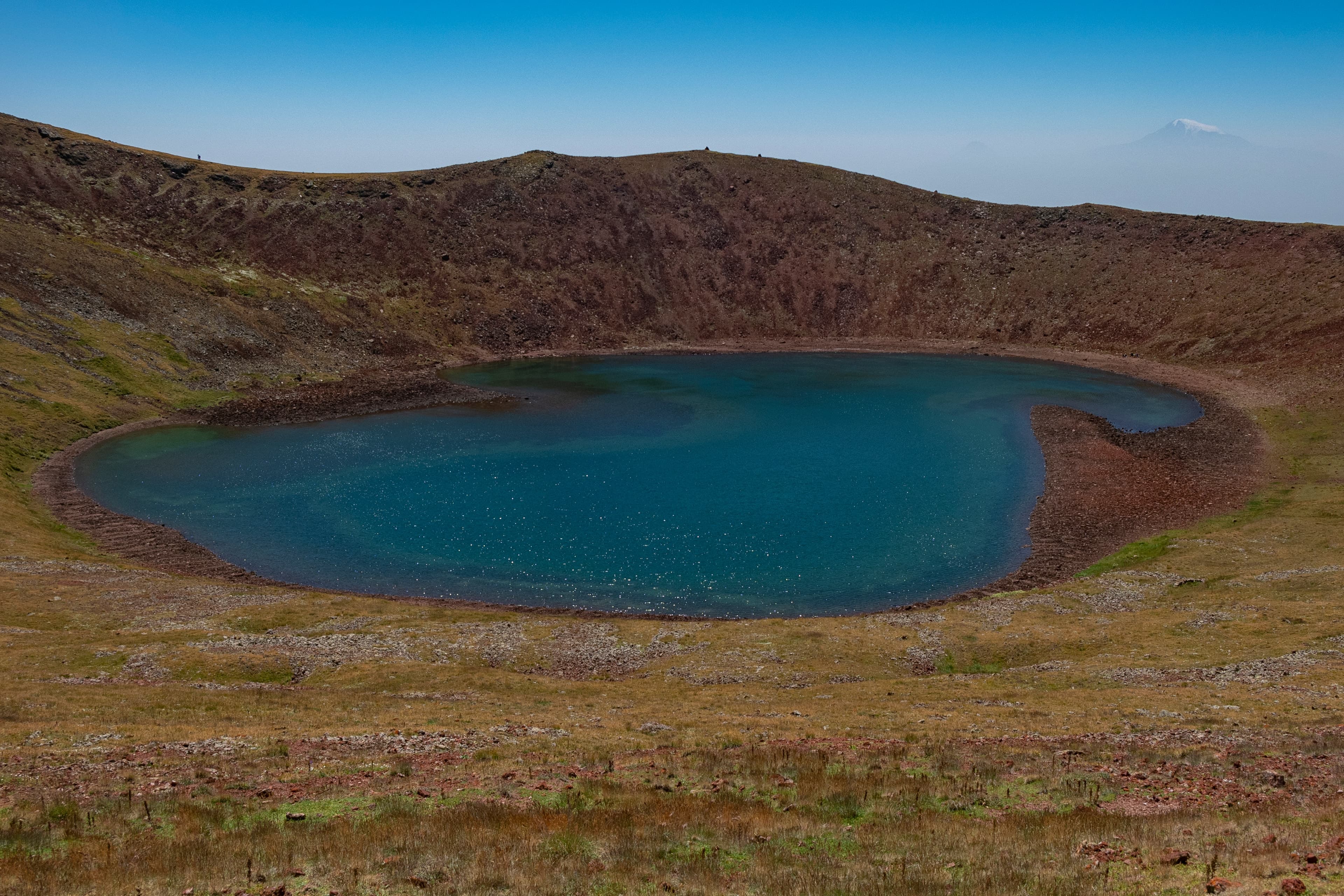
Gegharkunik — At 3,597 metres a still lake sits in the crater of an extinct volcano. The summit carries the name of the dragon from Armenian mythology, and the long highland tracks that reach it give the name substance.
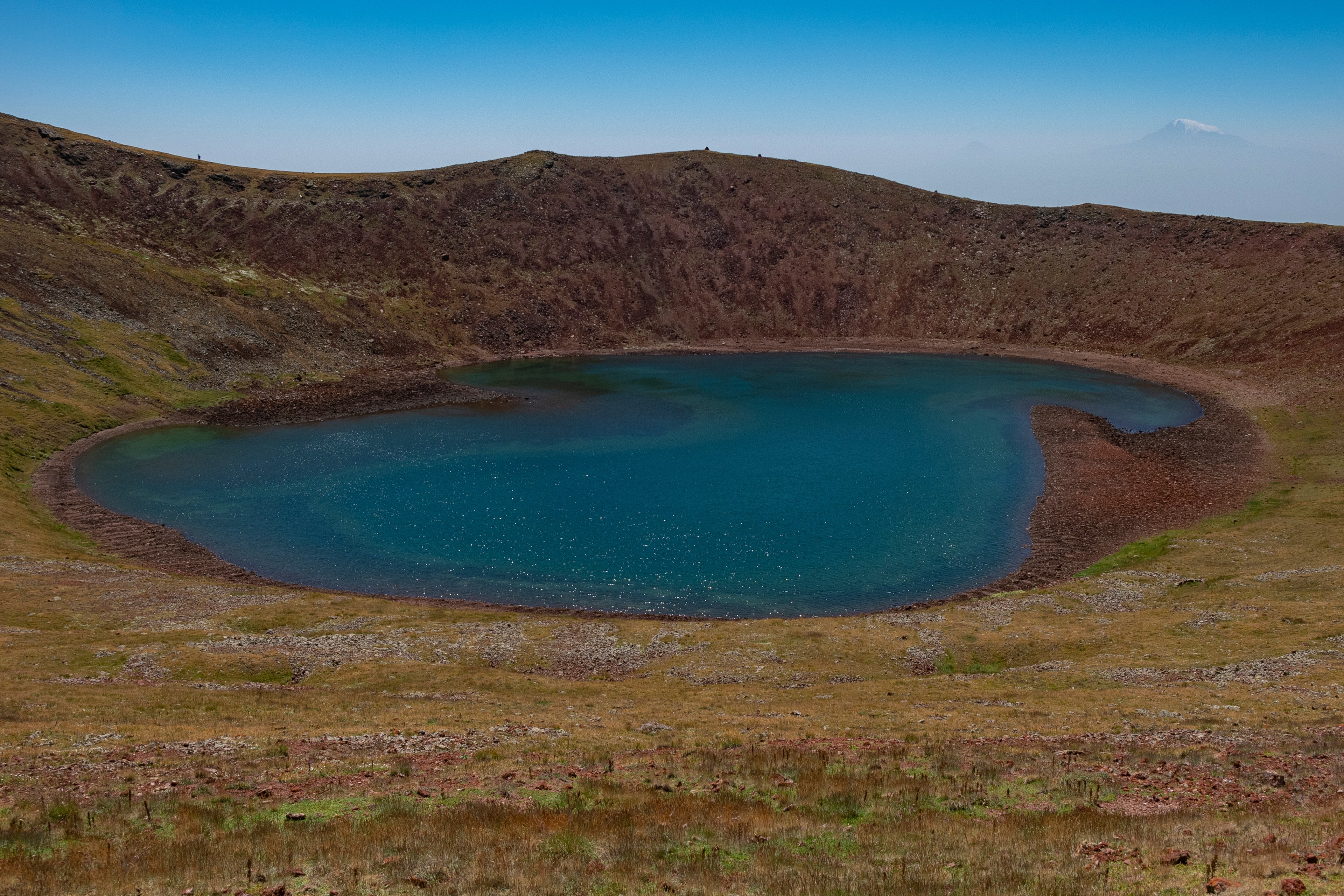
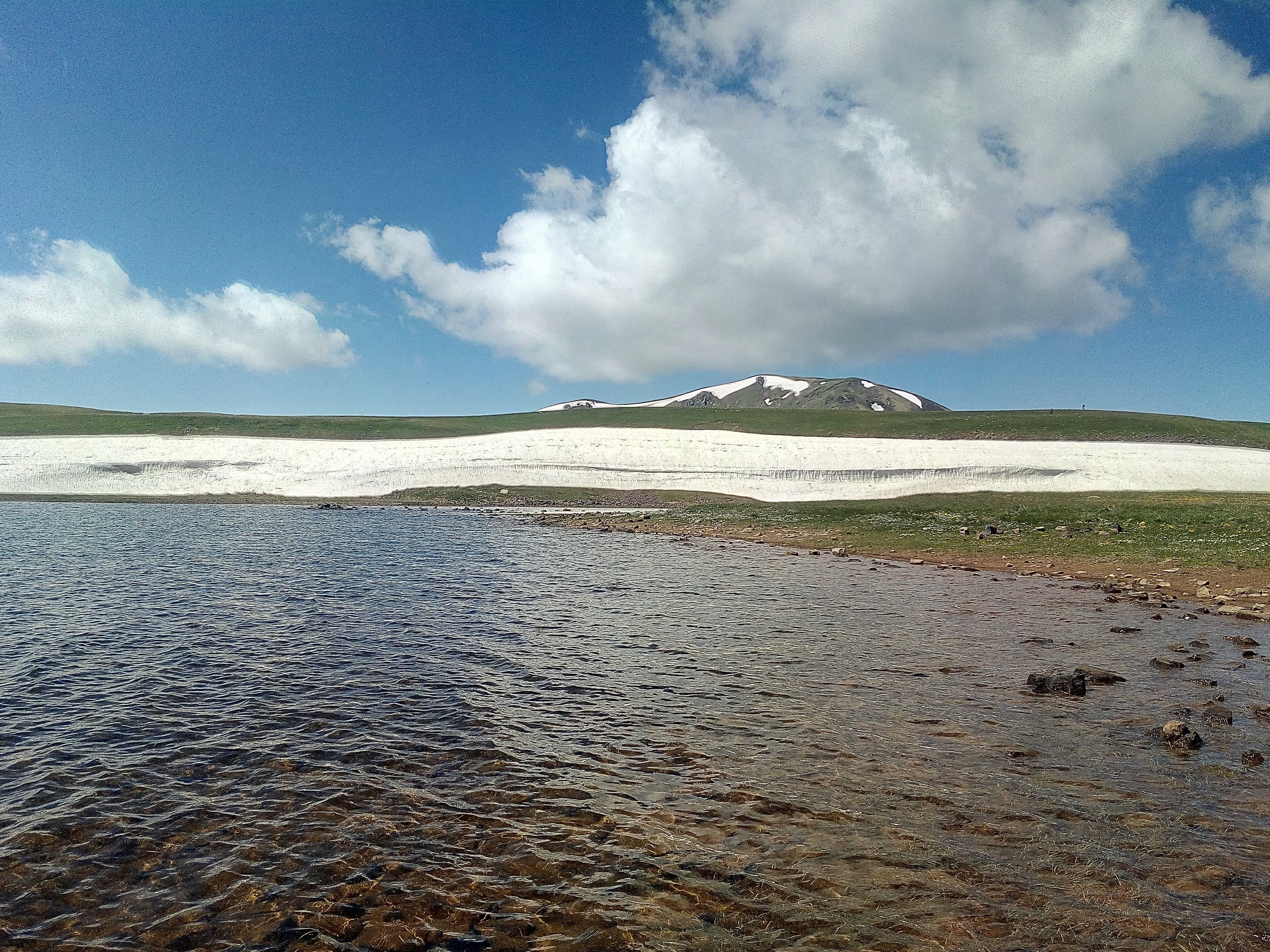
The final climb is on foot: loose volcanic scree, above 3,000 metres, with snow lingering here even in June. Then you stand at 3,597 metres on the rim of an extinct volcano — and deep in the crater lies a lake, still and cold, fed by meltwater. The mountain carries the name of a dragon from old Armenian legend. All around is nothing but the open highland of Gegharkunik and the wind.
From the crater rim the view opens over Lake Sevan to the east and, on a clear day, all the way to Ararat in the southwest.
Offroad & access
From Geghhovit we lead you in convoy up a highland track, over grass, scree and cooled lava fields to more than 3,000 metres, with stream fords that swell with the snowmelt. Factor 4 of 5: our vehicles ride high, run low range and diff locks, and the lead guide carries the recovery gear. The last stretch to the rim is yours on foot — 30 to 60 minutes up a loose scoria slope, until the lake lies deep in the crater below you.
Elevation 3,597 m, the highest point of the Geghama Mountains; last eruption around 1900 BC. In the crater — about 500 m across and 50 m deep — a lake of snowmelt sits year-round. Two Bronze Age Vishapakare (dragon stones) stand right at the shore; over 12,000 petroglyphs are documented across the massif. Off-road factor 4 of 5, best season mid-June to September.
The high pastures of the Geghama Mountains were alive as far back as the Neolithic: petroglyphs on the volcanic slopes show hunts, battles and celestial signs, and the Vishapakare stelae of grey basalt were raised in the second millennium BC. In the 5th century the historian Movses Khorenatsi wrote: "Azhdahak means dragon in our language."
In Khorenatsi's "History of Armenia," Azhdahak is a half-dragon king of the Medes, whom the Armenian king Tigran runs through with a spear in battle. Vishaps — dragon-beings of Armenian mythology — were held to dwell on mountain summits and in deep lakes; a volcano with a crater lake at this altitude does not carry the name by chance.
On your expedition three layers meet here in the tightest of spaces: young volcanic geology, Bronze Age dragon stones at the crater rim, and a name that leads straight into Armenian mythology. The crater lake holds only because a dense cinder cone dams the snowmelt through the summer — an image no other Armenian volcano offers at this altitude. Add golden eagles riding the updraught and Yazidi nomads with their herds in the high pastures.
Snow can lie at the crater until late June, and thunderstorms often build in the afternoon — we set the tour to the right weather window and start early, so you reach the rim with clear views.
GegharkunikLake
Upper Azat valleyMonastery
AraratMonastery
Azhdahak doesn't open up with standard vehicles or without local knowledge. Armenia Expeditions plans the approach, the vehicle logistics and the right time of day for you — so you reach the crater rim with a full view of Lake Sevan. One message — we’ll plan the rest.