Explorer
The Legends Route
6 days
3,300 m
Book two days. One rarely survives this weather.
At a glance
Every route is put together differently — we work out the price once you ask.
Fitness
Good fitness and confident deep-snow skiing; long descents without rescue infrastructure do not forgive exhaustion.
Why these months
From April to December we advise against it: without a closed snowpack there is nothing up there to ride.
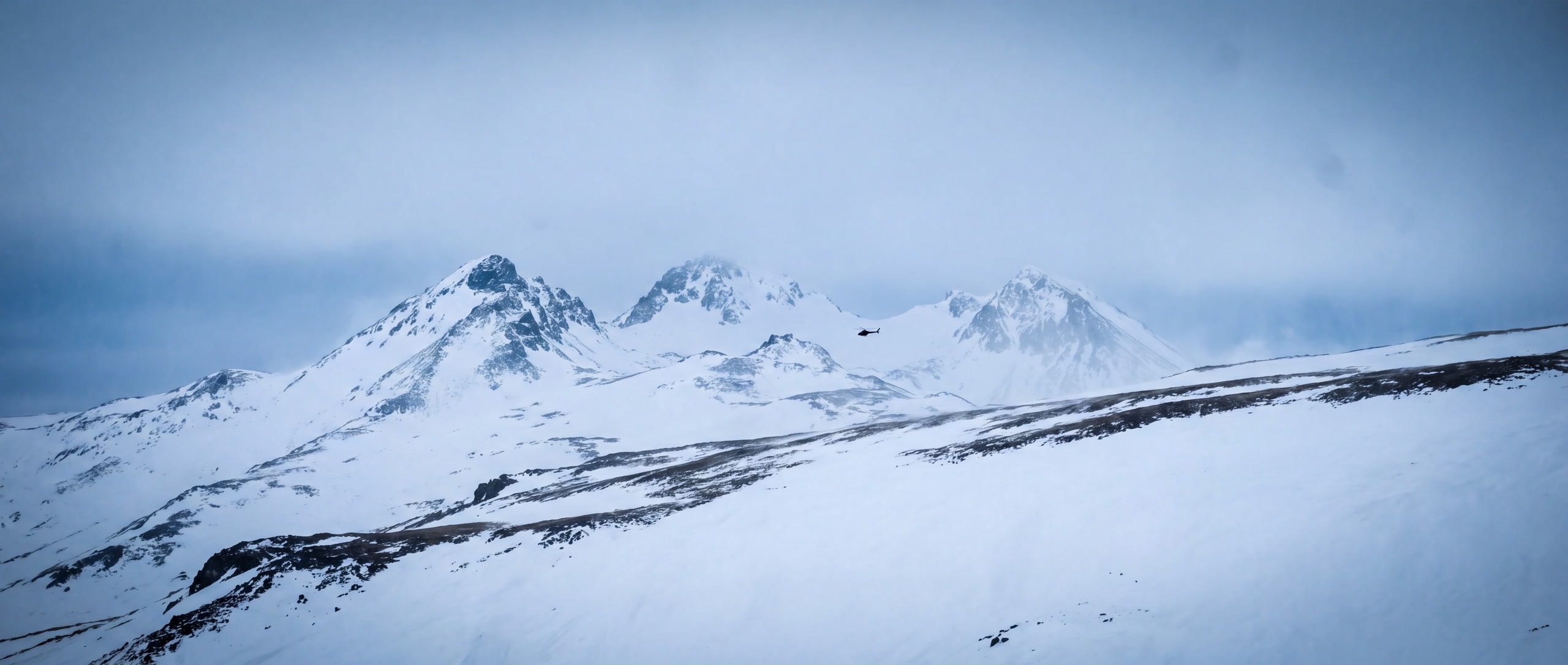
The helicopter touches down, you climb out crouched, take your pack and walk away sideways from the rotor. Then the machine lifts, the noise moves off, and what is left is a slope with no track on it and the realisation that nobody is up here but your group.
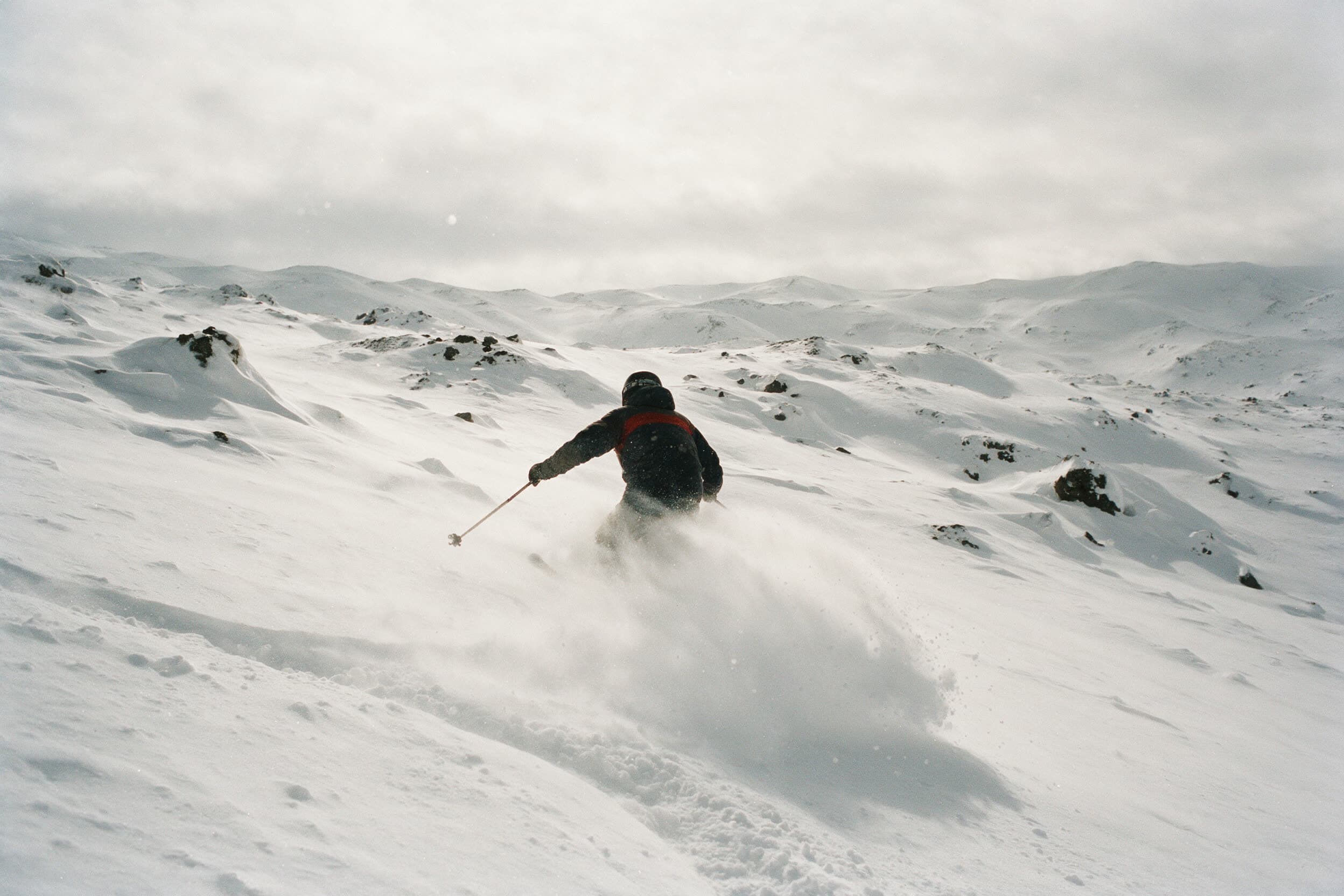
The flying is on the slopes of Aragats, Ara and Azhdahak. The nearest rescue service is hours away, and the last track in the snow belongs to nobody. What is left is terrain that asks you nothing.
How many descents a day yields hangs on daylight, refuelling stops and visibility. On a good day there are several; on another it stays at one, because a cloud layer sits over the ridge and leaves no contours at all. A pilot needs reference points in the snow, and without shadow there are none. Booking two days is therefore the more sensible plan than booking one.
The assumption is that you ski or ride off-piste safely — in every kind of snow, including the kind that goes hard in the shade in the afternoon. This is the point where most enquirers overestimate themselves, and it is exactly what we ask about beforehand.
Before the first flight comes the assessment: forecast, how the snowpack is built, what has happened on the slopes over the past days. If it comes out badly there is no flying, and a long journey to get here changes nothing about that.
Descents are made one at a time. One after another, watching whoever is skiing, regrouping to the side of the slope and never below the line of the person ahead. So between two runs you stand around longer than you would in a ski area.
By evening you no longer know how many vertical metres it was. You will remember the moment after stepping out, when the rotor noise moves away and you notice for the first time how quiet this mountain is.
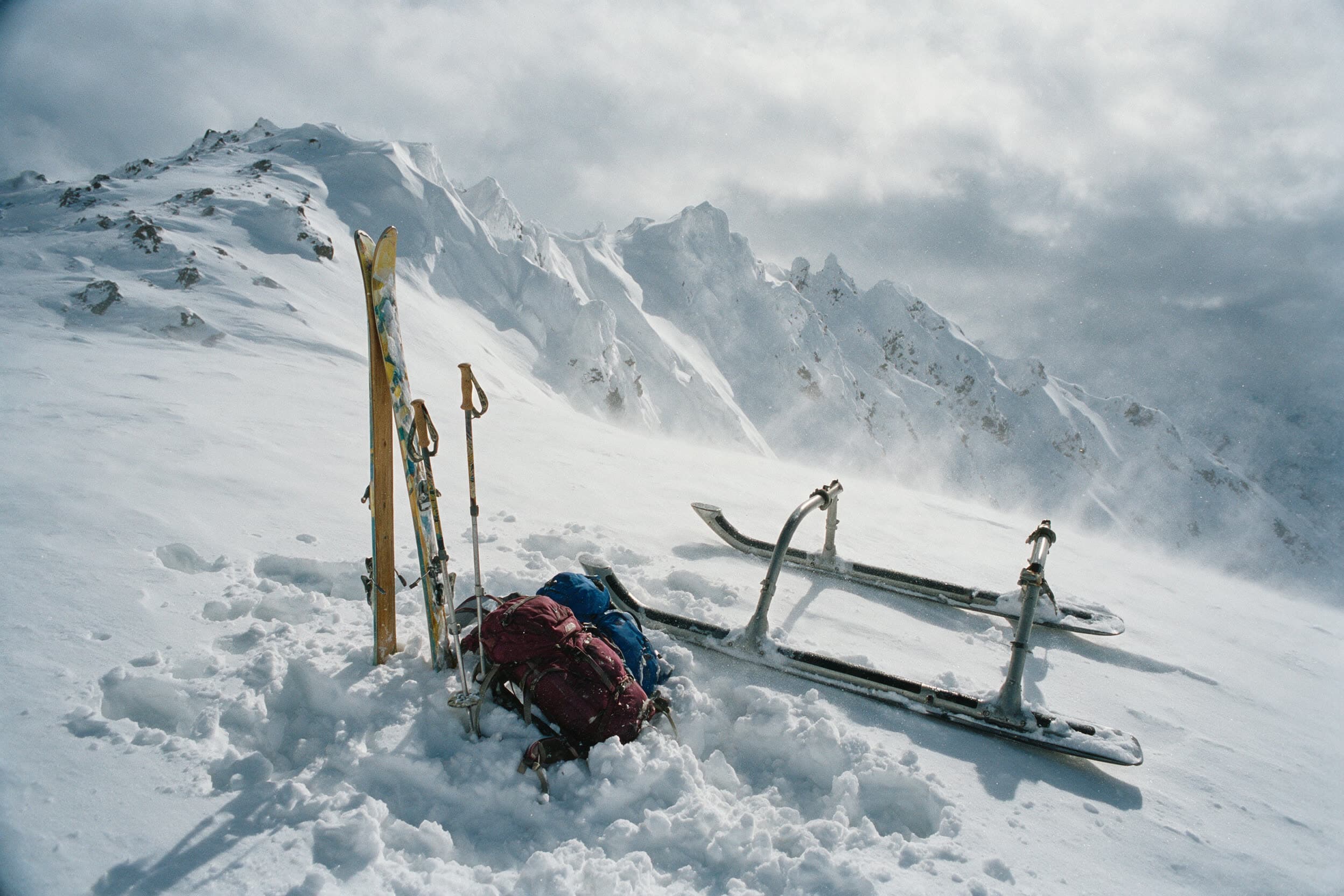
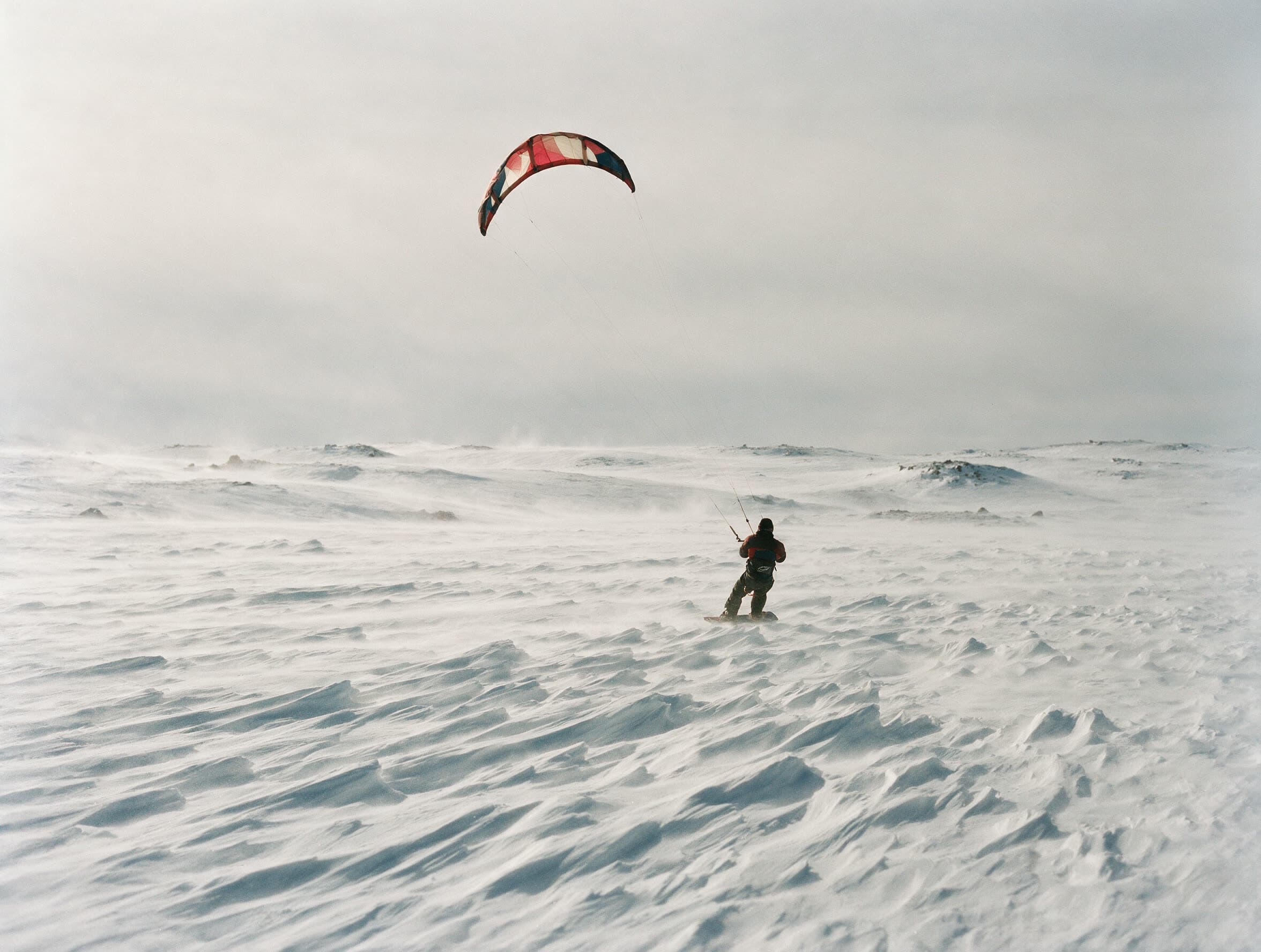
Under a closed cloud layer nothing casts a shadow any more, and a slope of pure white no longer offers the pilot a surface to set down on. Then there is no flying — not even when the snow underneath would be perfect. Cold on its own has never cost a slot.
Boarding and leaving the helicopter only on a signal and always in the pilot’s field of view, crouched and away from the rotor to the side, nothing loose in your hands. On the slope people ride one at a time, regrouping at the edge and never below the person ahead. Groups stay small so that every descent can be watched.
Avalanche conditions: The current situation is assessed before every flying day — bulletin, snowpack structure, wind and fresh snow from the days before. If that assessment comes out badly the day is postponed; individual slopes are left open until landing and decided on the spot.
Equipment standard: A transceiver, shovel and probe for every participant, plus an avalanche airbag pack. The devices are checked together before the first flight; anyone unfamiliar with them learns to use them that morning.
Every one of our expeditions can be extended with this experience — just say so in your inquiry.
Sound like your kind of day?
Tell us what draws you — we'll build it into your trip or plan it on its own.