Off-road
AragatsotnMountain
Aragatsotn — On horseback across highland pastures beneath Armenia’s highest peak
from$205per person, based on 5 guests
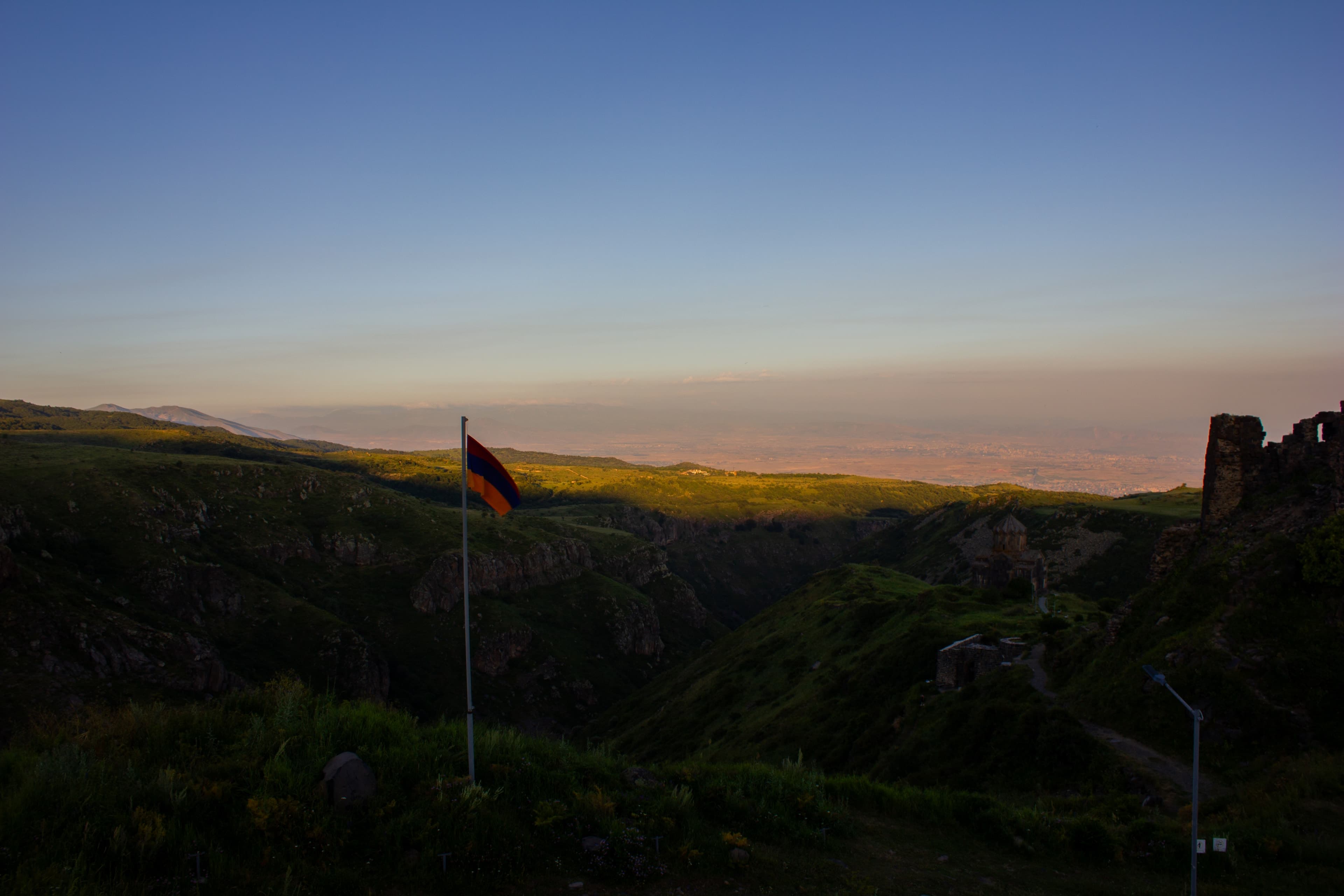
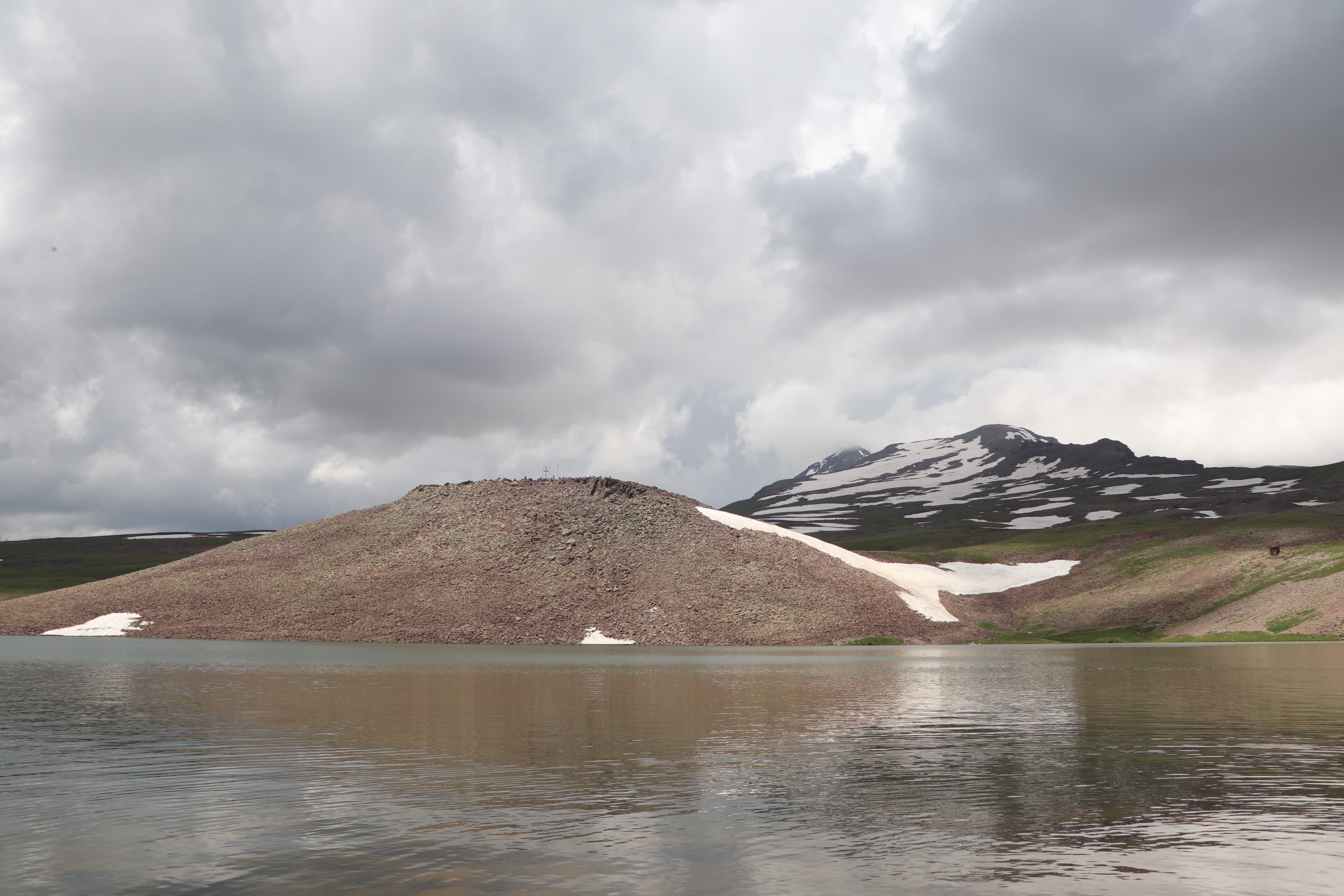
A ride for nature lovers: we drive from Yerevan up into the Aragatsotn highlands to Lake Kari at 3,200 metres, where the forest ends and only rock and short grass remain. From here we ride on horseback into the highland pastures at the foot of the Aragats massif, whose highest of four peaks, at 4,090 metres, is Armenia’s highest point. The wind sweeps across the open slopes, snowfields hold out here into summer, and along the way the fortress of Amberd greets you from its mountain spur. Return in the afternoon via Lake Kari to Yerevan.
This day is first of all a climb, and you make most of it sitting down. Yerevan lies at around 990 metres, Lake Kari at 3,200. Between them are a good sixty kilometres and more than two thousand metres of ascent, and not one of them asks for a track: the surface runs unbroken to the shore, and no sealed road in this country goes any higher. Seventy-five minutes is what the climb takes. That is little time for that much altitude, and you notice it as you step out.
The mountain road starts above Byurakan, which itself sits at a good 1,400 metres. The asphalt up there is old but kept up; narrow all the same. Two vehicles rarely fit abreast in the hairpins, above roughly 1,800 metres the edges have broken away, and anyone coming the other way comes into sight a bend early instead of all at once in front of your bonnet. Halfway up, Amberd Fortress passes at 2,300 metres, some eighteen kilometres below the lake. Nobody needs low range here, tyre pressure stays where it is, and there is no ford on the whole route. What is asked of you is something else: read the road ahead, and on the way down let the engine do the work instead of the brakes.
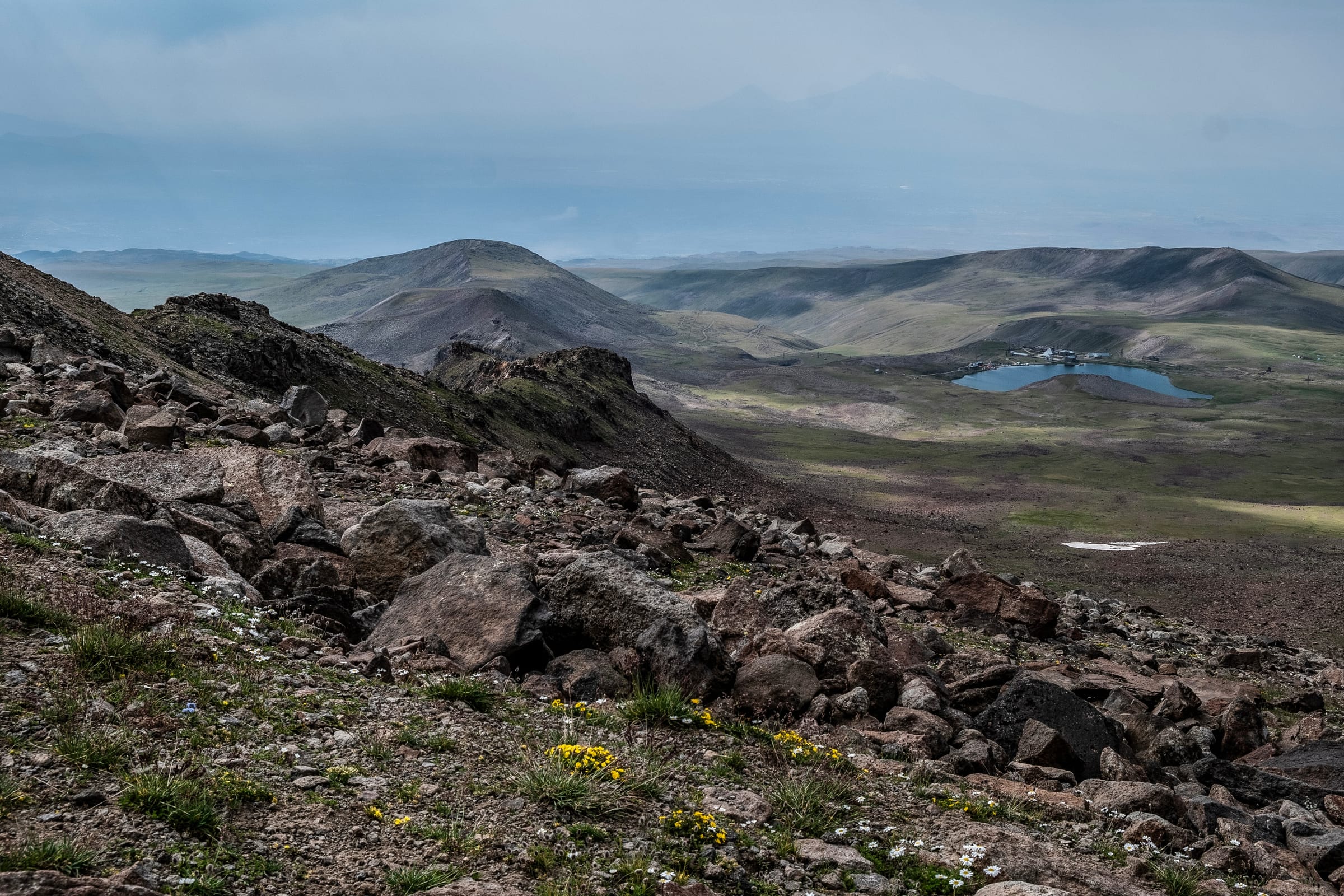
Up top the vegetation gives out. What remains is scree, low pasture grass and the snow that holds in the hollows into high summer; above the shore stand the four summits of the Aragats massif, the highest of them 4,090 metres. That the wind almost never rests here and the temperature sits well below the city’s belongs to this altitude as much as the short season does. From the lake you move into the saddle and out into the high pastures: four to seven hours, a helmet is part of the equipment and is worn, and no prior experience is asked for. The vehicle stays down by the shore. It brought you the whole way here, and the horse is the choice you make for the afternoon, not a substitute for the drive.
Late in the afternoon the same road takes you back down. It grows warmer with every kilometre, the wind eases off, and seventy-five minutes later the vehicle is back in the city. No more than eight guests come along on any of these days, and the fleet page lists the vehicles that take the climb. The season runs from June to October, and that limit is set by snow on the topmost kilometres alone.
Drive from Yerevan to Lake Kari at 3,200 metres, then on horseback into the highland pastures at the foot of Aragats — four peaks ringing the old crater, the highest reaching 4,090 metres. Return via Lake Kari to Yerevan.
The same road twice: that is the whole of the driving. A good sixty kilometres up, seventy-five minutes, the same line back down late in the afternoon, plus the lakeside tracks — the fact box gives 130 kilometres and a good two and a half hours behind the wheel. Nothing on it is unsealed. From the plain it climbs past Byurakan and the height of Amberd to the shore at 3,200 metres, the last part in tight hairpins where you give way to what comes down. At the lake you change over: saddle, pastures below the four summits, a break outdoors at midday. Back to the shore, back into the vehicle, and the descent takes as long as the climb.
Driving time 2 h 45 · Elevation 990 → 990 m · highest point 3,200 m · tarmac 100 %
AragatsotnMountain
AragatsotnFortress
AragatsotnLake
Packing list
Questions about this tour
Most people feel something; very few have trouble with it. Above roughly 2,400 metres, altitude can make itself known in anyone unacclimatised: headache, tiredness, little appetite, sometimes nausea. The US health authority’s travel medicine pages list exactly those signs and advise against climbing from low ground past about 2,750 metres in a single day. This day does precisely that: it has no intermediate stage on which the body could settle in. What it has instead is an ending down below — the way back is due after the ride in any case and can be brought forward at any point. If something feels wrong up there, say so rather than sit it out. Anyone with a heart or lung condition, anyone pregnant, anyone on regular medication should settle the altitude question with their own doctor beforehand. It is not a question a tour operator can answer.
The fact box says June to October, and what stands behind that is snow, not caution. From late November the mountain road lies under a cover that holds on the topmost kilometres well into spring. Travel accounts name mid-May as the earliest date, others not before June, depending on when the last stretch is cleared; reliably open, the road is from June. Even then snow often still sits in the hollows by the shore, and the lake itself spends the greater part of the year under ice. At the other end October closes the window, and an early onset of winter closes it weeks before that. Ask for May or November and you will get an honest answer rather than a date.
Two means of transport share the day, and the road takes the smaller share: seventy-five minutes each way, a good two and a half hours in total. Four to seven hours are set aside for the saddle, and how much of that it becomes is decided by the weather, the group, and where the herds happen to be standing. Around midday the saddles are taken off, the horses graze, and the meal is an outdoor one. The vehicle meanwhile stays where it was parked — it does not follow the horses into the terrain, it takes you up and brings you down again. At the end of the ride it is waiting by the shore, and the same road turns that altitude back into a city at 990 metres.
Fixed dates or your own timing — guided or self-driven. We reply personally.