Highland Ride at Aragats
1 day
3,200 m
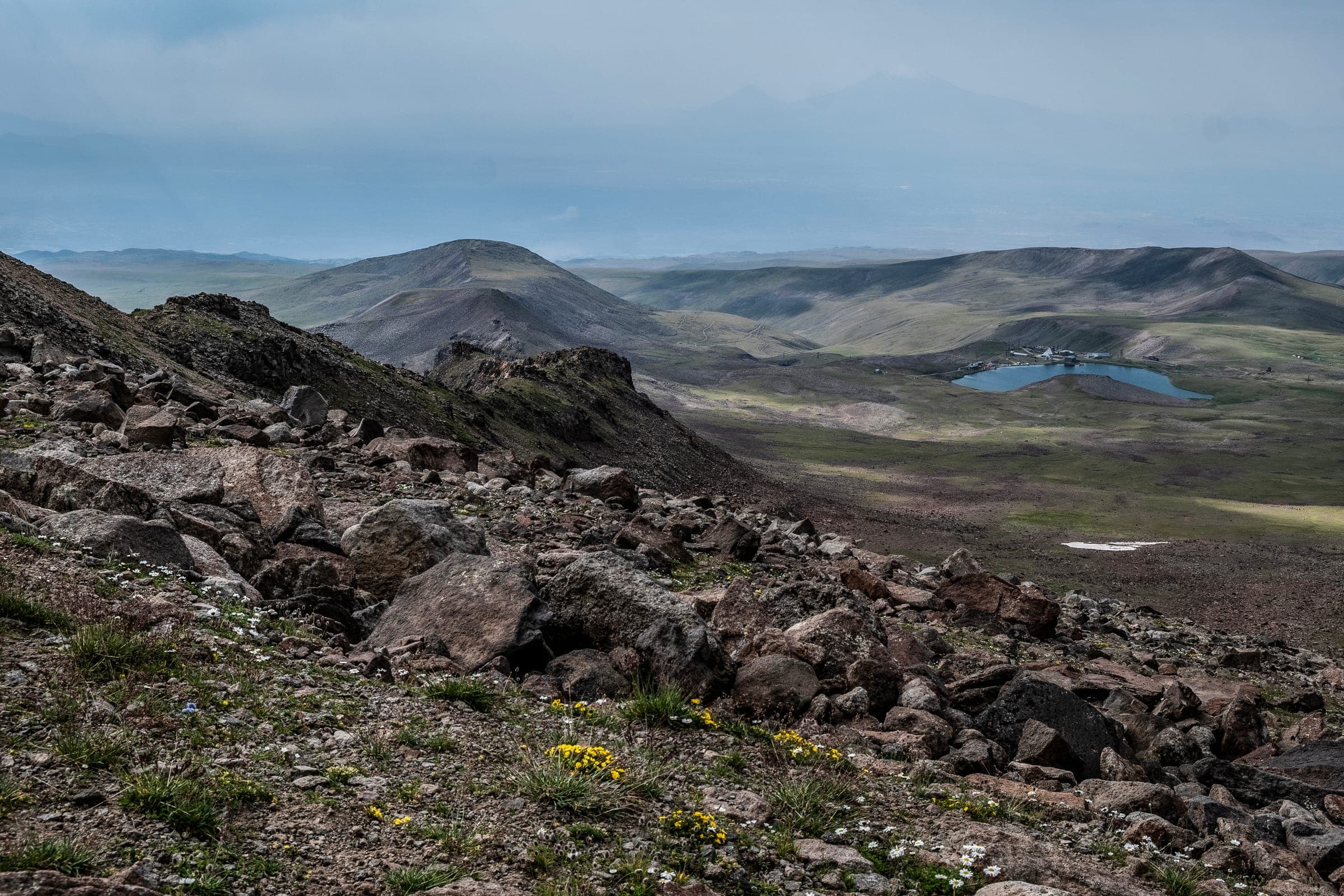
Aragatsotn — Kari Lake lies at 3,200 meters elevation on the slopes of Aragats – Armenia's highest mountain. An old, continuously paved mountain road leads directly to the water. No other point in Armenia is as high as this with a standard car.
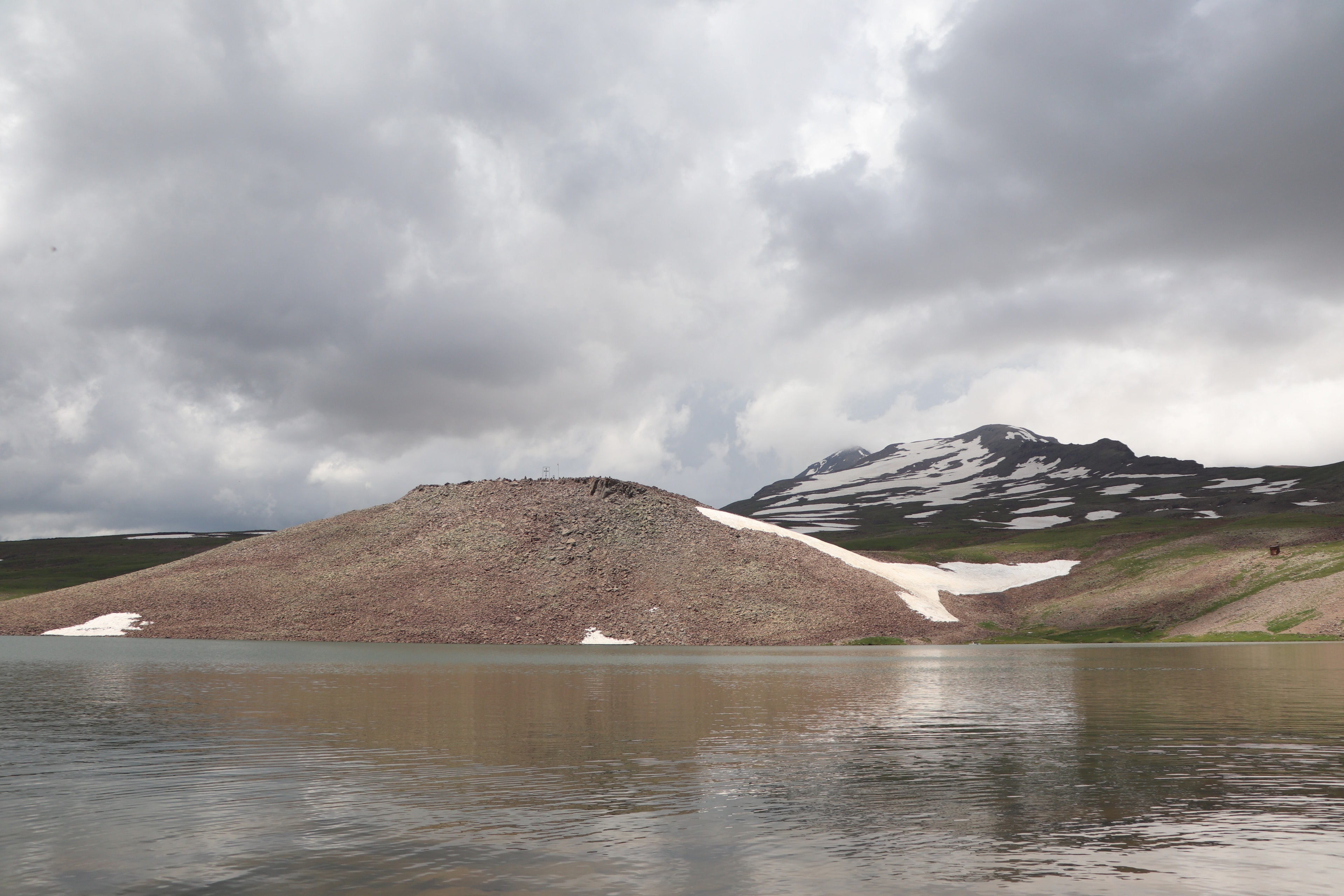
Kari Lake sleeps under ice for eight or nine months a year; only in the brief summer does its water turn clear and achingly cold. You stand at the shore where, since 1943, a research station has studied cosmic rays — an institute as solitary as a glacier lake gets. Nearby lie millennia-old vishap stones that researchers link to an early water cult. "Kari" simply means stone, and the place feels exactly like that: bare, silent, deep.
On the south slope of Aragats, nestled between moraine ridges and volcanic rock, lies Kari Lake at 3,200 meters above sea level. The water is cold and clear, remains under ice for eight to nine months of the year, and reveals the four peaks of Aragats once the summer snow recedes. The name "Kari" simply means "stone" in Armenian – a factual reference to the rocky high-mountain landscape in which the lake is situated. With a perimeter of 1,150 meters and a maximum depth of eight meters, it is compact, but its accessibility is unusual: few alpine lakes in the region are so easily reached.
Offroad & access
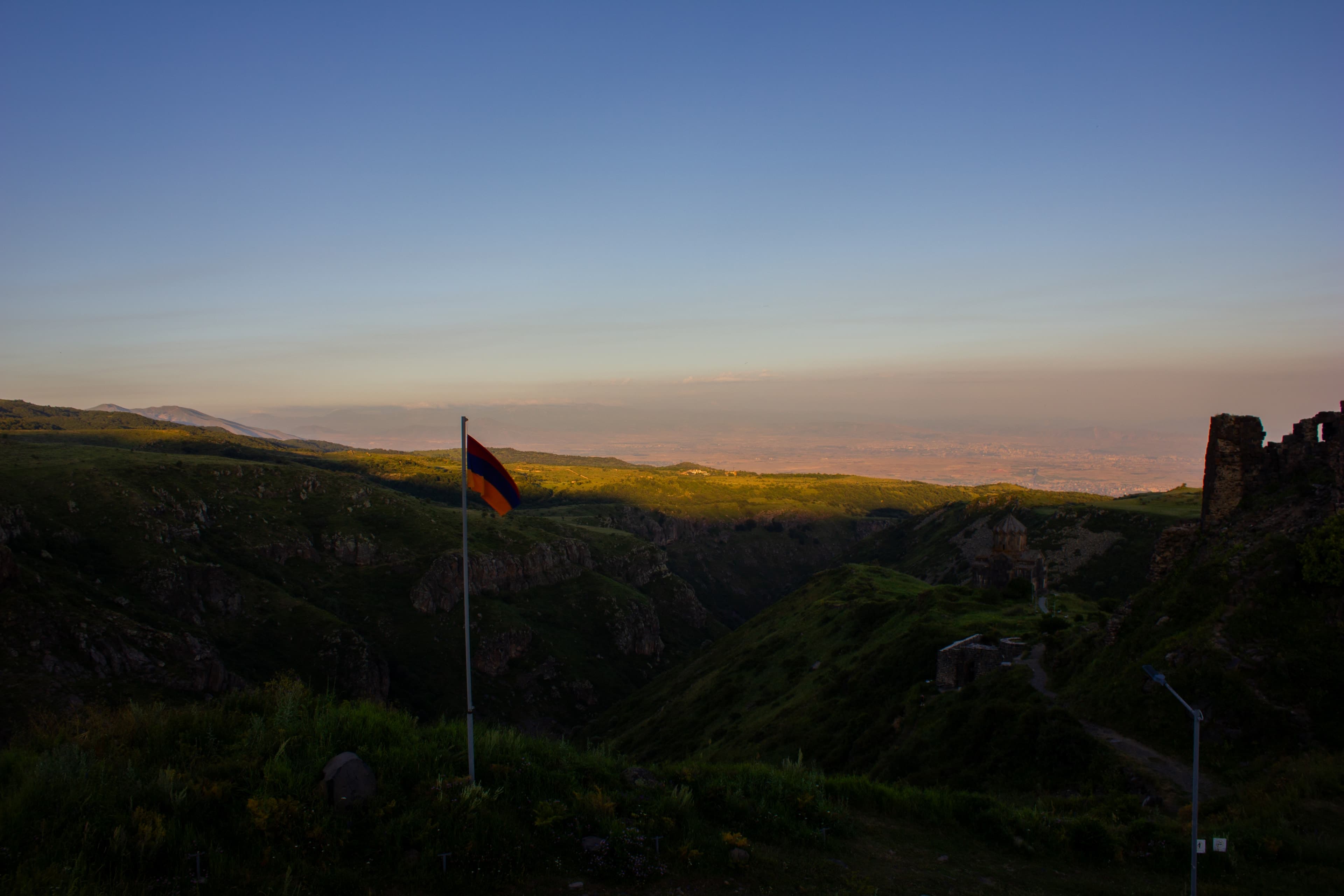
Offroad rating: 1 out of 5 – no off-road vehicle required. Access from Byurakan (approx. 22 km, driving time about 1 hour 20 minutes) follows an old but continuously paved mountain road. The roadway is narrow, winding, and broken in places, but altogether easily passable with a standard car or sedan. Coming from the Artashavan direction, after the national park you encounter a worse-preserved section before both routes converge above Byurakan. The only seasonal obstacle is snow: the road is typically closed from late November to early May, sometimes until mid-May. From June onward, passage is reliably open. Kari Lake is the highest point in Armenia reachable by personal car.
Location: Aragatsotn, south slope of Aragats (40°28′N, 44°11′E). Elevation: 3,200 m above sea level. Area: approx. 0.12 km². Perimeter: 1,150 m. Depth: max. 8 m. Water volume: approx. 375,000 m³. Inflow: predominantly precipitation and snowmelt. Geology: glacial moraine basin on the extinct stratovolcano Aragats (highest north peak: 4,090 m). Fauna: In 1963, Gegharkunian trout from Lake Sevan were introduced; natural reproduction did not occur, but the fish grew faster than in Lake Sevan. On the south shore stands the Cosmic Ray Research Station, founded in 1943.
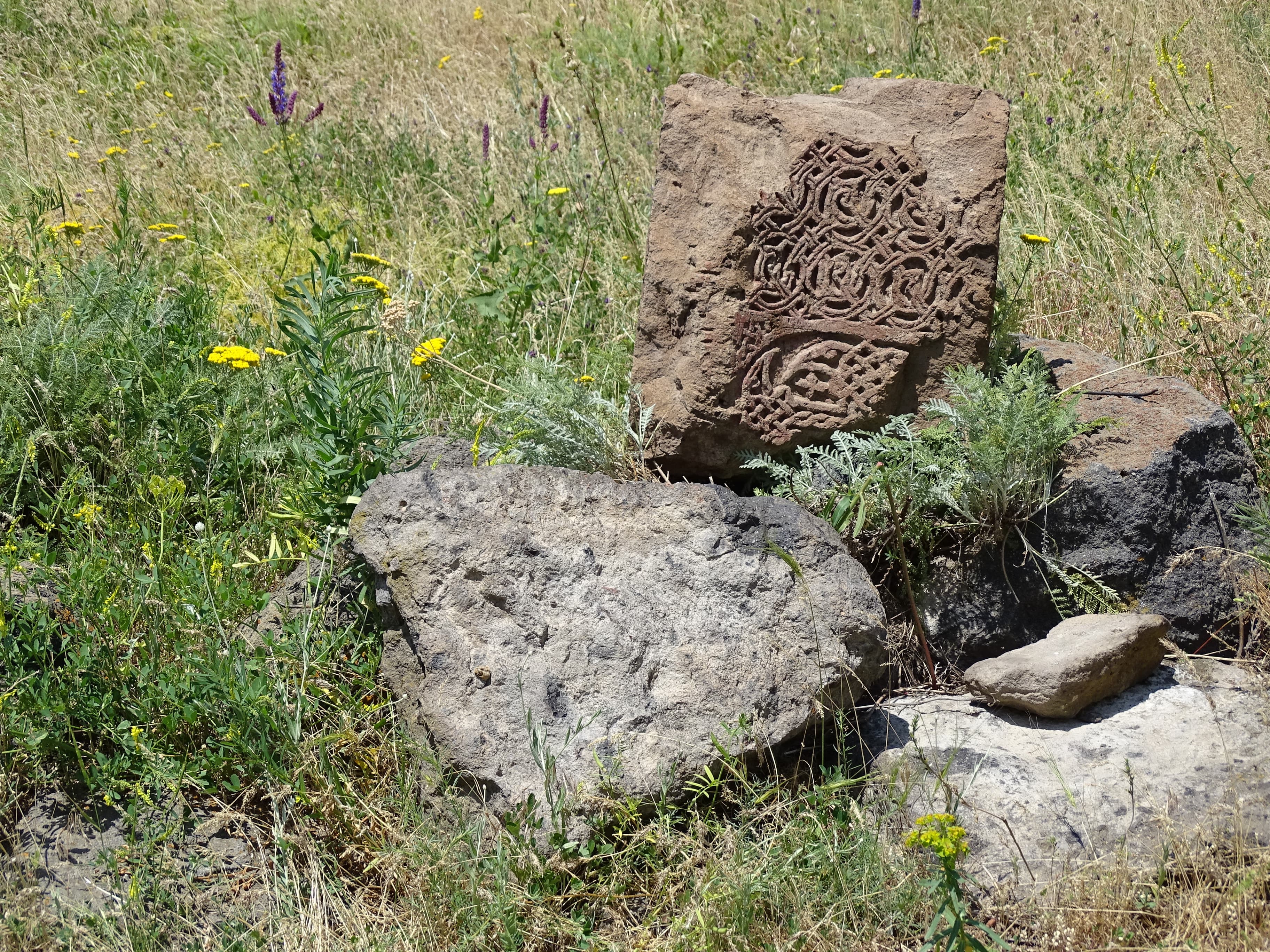
Since 1943, a cosmic ray research station has stood on the south shore, founded by brothers Artem and Abraham Alikhanyan – both physicists who came with a scientific expedition to Aragats during World War II to study the proton component of cosmic radiation. At this station, the then-largest permanent-magnet magnetic spectrometer in the entire USSR was developed. Both received the USSR State Prize for their research work. The station remains in operation today and is run by the Armenian Academy of Sciences. A further historical detail: in the 17th century, Catholicos Pilippos I ordered the lake's outlet sealed to divert water supply. The original canal to the Amberd River (a tributary of the Kasagh) no longer exists today. Vishap stones have been found on the shore and in the vicinity of Aragats – prehistoric stone monuments from the Armenian highlands that researchers associate with an early water cult and date to as much as 6,000 years old.
According to tradition, Ararat and Aragats were once two sisters who quarreled over who was greater and more beautiful. Since then, they have stood apart – Ararat now in present-day Turkey, Aragats in Armenia. On Aragats, so the legend tells, a lake formed from the tears of their discord. Whether this originally referred to Kari Lake cannot be confirmed; the tradition is regionally widespread and is frequently associated with the mountain lake. The Vishap stones on Aragats are currently understood by researchers to be connected to water cults and irrigation rituals – a documented archaeological link between the mountain, water, and religious practice extending far back into prehistory.
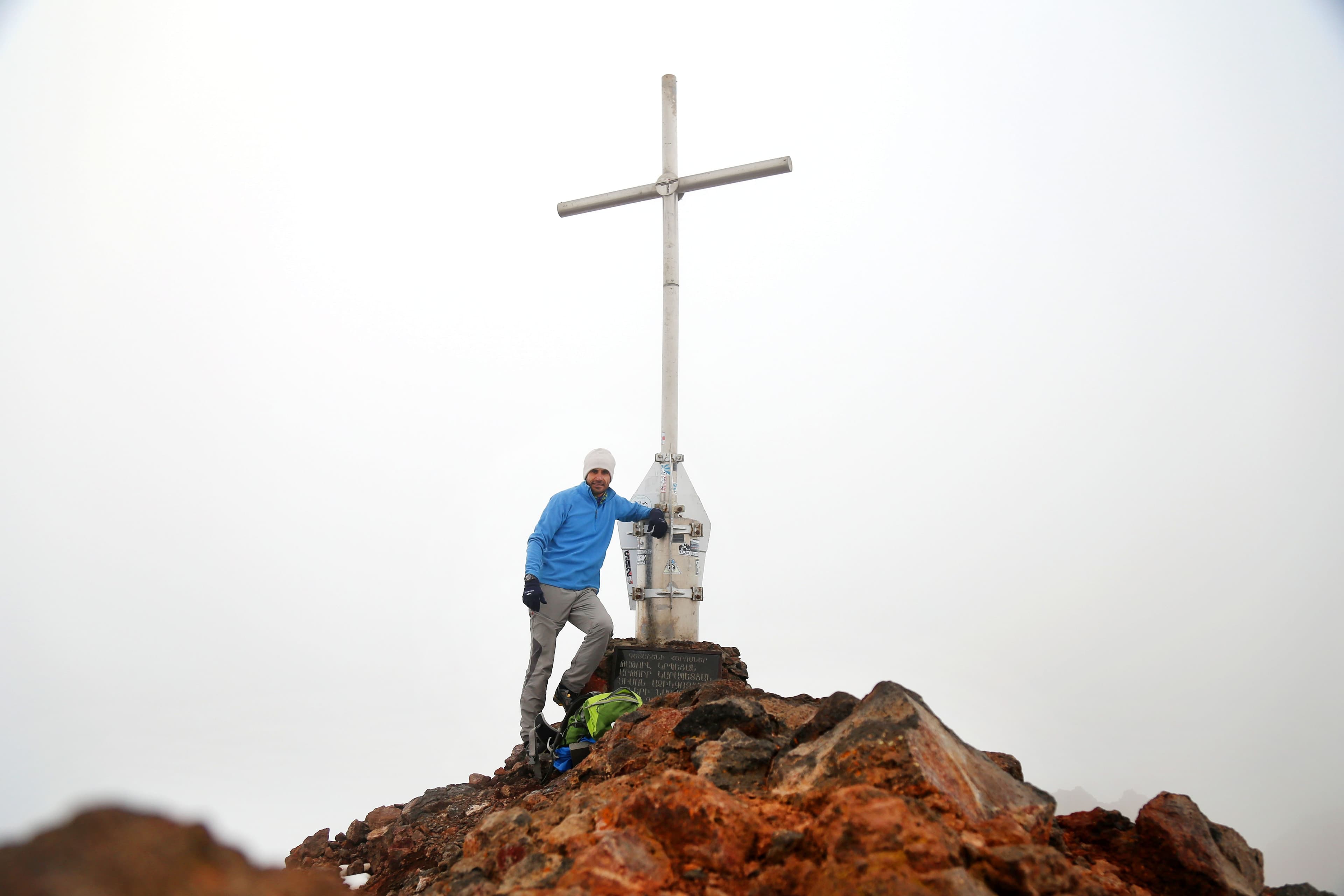
Kari Lake lies at an altitude otherwise reached only with mountaineering equipment or an off-road vehicle – here, a standard car suffices. This makes it one of Armenia's few high-altitude destinations accessible without alpine preparation. At the same time, it serves as a starting point for the ascent of Aragats' south peak (3,879 m), one of the few four-thousand-meter peaks in the region. The combination of research station, Vishap stones, panoramic view of all four Aragats peaks, and the unusual ecological situation (introduced trout, glacial moraine lake on extinct volcanic slopes) makes the lake a place that serves multiple interests at once – without mass-tourism infrastructure.
Best season: June to October. Road typically snow-free from early to mid-June. Access from Byurakan: approx. 22 km, around 80 minutes. Any vehicle with sufficient ground clearance and functioning braking system is suitable; all-wheel drive is not required. Early morning conditions may briefly close the road due to residual snow. Bring your own provisions and water – there is no gastronomic infrastructure at the lake. Warm clothing is advisable even in summer: wind and cloud cover cause temperatures to drop significantly at lake elevation. Cellular reception is limited above Byurakan. Overnight accommodations are available in Byurakan or in the Aragatsotn region.
AragatsotnMountain
AragatsotnFortress
AragatsotnMonastery
Kari Lake is part of Armenia Expeditions's route that opens Armenia's high mountains without compromising travel comfort. If you want to know what other destinations are reachable at this altitude and what an individual tour might look like, find all information at One message — we’ll plan the rest..