Gravel
LoriMonastery
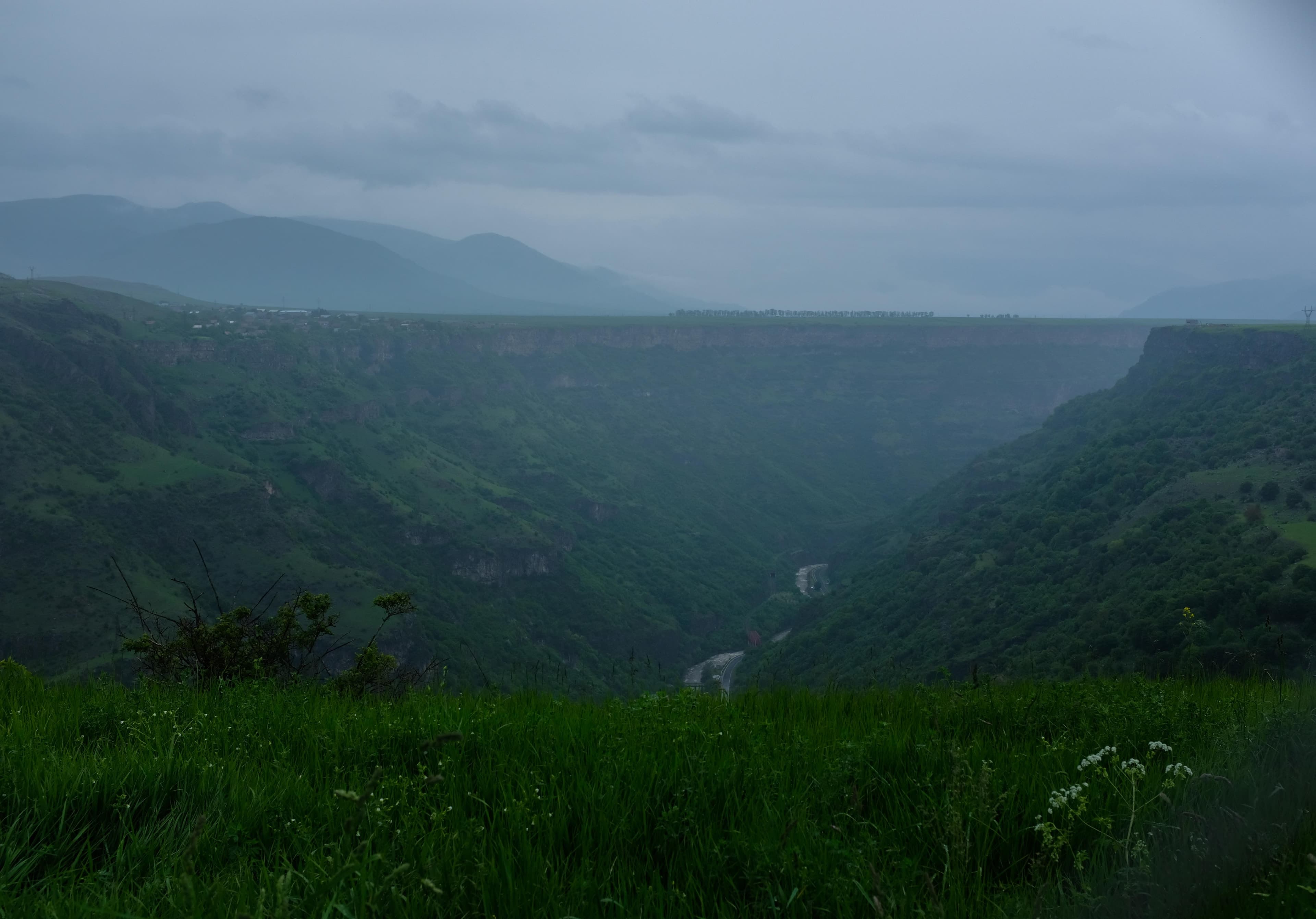
Lori — On a rocky spur above the confluence of Dzoraget and Gargar stands Hnevank, the 'Old Monastery'. Its walls reach back to the 7th century; the complex was rebuilt in the 12th century by a prince from the House of Orbelian. Accessible only via a rough gravel track that winds down into the gorge in switchbacks.
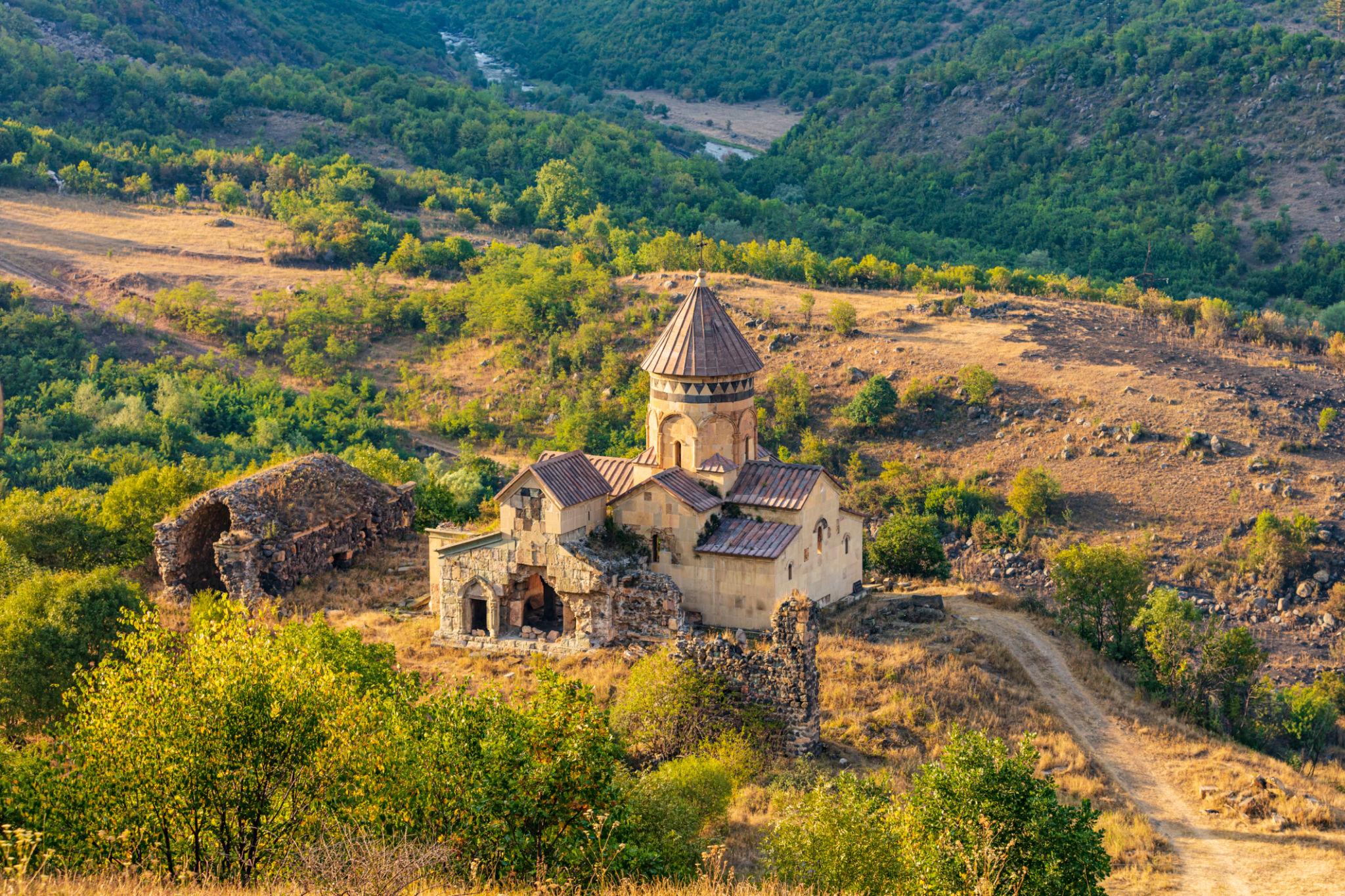
Above you the forested gorge slopes climb steeply, below the water rushes through narrow rock channels — and in between, a freshly restored dome now crowns the old stonework of the main church. At the rim of the dome, a Georgian inscription names its patron: Smbat, whose family united Georgian and Armenian roots. No railing separates you from the drop, no barrier from the ruin — here you stand as unprotected as the monks once did.
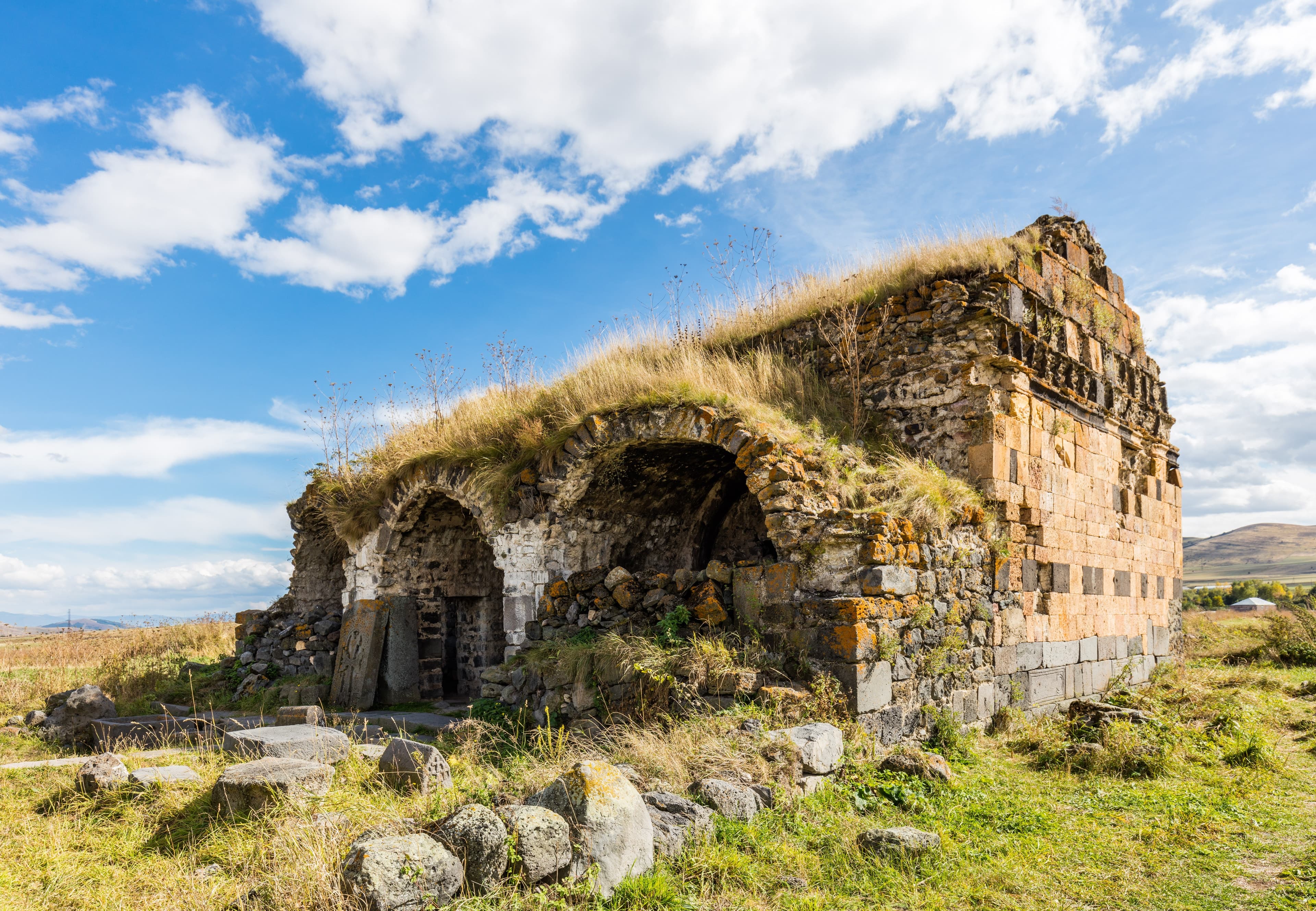
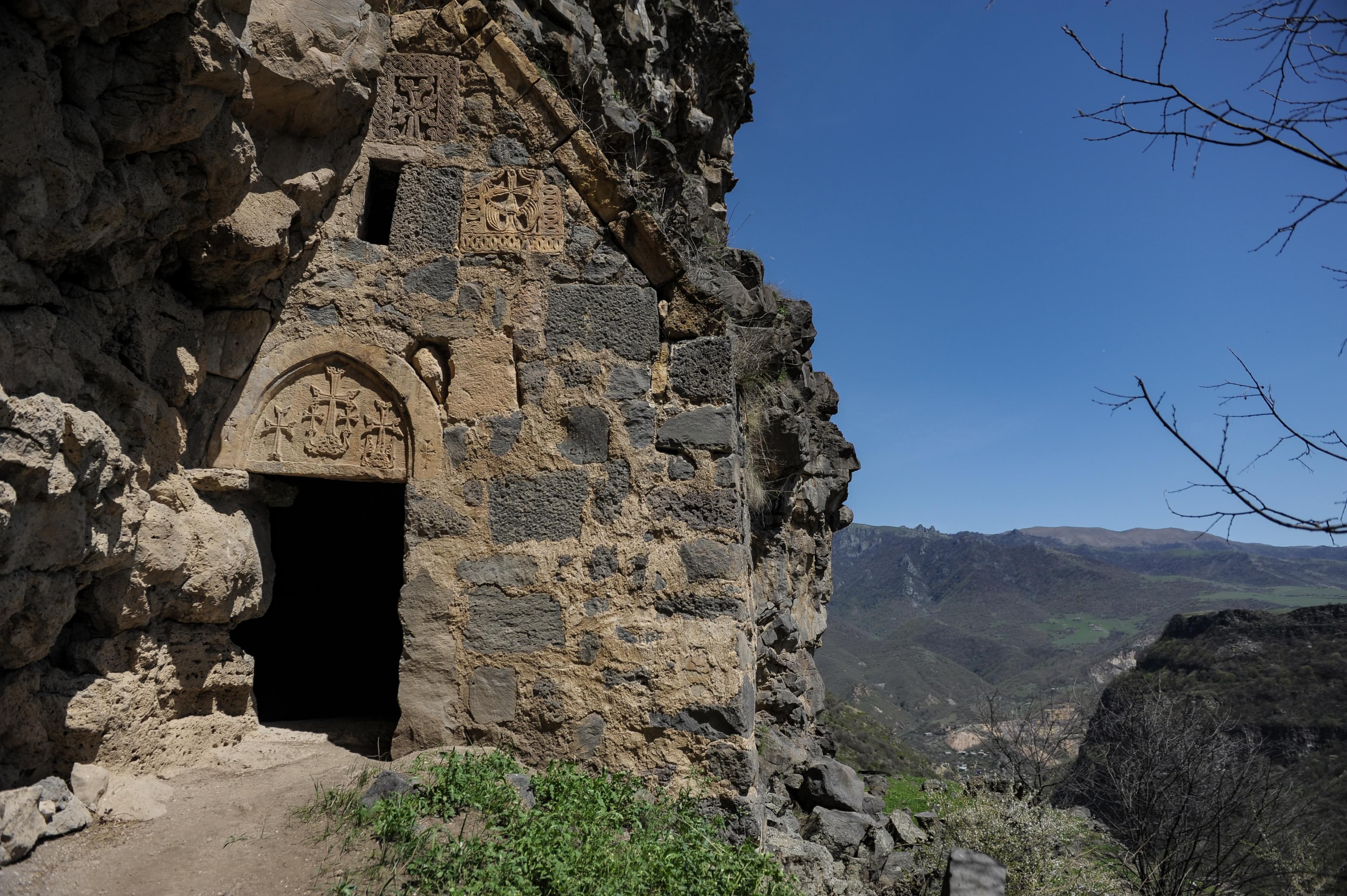
Hnevank sits on a rocky outcrop in the Dzoraget Gorge where the rivers Dzoraget and Gargar meet, at roughly 1,100 metres elevation. Above you, forested gorge slopes rise sharply; below, water rushes through narrow bedrock channels. The monastery lies off the main roads, at the end of a track that descends from the village of Kurtan into the depths. The name means simply 'Old Monastery' in Armenian and describes quite accurately what awaits you here: a compact stone complex whose core dates from the early Christian era and which today, partly restored, towers above the valley.
Offroad & access
The off-road rating stands at 3 out of 5. From Kurtan begins broken asphalt, soon giving way to a rough gravel track. This winds in switchbacks down into the Dzoraget Gorge to the monastery. The ground is rough, with loose stones and potholes; after rain the track becomes muddy and traction worsens considerably. A 4x4 with adequate ground clearance is recommended. In dry weather, the section is navigable for a capable vehicle, though the descent demands calm, forward-thinking driving through the curves. The actual drive from Kurtan is brief but slow; allow more time for the final kilometres than the distance alone suggests.
Location: Dzoraget Gorge, Lori Province, northern Armenia, at the confluence of Dzoraget and Gargar rivers. Elevation: approximately 1,100 m. Coordinates: 40.952953, 44.58425. Nearest village: Kurtan. Type: monastery of the Armenian Apostolic Church. Dating: main church at its core 7th century; overall complex spanning from the 7th to 12th century. Components: main church with gavit (vestibule) and several scattered auxiliary buildings. A Georgian inscription on the drum of the dome names Smbat as the builder. Restoration: the collapsed dome of the main church has been fully restored in the course of state conservation work. Best travel season: May to October.
The core of Hnevank's main church dates to the 7th century, as evidenced by the church's architectural form. The complex acquired its present shape in the late 12th century when Prince Smbat of the House of Orbelian had it rebuilt from the ground up. The Orbelian were a branch of the Liparitids who came to Armenia from Georgia at the end of the 12th century; Smbat is regarded as the progenitor of the Armenian princes of Syunik. A Georgian inscription on the dome's drum preserves his name and points to this Georgian-Armenian interweaving of the founding family. Over the centuries the complex fell into disrepair; the dome of the main church collapsed. In more recent times, the Armenian state has undertaken conservation work and fully restored the dome.
There is no distinct, historically recorded legend for Hnevank. What is significant is the name itself: 'Hnevank' means 'Old Monastery' in Armenian. According to tradition, this designation suggests that a church already stood at this location long before the 12th-century rebuilding, so that even at its height the complex was known as the 'old' one. The place yields no more reliable tales; it is honest to remain with what is documented rather than invent a story.
Hnevank unites two things that rarely coincide so closely: a monastery core from the 7th century and a location accessible only via a gravel track. Because access is demanding, the site remains largely free of large visitor flows. The Georgian inscription on the dome makes the founder's story tangible, telling of the close interweaving of Armenia and Georgia in the medieval period. If you wish to see both the freshly restored dome atop ancient masonry and the gorge below it from a single vantage point, without railings and without staging, you find both here.
Access: from Kurtan on broken asphalt, then gravel track with switchbacks descending into the gorge. Vehicle: 4x4 with good ground clearance recommended; after precipitation the track becomes muddy. Best travel season: May to October, when the track is dry and passable. Elevation approximately 1,100 m. There is no tourist infrastructure on-site, so bring water and provisions. Sturdy footwear is sensible as the ground around the complex is uneven. Allow time for the slow final section and check the weather before setting out, as rain makes the gorge considerably more demanding.
LoriMonastery
LoriCanyon
LoriFortress
If you wish to reach Hnevank via the gravel track into the Dzoraget Gorge, Armenia Expeditions plans the drive with a capable vehicle and local expertise. One message — we’ll plan the rest.