Rough track
LoriMonastery
Lori — High above the Debed Gorge, the walls of Kobayr cling to the steep slope. In the exposed apses are frescoes from the 12th and 13th centuries: Mary with child, apostles, church fathers. You reach the ruin only on foot, via a short steep path above the village of Kobayr – and find yourself alone among column stumps and paintings above the river.
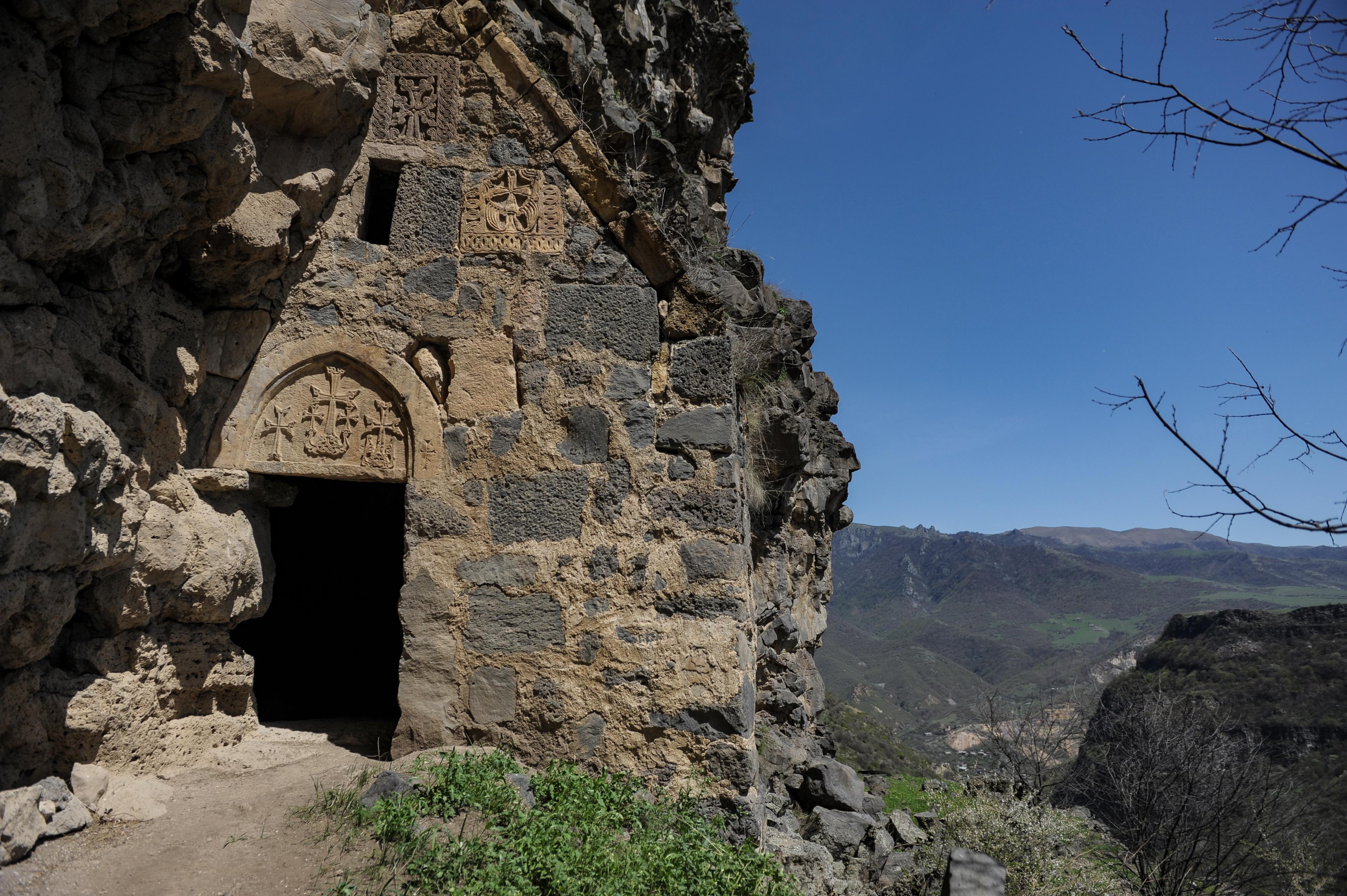
Tradition holds that Anush, the heroine of Hovhannes Tumanyan’s poem of the same name, threw herself from a church window into the depths of the Debed Gorge. The name itself speaks of caves: Georgian ‘kob’ and Armenian ‘ayr’ both mean the same thing. In the bell tower of 1279 lie Prince Schansche Zakarian and his wife Vaneni — buried inside a ruin now inhabited only by wind and springs.
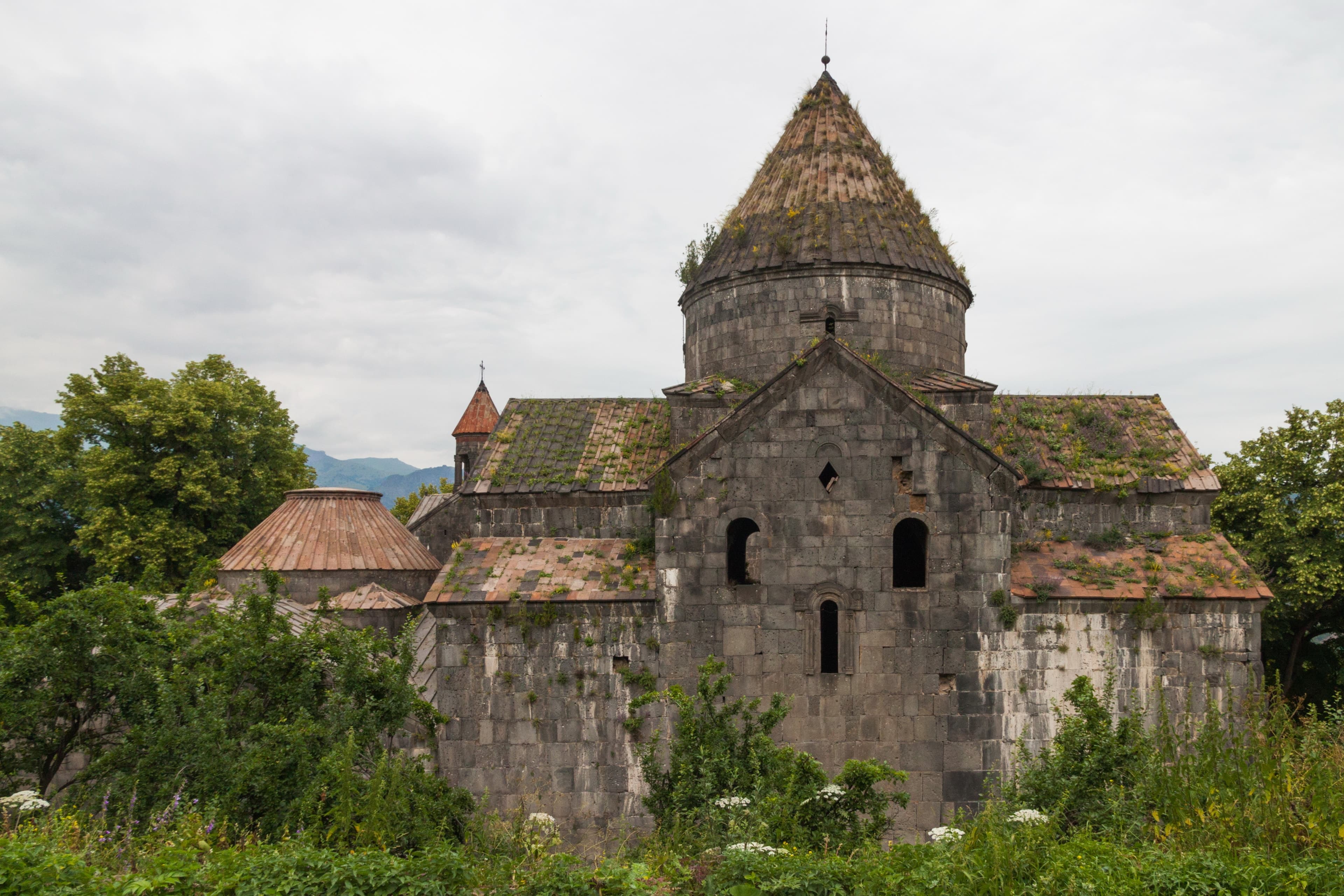
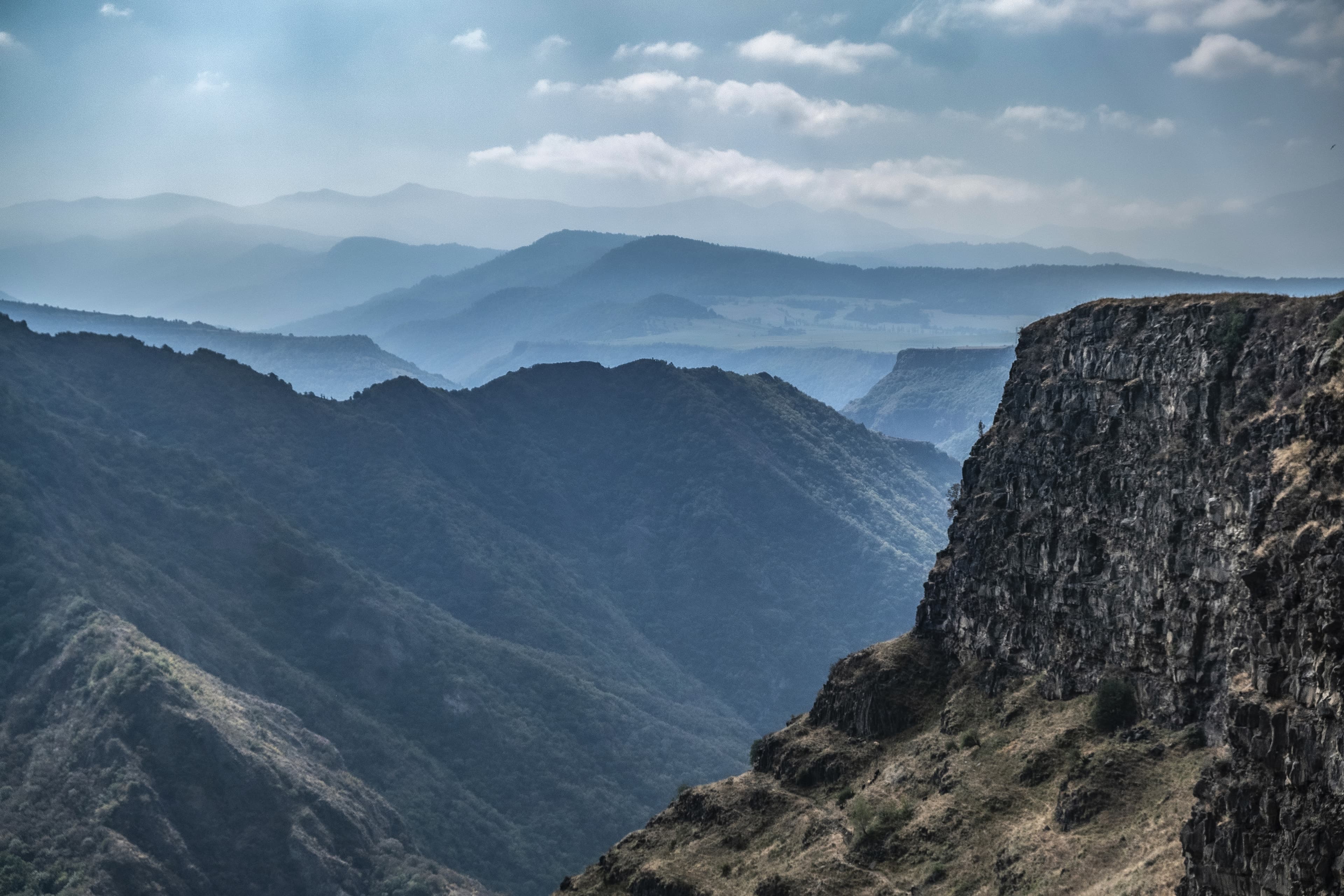
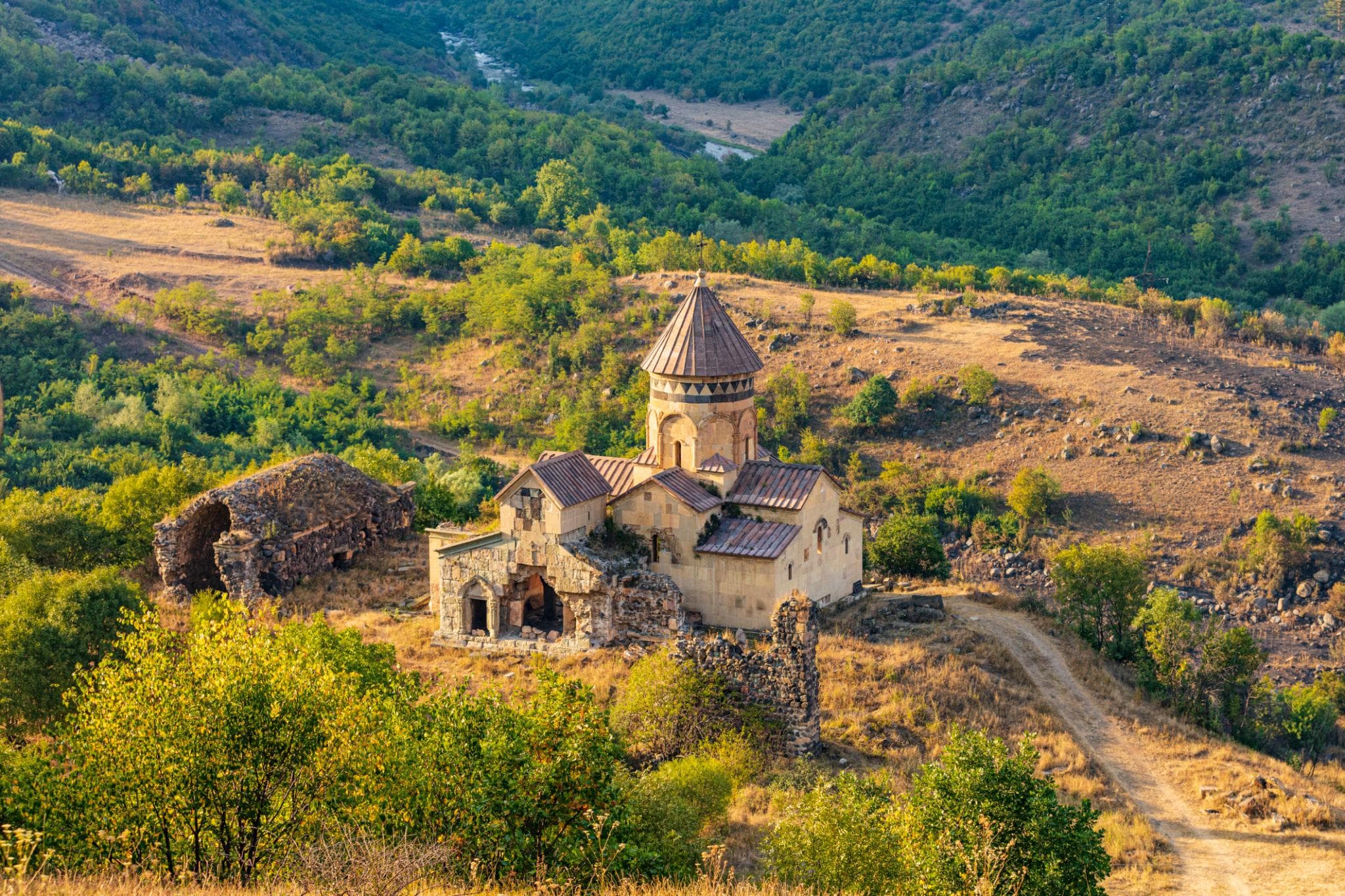
Kobayr sits at roughly 900 meters on a forested steep slope above the Debed Gorge in Lori province, overlooking the village of the same name near Tumanyan. The monastery complex is today a ruin: free-standing apses, remains of the main church, the small Mariamashen church, and the bell tower, with trees and springs emerging directly from the slope. From the forecourt the view drops steeply to the railway line and the Debed, which has cut the gorge over millennia. What distinguishes Kobayr from many Armenian monasteries are the surviving wall paintings in the open apses – frescoes exposed to the elements yet still revealing faces, garments, and inscriptions.
Offroad & access
Offroad rating 2 out of 5 – the approach is straightforward. Via asphalt and short gravel sections you reach the railway crossing at the village of Kobayr; in dry weather the route is easily passable without all-wheel drive. Parking is in the village below. From here travel is on foot: a steep narrow path leads approximately 15 to 20 minutes up the slope to the ruin. The way is earthy to stony, partly worn and can be slippery after rain. Sturdy footwear suffices; no climbing technique required, just some sure-footedness on the final stretch. If you wish, you can continue from Kobayr on the hiking trail along the gorge toward Horomayr and Odzun.
Elevation: approximately 900 m. Coordinates: 41.0051° N, 44.6351° E. Region: Lori, nearest town Tumanyan. Founded in 1171 by Mariam, daughter of Kyurikid King Kyurike II (branch of the Bagratuni dynasty). From the late 12th/early 13th century, Kobayr passed to the Zakarid principial house; under them it became Chalcedonian, which is why Armenian as well as Georgian inscriptions are found on the walls. The bell tower was erected in 1279 and simultaneously served as the sepulcher of Prince Schansche Zakarian and his wife Vaneni. The name Kobayr combines Georgian "kob" and Armenian "ayr" – both mean "cave." Among the surviving works are the frescoes of the main church with Mary and child, apostles, and church fathers. The complex has been undergoing restoration for years with Italian participation.
Kobayr was founded in 1171 as a spiritual and cultural center of the Kyurikids, a branch line of the royal Bagratuni. In the high Middle Ages it was among the significant sites of northern Armenia, with a scriptorium where manuscripts were copied and theological works composed; the scholar David Kobayretsi is linked to the place. As the Kyurikids lost control of the region, Kobayr passed to the Zakarids, who served the Georgian crown. Under them the monastery was oriented Chalcedonian (Georgian-Orthodox) – visible in the bilingual inscriptions and in frescoes of Byzantine character. In 1279 the Zakarids erected the bell tower, which simultaneously housed the grave of Prince Schansche Zakarian and his wife Vaneni.
According to tradition, the name derives from a cave on the slope: "kob" (Georgian) and "ayr" (Armenian) both mean "cave" – fitting the jagged location above the gorge. A second, folk interpretation connects the place-name "Kober" to a dispute over ownership, in which the question supposedly was posed: "Is that your fortress?" It is also told that Anush, the heroine of Hovhannes Tumanyan's eponymous poem, threw herself from a window of the church into the depths of the Debed Gorge – a litterarily tinged tradition that links the site to the region's most famous poet.
Kobayr is one of the rare places in Armenia where medieval wall painting has endured in the open air. The frescoes in the open apses – Mary with child, apostles, church fathers – stand unprotected in daylight, and the Byzantine style as well as the Armenian-Georgian inscriptions make the eventful history between Kyurikids and Zakarids immediately legible. Because the ruin is reachable only on foot and lies off the main routes, you rarely encounter crowds here. The view from the complex across the railway line and the Debed in the deep gorge ranks among the most impressive vistas in Lori province.
Best travel season: April through November; in winter the path can become icy or muddy. Drive to the railway crossing at the village of Kobayr, park in the village, then 15–20 minutes uphill on foot. Bring sturdy footwear and some sure-footedness; in heat take water. Watch out at the railway crossing and at the unguarded wall edges above the gorge. The complex is open to the public but may be partially scaffolded or restricted due to ongoing restoration work. No infrastructure on site; food and beverage in Tumanyan or Alaverdi. For photography enthusiasts, morning light in the east-facing apses is worthwhile.
LoriMonastery
LoriMonastery
LoriCanyon
Would you like to experience Kobayr with time for the frescoes and the ascent above the Debed Gorge? Armenia Expeditions brings you safely to the village and accompanies you up to the ruin. One message — we’ll plan the rest.