Signature
The South: Monasteries & Wine
7 days
2,400 m
Flat water in Shirak, at your own pace.
At a glance
Every route is put together differently — we work out the price once you ask.
Fitness
Two to four hours of steady paddling; shoulders and core work harder than it looks.
Why these months
From October to April we advise against it: Shirak lies high and turns cold early, and so does the water; wet clothes in wind become a problem there faster than elsewhere.
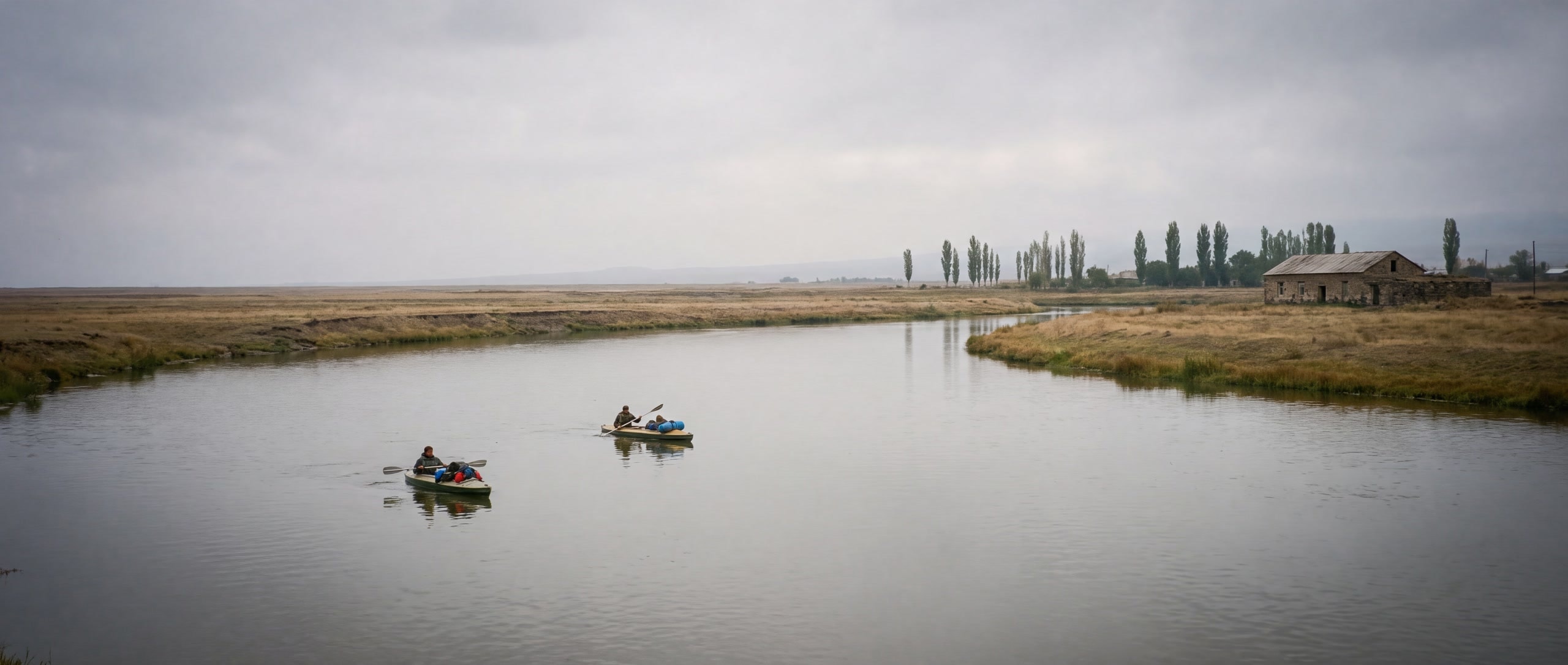
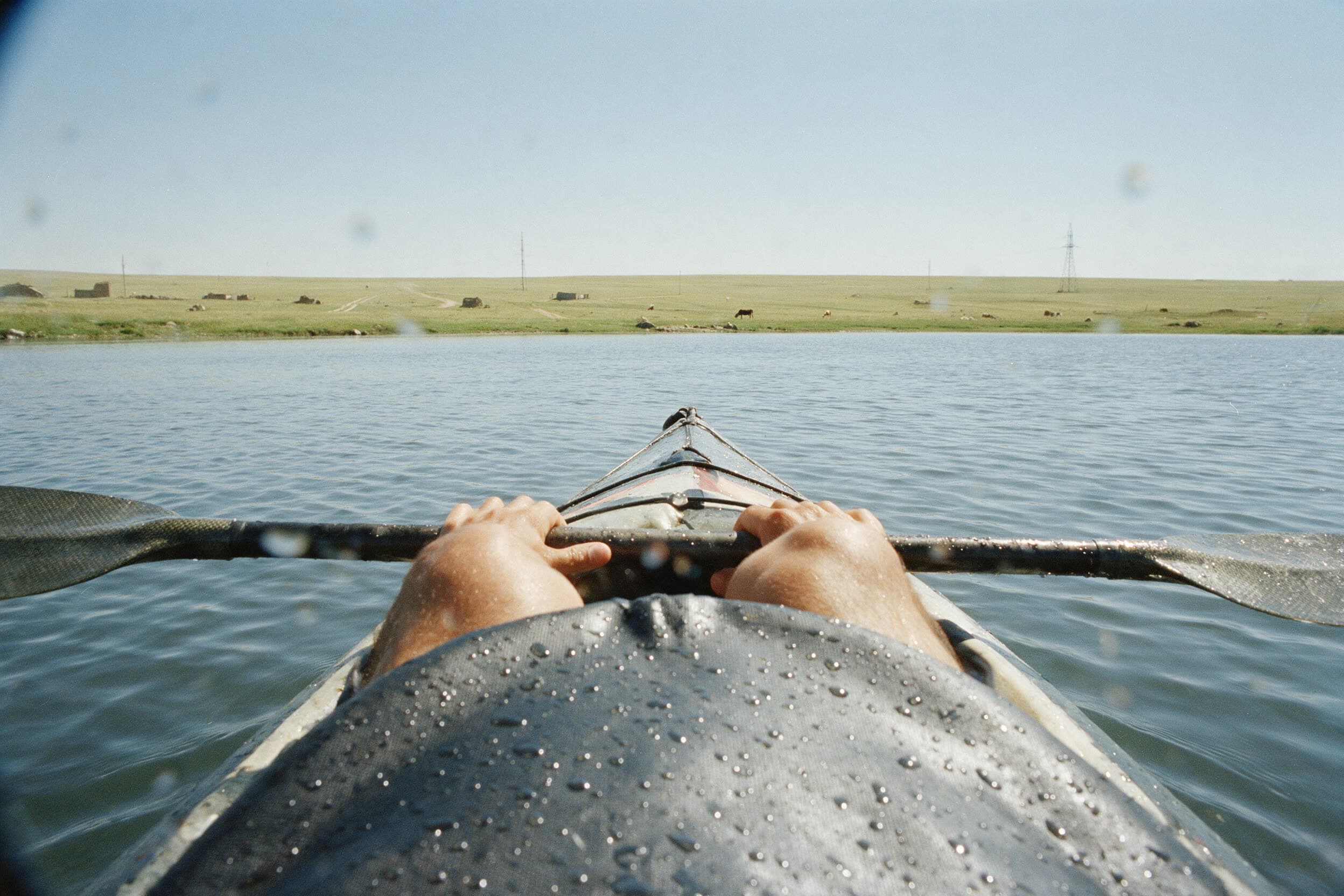
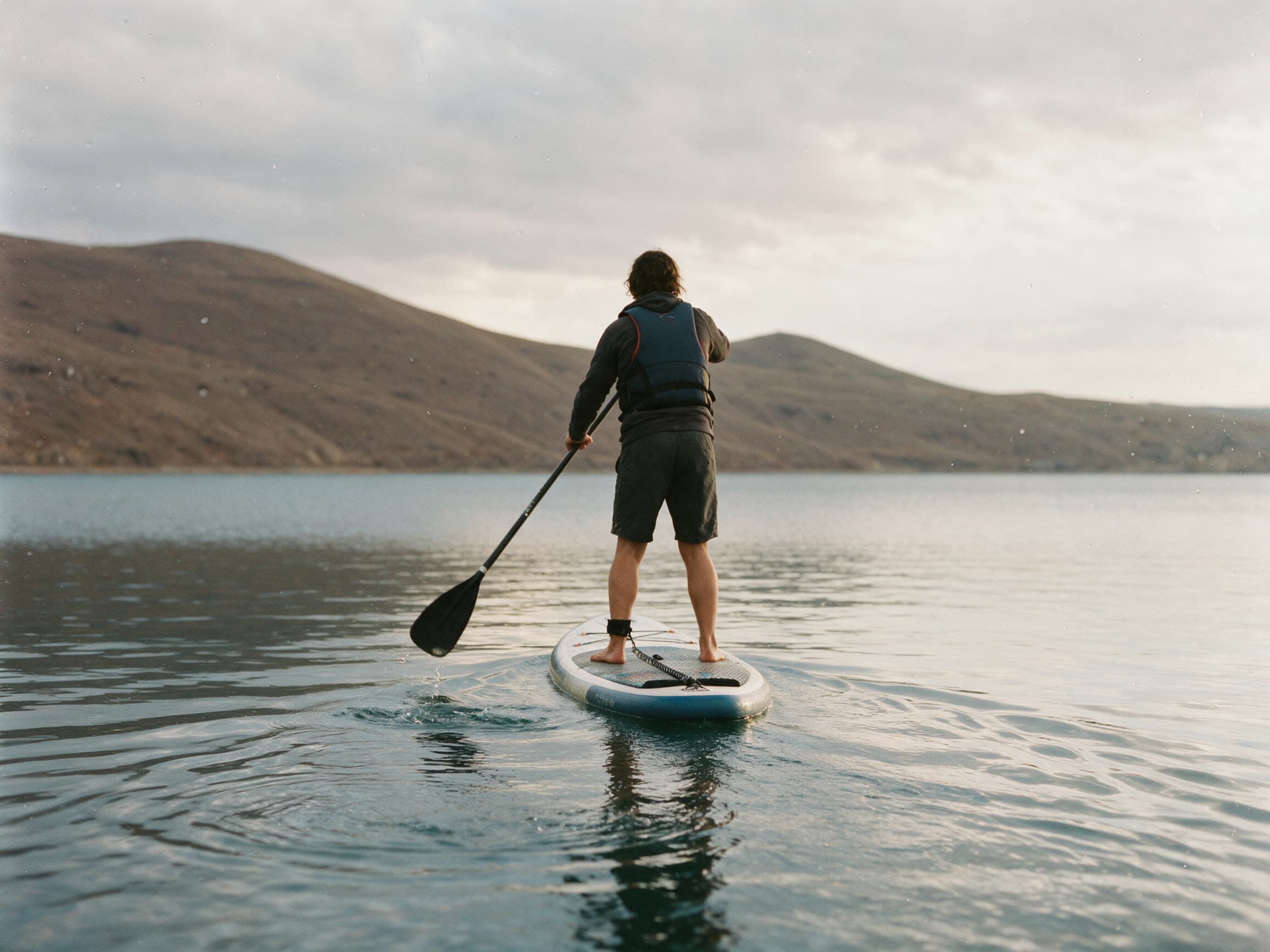
The blade goes in, the boat pulls away, and for two seconds all you hear is water dripping off the paddle. Then again. Around you lies the open steppe of Shirak with a line of poplars on the horizon, and your eye sits thirty centimetres above the surface.
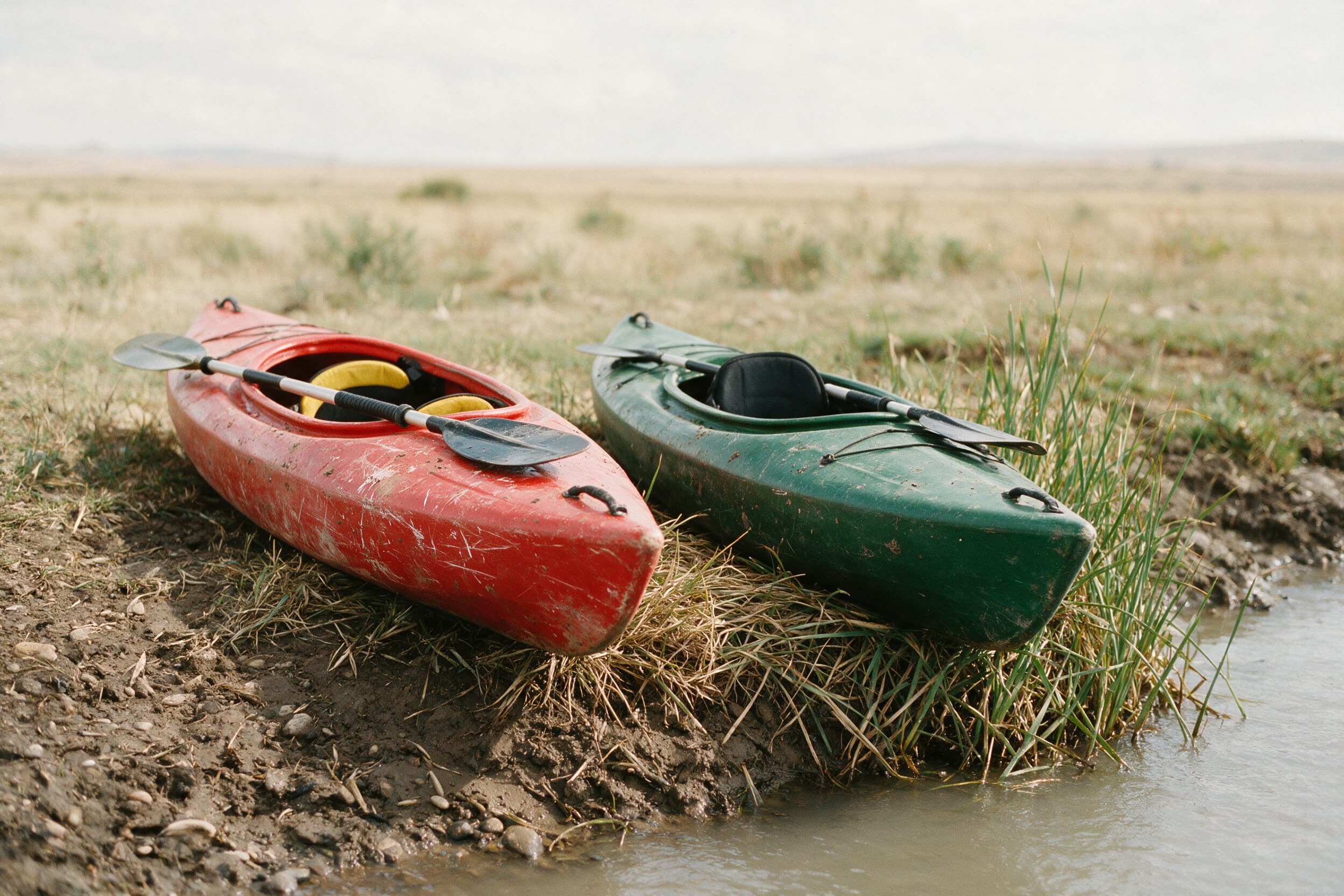
The boats are sit-in kayaks with spray decks. Ten minutes of instruction: paddle grip, the sweep stroke — a wide, reaching pull that turns the boat — and what to do if it should tip. Then you are in and moving. Capsizing is unlikely on this water, but we practise it anyway, because everything afterwards feels calmer once you have.
This is exactly where it differs from a board: from a stand-up paddleboard you step off when you have had enough and stand in hip-deep water. From a sit-in kayak with a spray deck you do not simply get out. So the wind weighs more here. Shirak is high and open; when it gets up it pushes you sideways, and the way back is something you sit through in the boat whether you want to or not. That is why we paddle in the morning and set the turning point into the wind.
Two things stand out. First: it is quiet. No engine, no traffic, only blade strokes and wind in the reeds. Second: after an hour and a half you notice your shoulders.
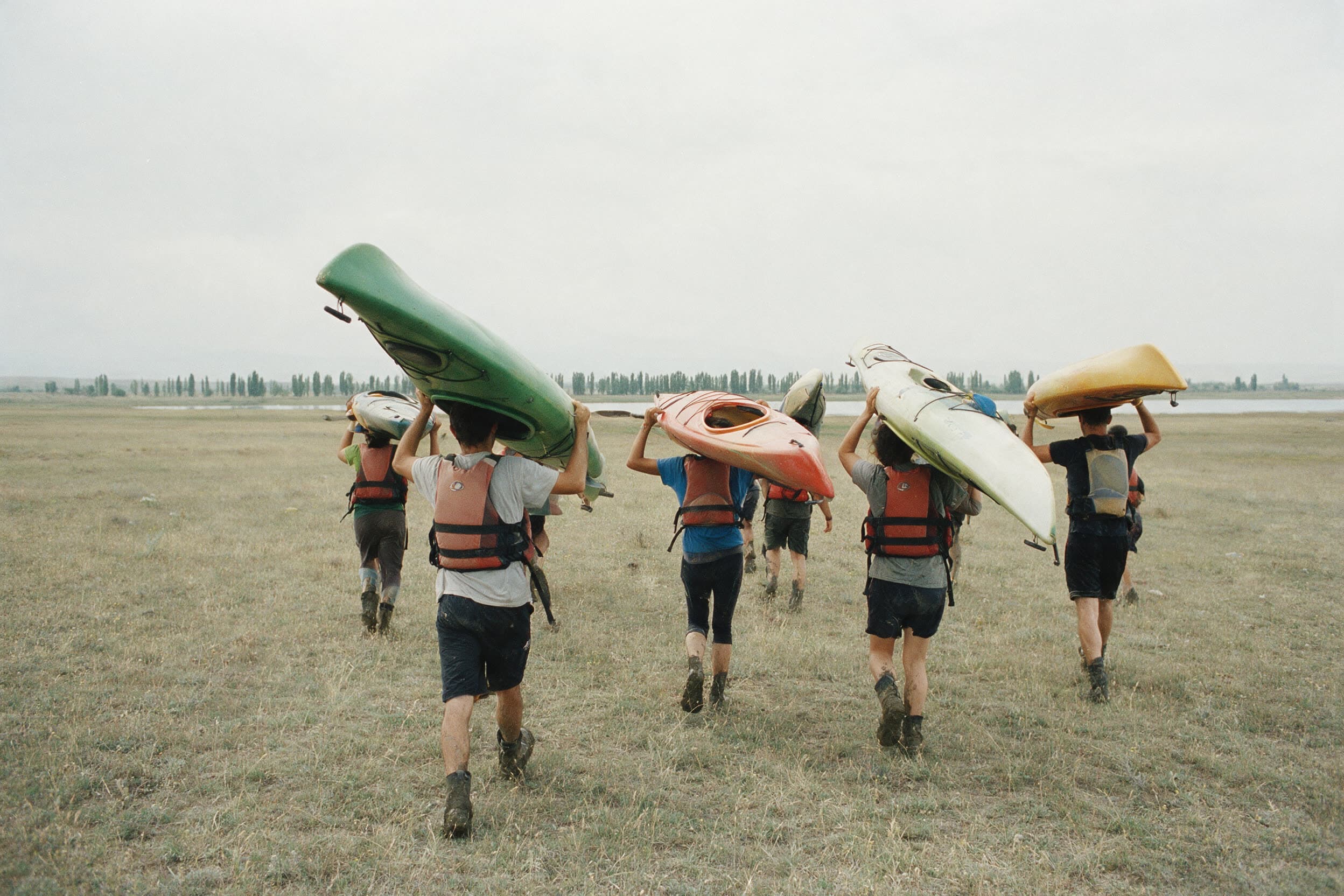
The route is set by water level and wind. In some weeks you paddle long stretches, in others short sections with a portage. Both are normal and both are said in advance.
You need to be able to swim. The buoyancy aid stays on even where the water looks hip-deep — shallow does not mean harmless when you are sitting in a boat.
Halfway along we pull out at a gravel bank, turn the boats over and let them drain. Ten minutes standing, stretching your back, then on. Two to four hours in a sit-in kayak asks for that, and most people only notice once they are upright again.
On open water, wind turns a loop into a workout; beyond a certain strength we shorten the route or move it. Rainfall stays without consequence as long as dry clothes are waiting in the car. In a thunderstorm the boats stay ashore.
Being able to swim is a condition and the buoyancy aid stays on. Before setting off we practise exiting a capsized boat. Paddling is within sight of each other, never solo, and the route follows the slowest person in the group.
Every one of our expeditions can be extended with this experience — just say so in your inquiry.
Sound like your kind of day?
Tell us what draws you — we'll build it into your trip or plan it on its own.