Gravel
SyunikMountain pass
Syunik — Deep in the Vorotan Valley, near the Devil's Bridge, the walls of a 17th-century hermitage stand among walnut and fig trees. Once over 700 monks lived here. Today the complex sits apart from cable-car routes, at the end of a rough track – a place that demands patience on arrival and rewards with silence.
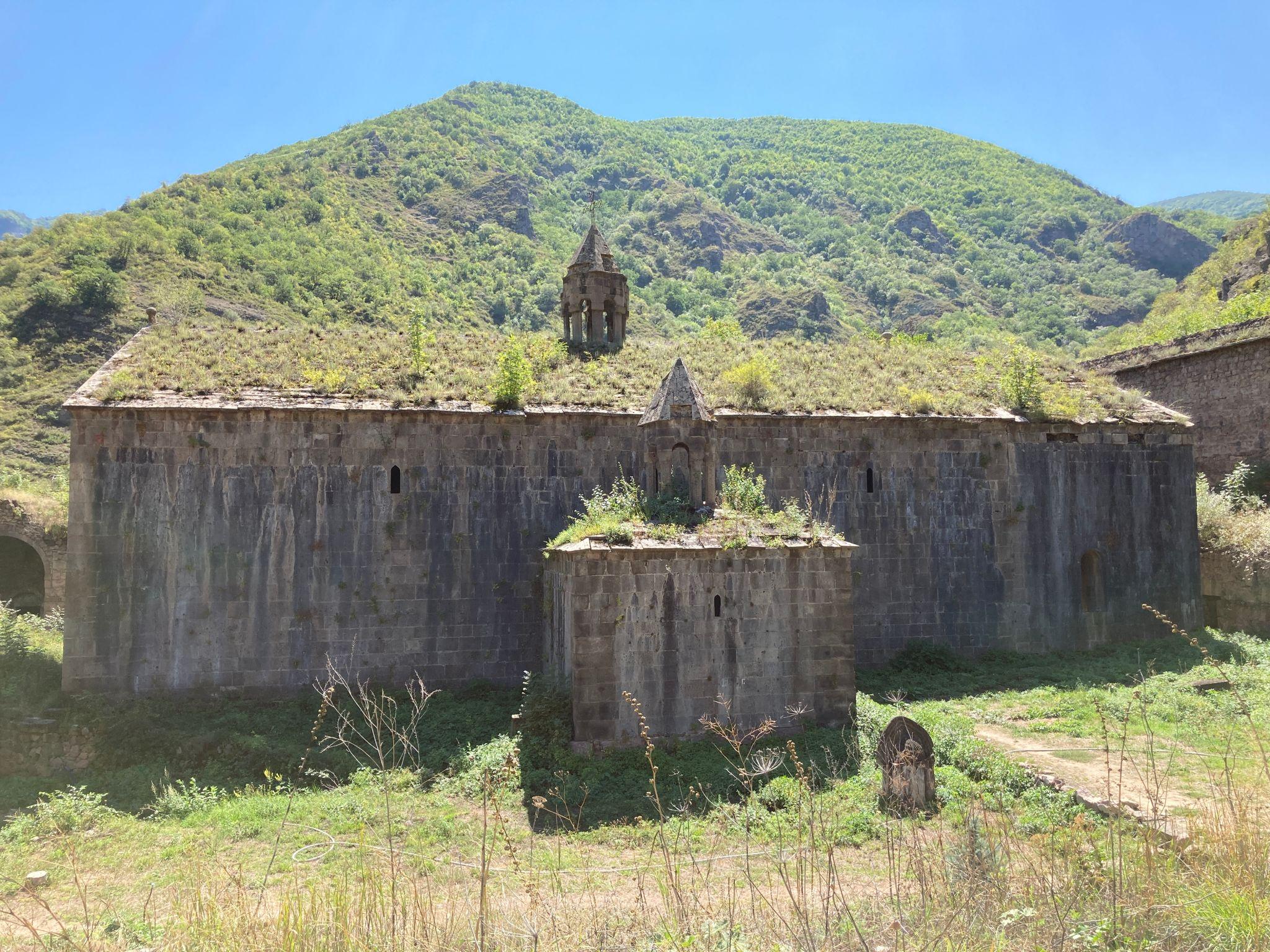
The name means Great Wilderness – and that is still what it is: wall courses and towers with no railings, no souvenir stands. After the 1658 earthquake, the Catholicos relocated the community here and had the basilica rebuilt; monks copied manuscripts in its bare rooms. You clamber over loose stone, reading centuries into whatever the walls left behind.
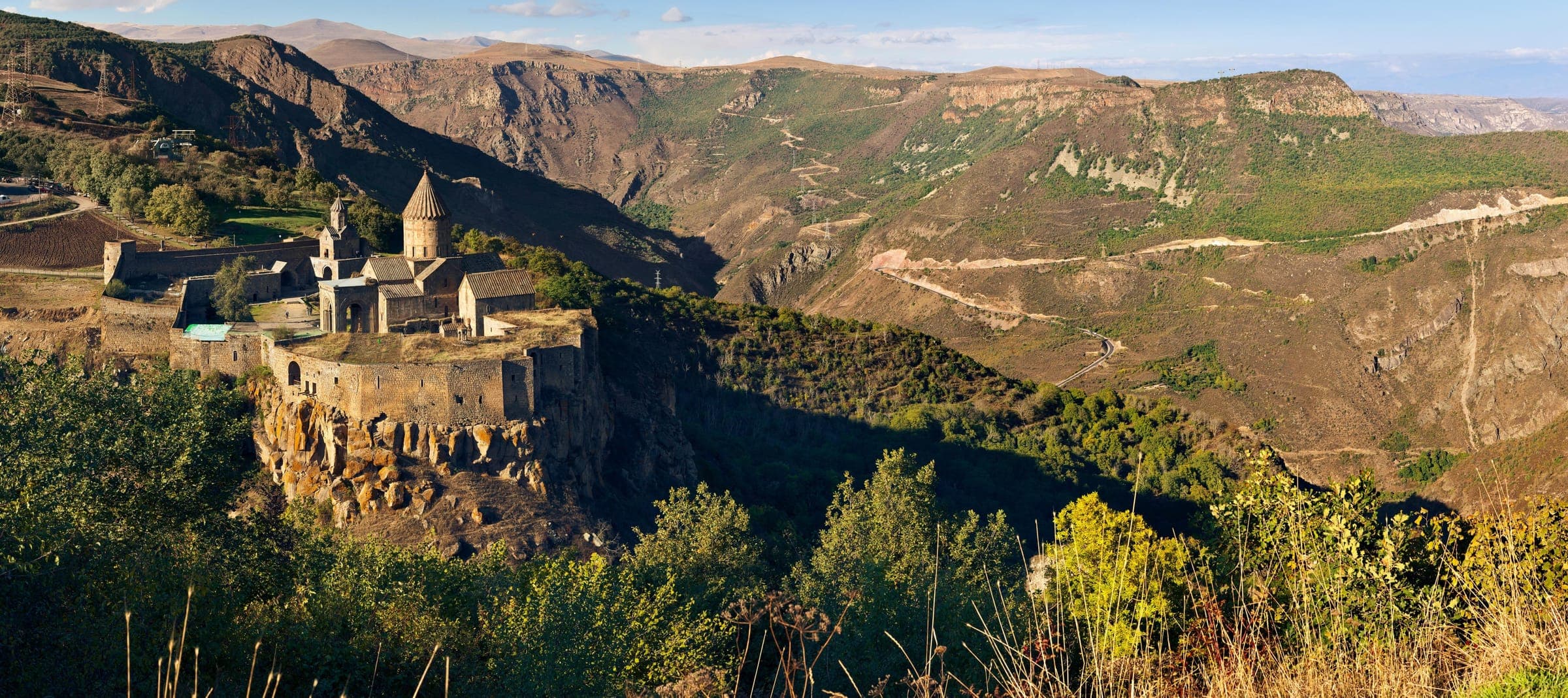
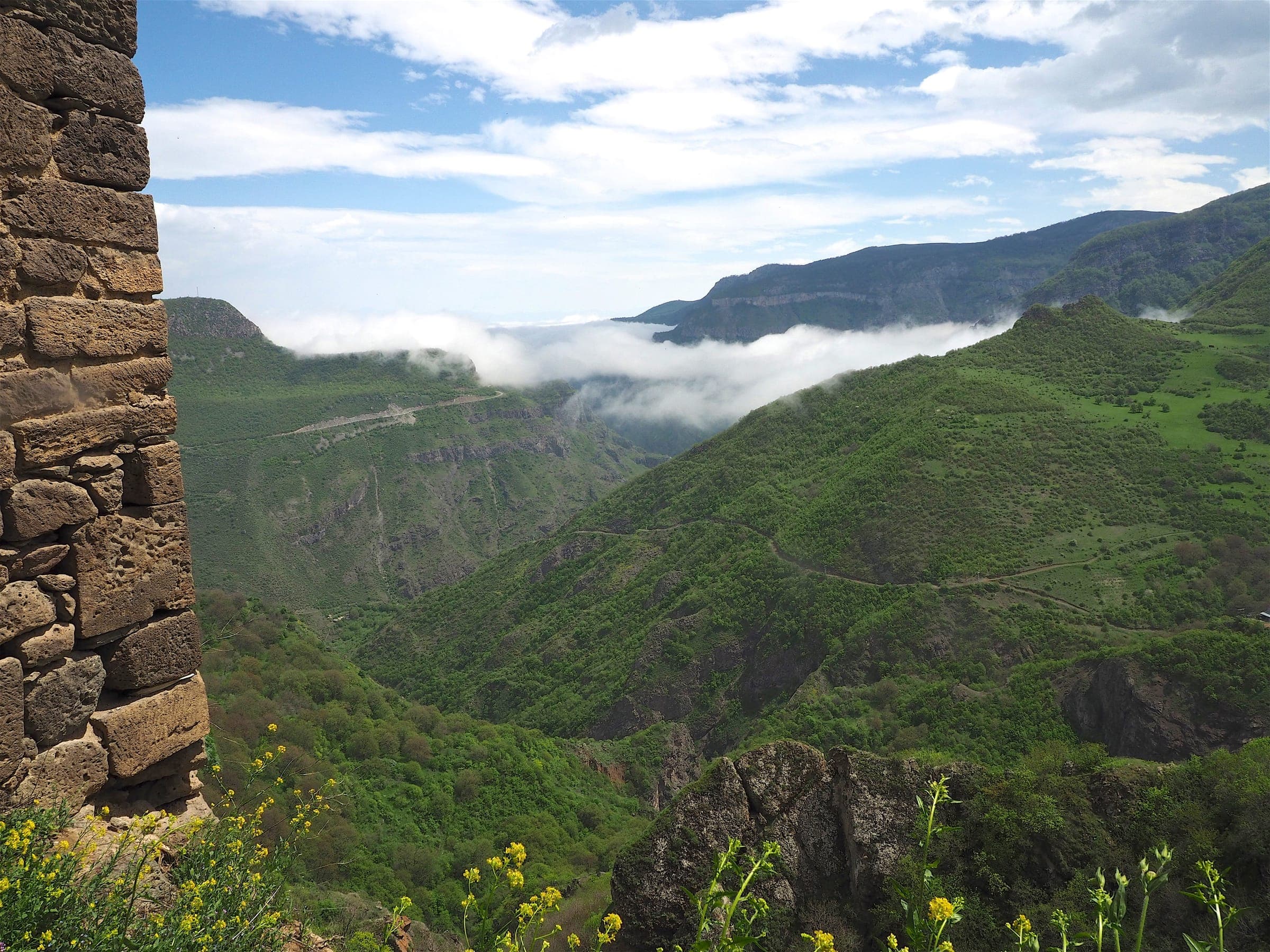
The Tatevi Mets Anapat, the Great Hermitage of Tatev, stands on the right bank of the Vorotan where the river meets its tributary, the Tatev stream. It sits in a gently sloping fold of the gorge at approximately 1,000 metres, enclosed by rectangular rubble-stone walls with corner towers. Walnut and fig trees grow right up to the complex. From the tourist-busy monastery plateau of Tatev with its cable car, this place is separated by the gorge's depth: those who come here descend into the valley, where the famous Devil's Bridge arches across the Vorotan. The hermitage itself is a ruin – wall courses, towers, and the remains of the monastery church, without souvenir stands or railings.
Offroad & access
Access descends from the main road into the Vorotan Gorge, toward the Devil's Bridge area. The final section is a rough, unmade track with potholes and noticeable gradient. A 4x4 is recommended; in dry weather the route is manageable, but when wet the substrate becomes slippery and inclines more demanding. This corresponds to offroad factor 3: rough track, potholes, no extreme technical terrain, but unsuitable for a low-slung sedan. Plan the drive for ground clearance and attention rather than speed. The distance within the valley is short; driving time depends on track conditions and weather. Sturdy footwear helps at the destination, as the ruin is unpaved.
Region: Syunik. Type: Monastic ruin / hermitage. Elevation: approximately 1,000 m. Coordinates: 39.387665 N, 46.260806 E. Nearest settlement: Tatev. Best season: May to October. Built: 1660s, by order of Catholicos Hakob IV Jughayetsi. Occasion: Following the 1658 earthquake that destroyed the nearby Harants Hermitage (Halidzor), the community was relocated here. The three-aisled basilica Surb Astvatsatsin (Holy Mother of God) was completed in 1663 from finely dressed stone. At its height, according to chronicler Arakel of Tabriz, approximately 700 monks lived in the complex, which served as a centre for manuscript copying. Offroad factor: 3 out of 5.
The hermitage's origins lie in a specific event. In 1658 an earthquake destroyed the Harants Hermitage near Halidzor in the same gorge. Catholicos Hakob IV Jughayetsi then had a new, larger complex built in the 1660s and relocated the community here. The ground plan followed that of the destroyed hermitage but was more generous in scale. In 1663 the three-aisled basilica Surb Astvatsatsin was completed. In its heyday, the Mets Anapat – literally the "Great Desert" or "Great Wilderness", used to describe a remote monastery – was a significant spiritual and scholarly centre: manuscripts were copied here, and according to chronicler Arakel of Tabriz, some 700 monks lived within its walls. Later the complex fell into decay; today the perimeter walls with towers and the church ruin remain.
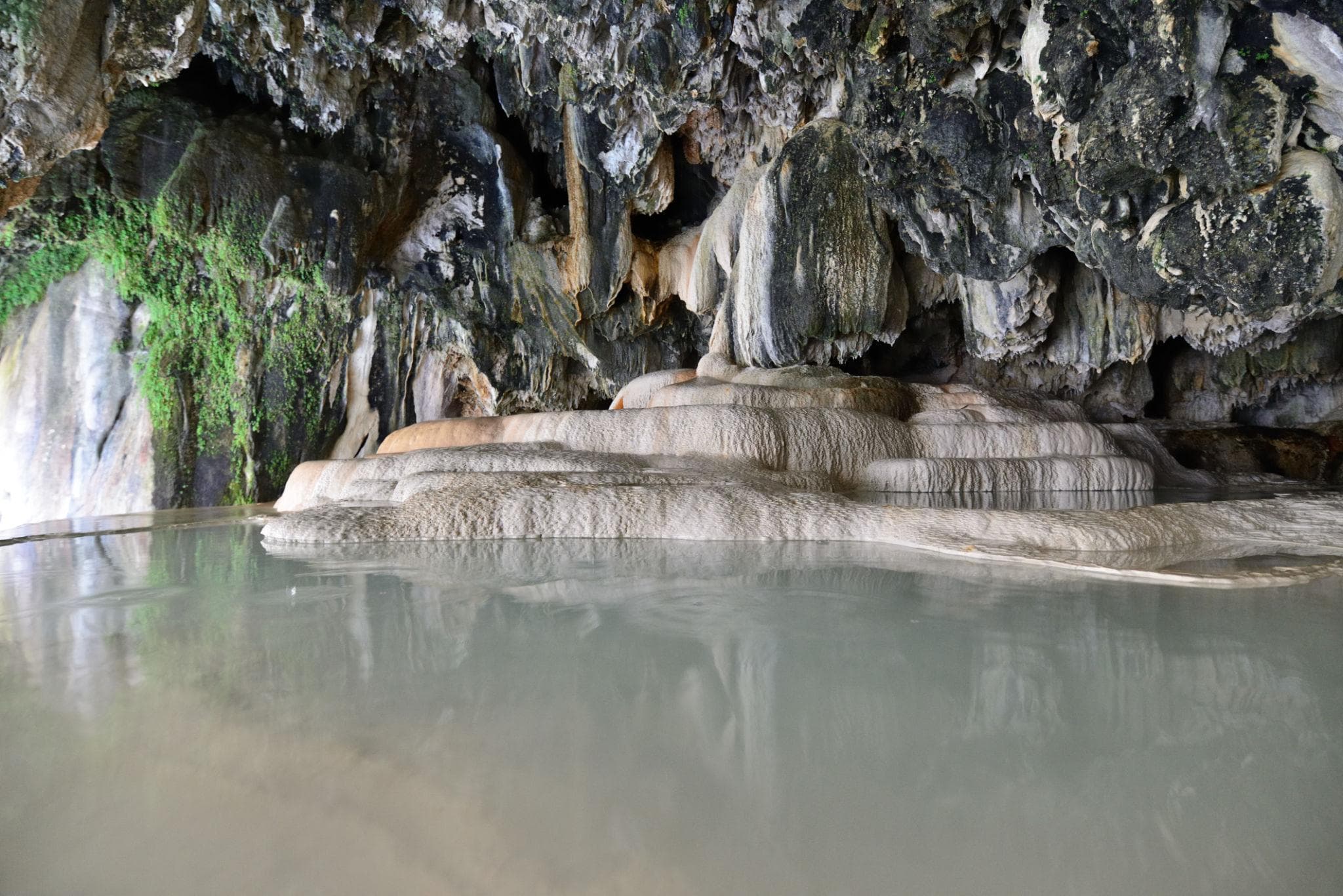
The name Anapat means "wilderness" or "desert" in Armenian and traditionally denotes a secluded monastic retreat – "Mets Anapat" is thus the "Great Hermitage", not a desert in geographical sense. Well-documented legends specific to the hermitage itself are sparse. The site is, however, closely linked to the nearby Devil's Bridge (Satani Kamurj) in the same valley section: According to tradition, the strangely shaped travertine terraces and the natural rock arch spanning the Vorotan appeared so unreal to locals that they believed only the Devil himself could have created them. Hence the name. The bridge is indeed formed from limestone tufa, deposited by warm mineral springs.
Most visitors to Tatev remain atop the monastery plateau at the end of the cable car. The Great Hermitage lies below in the gorge and is less frequently visited, partly because of the track. Those who make the journey find an expansive monastic ruin without infrastructure, plus the immediate proximity to the Devil's Bridge and its warm mineral springs in the same valley section. It is a place for travellers who find more meaning in stones, strata, and open questions than in viewing platforms – and for whom the drive itself is part of the destination.
Best season is May to October; in winter and during prolonged wet weather the track should be avoided. Vehicle: 4x4 with adequate ground clearance recommended; when wet, exercise caution due to slippery substrate. Sturdy footwear for the unpaved ruin, bring drinking water – there is no supply on site. The Devil's Bridge with its warm springs lies in the same valley section and combines well with a visit here. Tatev as the nearest settlement serves as an orientation point. Treat the ruin with respect and leave no litter.
SyunikMountain pass
Syunik, Southern ArmeniaMonastery
Vorotan gorge, SyunikNature
To reach the Great Hermitage of Tatev away from cable-car routes, Armenia Expeditions plans access through the Vorotan Valley with suitable 4x4 and knows track conditions by season. One message — we’ll plan the rest.