Off-road
Vayots DzorFortress
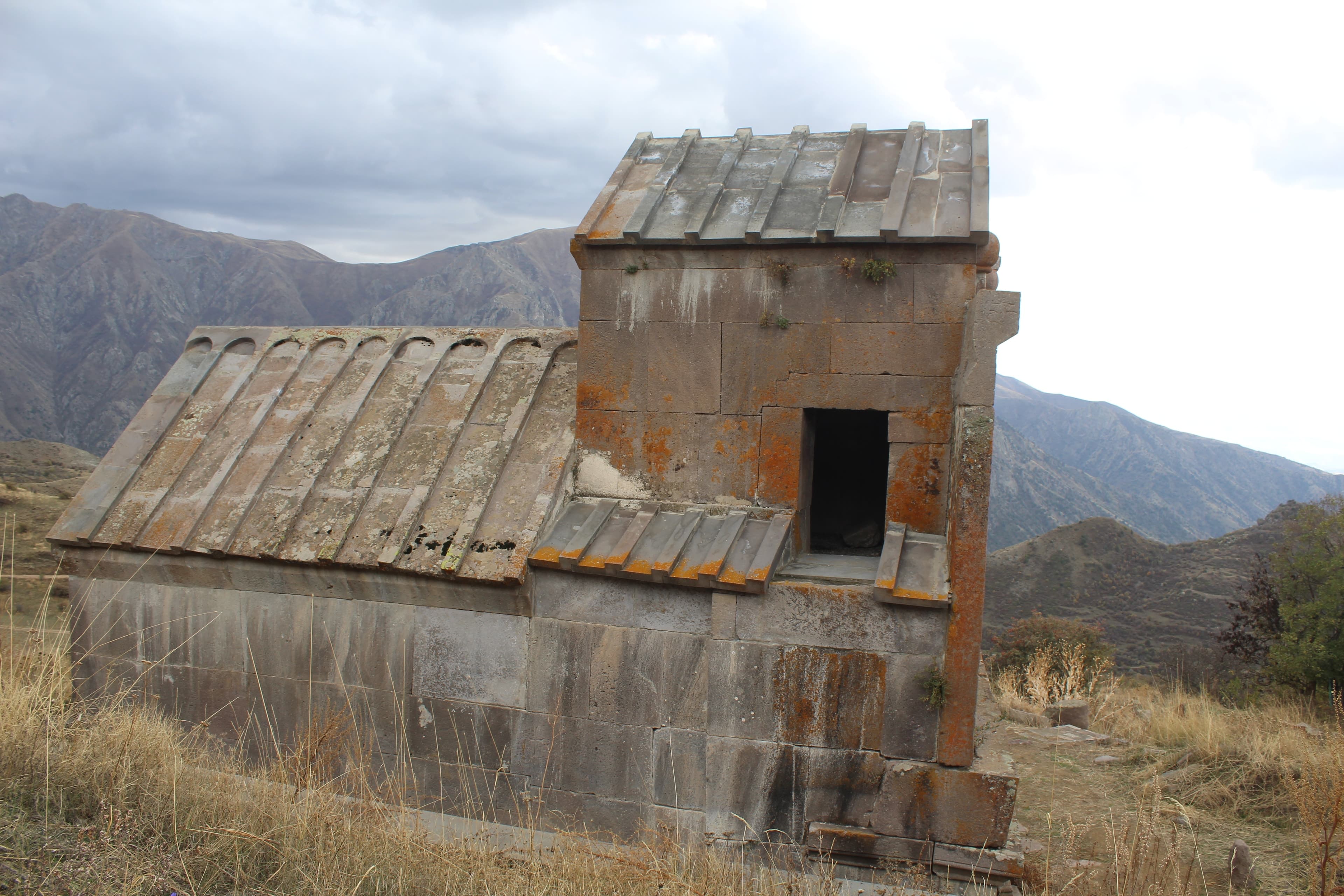
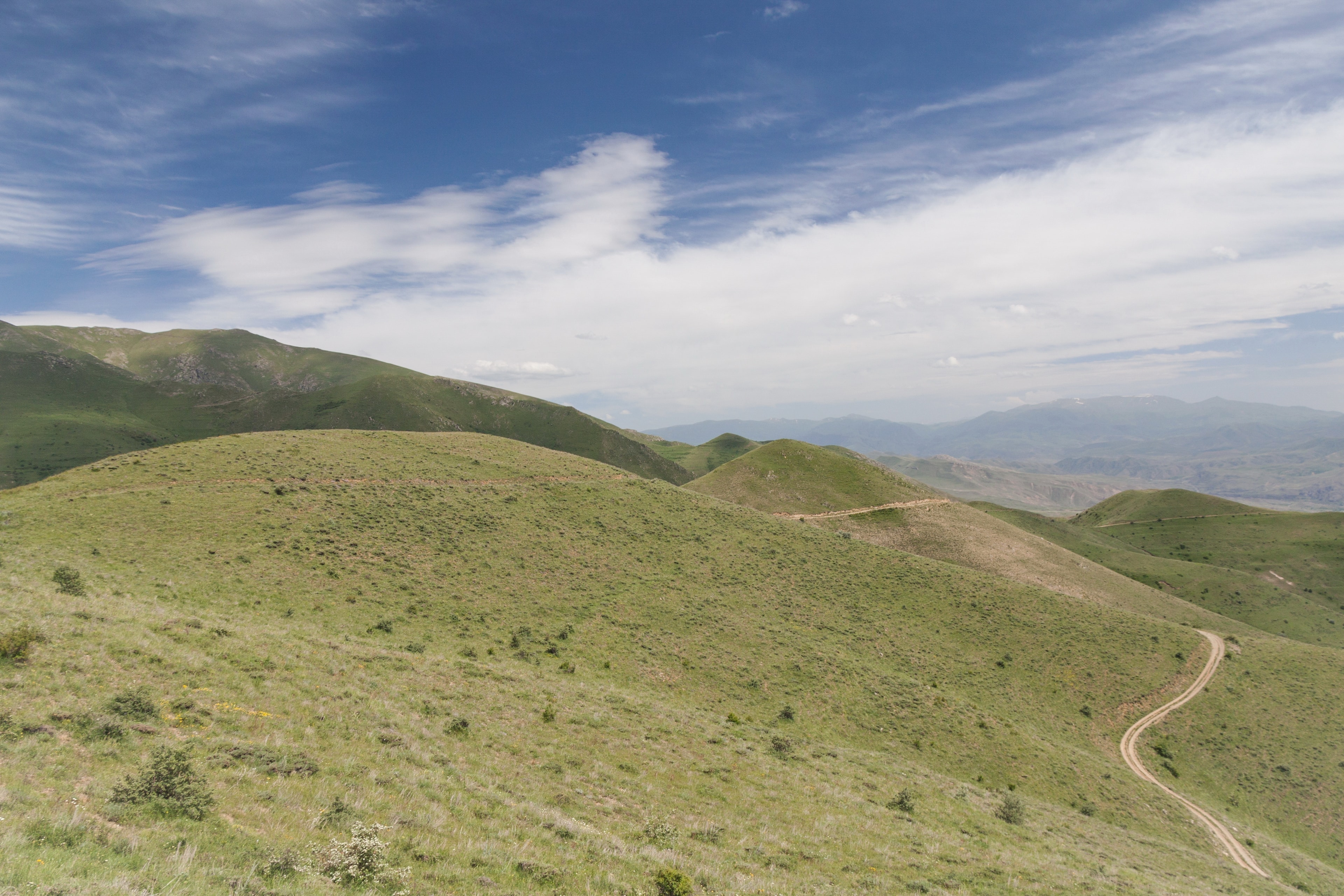
Vayots Dzor — At 2,360 meters, high above the Vernashen valley, stands a monastery built of polished light-colored felsite that glows from a distance. Seven kilometers of rough mountain track separate you from asphalt. At the summit await 14th-century reliefs from the Momik school, the grave of Garegin Nzhdeh, and a silence found only on the Teksar highland plateau.
On the facade, one relief shows a hunting scene, and beside it the portraits of the founding princes. Two of them are no longer here: they now hang in the Hermitage in Saint Petersburg and in Armenia’s History Museum. What remains on site was built in the early 14th century by the Prosh princes — their signature in stone, incomplete, but still legible.
Spitakavor sits on the south slope of Teksar mountain, around 2,360 meters high, about seven kilometers north of Vernashen village in Vayots Dzor province. The complex is built from light, polished felsite, which gives the monastery its name: spitak means white in Armenian. The walls nestle in a depression of the highland plateau, framed by bare mountain slopes, in early summer studded with meadow flowers. The main church, dedicated to the Virgin Mary, carries a single dome; a bell tower adjoins on the west side. On the facades you find finely executed reliefs, sacred and secular motifs alike, including a hunting scene and representations of the founder princes.
Offroad & access
From the asphalt near Vernashen, an approximately seven-kilometer mountain track climbs to the monastery. The route begins near the former Gladzor university and rises steadily along the south slope of Teksar until it reaches the high plateau. The ground is rocky and steep, in places loose and washed out, with rough steps and potholes. In dry weather, the stretch is safely passable year-round only with true all-wheel drive and low-range gearing; after rain or with snow remnants it becomes considerably more difficult. This corresponds to off-road factor 4: demanding, for experienced 4x4 drivers with gearing. Plan 30 to 45 minutes for the seven kilometers depending on conditions. Anyone without an all-terrain vehicle can hike the upper section.
Location: South slope of Teksar mountain, Vayots Dzor province, approximately 7 km north of Vernashen, near Yeghegnadzor. Elevation: 2,360 m. Coordinates: 39.8316° N, 45.3741° E. Type: Armenian Apostolic monastery, dedicated to the Virgin Mary (Surb Astvatsatsin). Construction period: Main church begun under the Prosh princes by Prince Eachi (died 1318), completed 1321 by his son Amir Hasan II.; Narthex (Gavit) to around 1330; three-story bell tower 1330 by Hovhannes Prosh and his wife Tadzna. Building material: light, polished felsite. Significance: medieval scriptorium; relief ornamentation of the Momik school. Best travel season: May to October. Off-road factor: 4 out of 5.
Spitakavor arose in the early 14th century under the Prosh, an Armenian princely family of the region. Prince Eachi began construction of the main church and died in 1318; his son Amir Hasan II. completed it in 1321. By around 1330 the narthex was added, and in the same year Hovhannes Prosh and his wife Tadzna endowed the three-story bell tower. The monastery was a renowned scriptorium of medieval Armenia and a spiritual center. Its relief ornamentation is regarded as the work of the Momik school, named after the sculptor and architect who also worked at nearby Noravank; two of the founder reliefs later entered the Hermitage in Saint Petersburg and the Armenian History Museum. Timur's campaigns in the 14th century severely damaged the walls and gavit; later raids and the forced relocation under Shah Abbas in 1604 further affected the community. In 1987 the Armenian military commander and political thinker Garegin Nzhdeh, who died in Soviet captivity in 1955, was buried in the monastery courtyard. His khachkar, a cross-stone, stands at the south wall. On June 17, Armenians make an annual pilgrimage to his grave.
According to tradition, residents of nearby Vernashen also call the monastery Tsaghkavank, the Flower Monastery, because in spring the surrounding slopes are densely covered with wildflowers. The official name itself is interpreted pragmatically: Spitakavor derives from the Armenian spitak, white, and refers to the light felsite from which the walls are built. Documented miracle tales about the place are rarely transmitted; veneration of the site today is fed primarily by the grave of Garegin Nzhdeh, which makes Spitakavor for many Armenians a place of pilgrimage.
Spitakavor combines three things rarely found in one place: well-preserved relief ornamentation from the Momik school of the early 14th century, the isolated location on a high plateau above 2,300 meters, and the grave of one of the most prominent Armenian figures of modern times. Because the drive requires a genuine all-terrain vehicle, visitor numbers remain modest; many days you have the complex largely to yourself. The light stone color, the finely executed hunting and founder scenes, and the broad view across the Yeghegnadzor valley make the ascent worthwhile, without the site needing to resort to spectacle.
Best season is May through October; during this time the track is passable in dry conditions. Starting point is Vernashen near Yeghegnadzor, roughly two hours from Yerevan on asphalt. The final seven kilometers require a genuine all-wheel-drive vehicle with good ground clearance; after rain or with snow remnants exercise caution. Bring sturdy footwear, as the ground around the complex is uneven. There is no infrastructure on-site, no provisions, and no reliable cellular network; bring your own water and supplies. At 2,360 meters it can be windy and cool even in summer; a weatherproof jacket is wise. As a consecrated place and burial site, the monastery demands respectful behavior and appropriate dress.
Vayots DzorFortress
Vayots DzorMonastery
Vayots DzorGeyser
Would you like to experience Spitakavor off the beaten path? Armenia Expeditions arranges your drive over the mountain track with an experienced all-wheel-drive driver and suitable travel timing. One message — we’ll plan the rest.